April Invasive Species News
The New York State Department of Environmental Conservation sent this bulletin on 04/04/2022 10:21 AM EDT |
| DEC Delivers - Information to keep you connected and informed from the NYS Department of Environmental Conservation |
| Share or view as a web page || Update preferences or unsubscribe |
Invasive Species News |
This Month's Topics:
DEC's Saratoga Tree Nursery Seeks Workers for 4-6 Weeks this Spring
How to Scrape Spongy Moth Eggs
Spongy moths are non-native, but are naturalized, meaning they will always be around in our forests. They tend to spike in numbers roughly every 10-15 years but outbreaks are usually ended by natural causes such as predators and disease. Removing their egg masses is not a cure for spongy moth infestations, but it is a small step you can take to help protect trees in your neighborhood. To learn more about this species and management efforts throughout the year, visit our website. Pictured: spongy moth egg masses on a tree Spring Seedling Sale Ends May 13The DEC Colonel William F. Fox Memorial Saratoga Tree Nursery's annual spring seedling sale is open until May 13. No matter your vision for your land, the nursery has hardy, NY-grown trees and shrubs to satisfy any planting goal. You can plant trees and shrubs to:
Orders are shipped in April and early May. Visit DEC's website to browse species and learn how to order. Upcoming Events and Learning OpportunitiesVirtual event: Coffee Talk: Embracing the Future through Resistance, Resilience, & Transformation (NERISCC) - Friday, April 8 from 12:30 p.m. to 1:30 p.m. - Pour a cup of coffee or tea and join the Northeast Regional Invasive Species and Climate Change (NERISCC) Management Network for an hour coffee talk to discuss a resistance-resilience-transformation approach to addressing effects of climate change on invasive species. Register online. In-person event: Landscape Pests (Jefferson County Cornell Cooperative Extension) - Saturday, April 23 from 10 a.m. to 12 p.m. - Learn how to stop Asian jumping worm, spotted lanternfly, and spongy moth on your property. Pre-registration required, sign up online. In-person event: Spotted Lanternfly Informational Workshop (Ulster County Cornell Cooperative Extension) - Wednesday, April 27 from 6 p.m. to 7 p.m. - Senior Agriculture Resource Educator Jim O'Connell will offer a free presentation on spotted lanternfly (SLF), including a brief history of its introduction, what’s being done to manage populations, and what the public can do to help. Those who attend will also get a free SLF collection kit. Register online. Virtual networking event: Invasive Species and Climate Change (NY Invasive Species Research Institute) - Thursday, May 5 from 12:00 p.m. to 1:15 p.m. - This networking event creates a virtual space for practitioners and researchers to connect informally and discuss respective work around climate change and invasive species. Register online. |
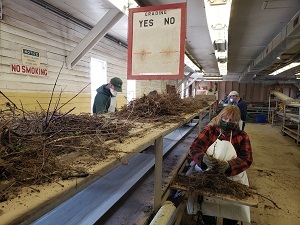 DEC’s Colonel William F. Fox Memorial Saratoga Tree Nursery is seeking seasonal help to process seedlings as part of the annual spring sale. Field worker and grading room positions are available; pay rate starts at $15.26 per hour. Applicants must be able to work 4-6 weeks this April and May. Interested applicants should
 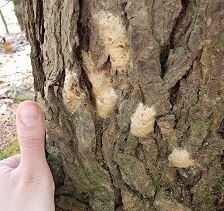 Have you noticed spongy moth egg masses in your neighborhood? Last year was a boom year for spongy moth (formerly known as gypsy moth) caterpillar populations, especially in Central and Western NY. Egg masses contain 600-700 eggs each and will hatch around May. If you find them now, you can scrape them off trees or buildings and drop them into a container of detergent to prevent the eggs from hatching.
|
The New York State Department of Environmental Conservation respects your right to privacy and welcomes your feedback | Update preferences or unsubscribe | Learn more about DEC Delivers |
|
Connect with DEC:    
|
|
| Basil Seggos, Commissioner | |