Hunting and Trapping Newsletter
The New York State Department of Environmental Conservation sent this bulletin on 03/30/2022 10:00 AM EDT |
| DEC Delivers - Information to keep you connected and informed from the NYS Department of Environmental Conservation |
| Share or view as a web page || Update preferences or unsubscribe |
Hunting and Trapping Newsletter |
DEC Hosts 14th Annual National Archery in the Schools Program State Tournament
A total of 407 students competed from their home schools in one of three divisions: high school (grades 9-12); middle school (grades 6-8); and elementary school (grades 4-5). Anthony Marino from St. Joseph by the Sea in Richmond County had the top overall score and placed first among male archers in the High School Division with a score of 292 out of 300 possible points. Gabryelle Dezalia from Schroon Lake Central School in Essex County was the top overall female archer, earning first place in the High School Division with a score of 278. Both winners will receive a trophy and a New York Champion Genesis bow and bow case. Awards were also given in each of the three divisions for first through tenth places. St. Joseph by the Sea in Richmond County was the first-place team in the High School Division for the 8th year in a row. The first-place team in the Middle School and Elementary School Division was Arkport Central School in Steuben County. For the full list of tournament results, visit the tournament website. Individuals who placed in the top 10 in their division, and teams that placed first in each of the three divisions, qualify to compete and represent New York State at the National NASP® Tournament held in Louisville, Kentucky from May 12th – 14th. For more information on how schools can become involved in NASP in New York, visit DEC's website. To learn more about NASP, visit the NASP website. For additional photos of the event, check out our Flickr album. Banding Together to Explain Declines in Eastern MallardsOver the past 20 years, mallard populations in New York and the Northeast United States have declined significantly, leading to reduced bag limits starting in 2018. To understand what factors may be contributing to the decline, DEC, Pennsylvania Game Commission, Ducks Unlimited, SUNY Brockport, and the University of Saskatchewan partnered with 22 state, federal, and non-governmental organizations to start one of the largest telemetry projects ever conducted in North America. Over the next 4 years, states and provinces in the Atlantic Flyway will be putting out over 1,100 GPS transmitters on female mallards to learn more about habitat use and migration timing and how these factors affect breeding success and survival. In the first year, DEC and partners deployed over 300 transmitters. Each transmitter can send tens of thousands of locations for two or three years. This project will give biologists and researchers a glimpse of what drives mallard populations and will help better inform mallard management in the Atlantic Flyway for years to come.
You can follow along by visiting the project website. It includes an interactive map that is updated periodically so you can follow these birds through migration in near real-time! DEC Collaborates with Staff at Long Point State Park to Manage Habitat
Habitat management for species of interest include American woodcock, ruffed grouse, wintering short-eared owls, and many species of songbirds. With coordination, work began in 2021 and about half of the target area has been cut with a forestry mower. The goal is to improve the remainder of the target acreage by the end of spring 2023. State Park staff plan to continue habitat management in perpetuity, while DEC can continue to offer this parcel for hunting through the Co-op. Photo courtesy of J. Kane |
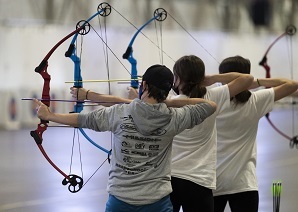 DEC recently hosted the 14th annual state archery tournament for New York schools participating in the National Archery in the Schools Program (NASP®). Twenty-two schools from 16 counties participated in the 2022 tournament held at the New York State Fairgrounds in Syracuse.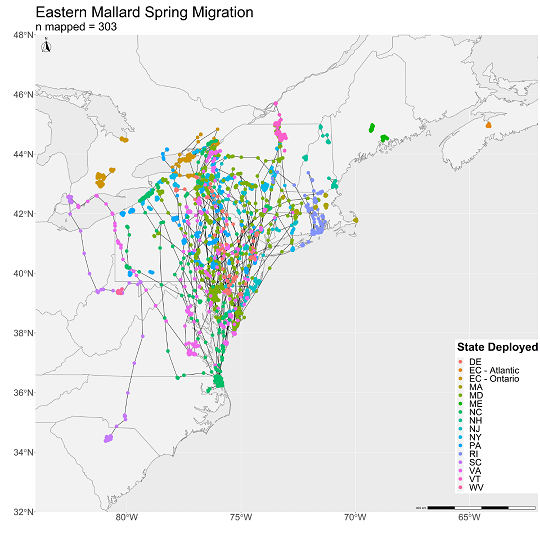
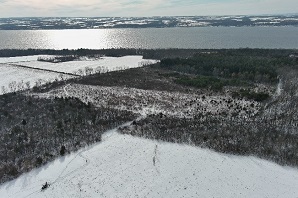 Staff at
|
The New York State Department of Environmental Conservation respects your right to privacy and welcomes your feedback | Update preferences or unsubscribe | Learn more about DEC Delivers |
|
Connect with DEC:    
|
|
| Basil Seggos, Commissioner | |