The Fishing Line - February 18th Edition
The New York State Department of Environmental Conservation sent this bulletin on 02/18/2022 01:02 PM EST |
| DEC Delivers - Information to keep you connected and informed from the NYS Department of Environmental Conservation |
| Share or view as a web page || Update preferences or unsubscribe |
The Fishing Line - February 18th Edition |
Freshwater Fishing, Fisheries Management, and Fishing Access NewsIn This Issue:
Free Fishing Weekend - February 19 & 20
With warmer temperatures in the forecast, we strongly suggest you check ice thickness frequently as you venture out on the ice. For ice safety tips and planning where to go, visit our website. More Information: New "How To" Video Series for Beginning Ice Fishing Upcoming Free Fishing Clinics
Lake Erie Tributary Angler Survey - January Update
While stream conditions were less than favorable this January due to ice, anglers that were able to brave the elements and find open water were treated to excellent fishing. Fishing quality remained high and steady at nearly 0.5 fish/hr. and was consistent among streams. January catch rates were similar to previous surveys. As February continues, anglers should be looking ahead for any warm-ups that open up the streams; in recent years some of the biggest runs of the season have occurred on a February thaw. Always remember to be careful when steelhead fishing in the winter - don’t go out on stream ice, wear boots with spikes, and use the buddy system. Tricia Bergstue with an exceptionally large Lake Erie winter-run steelhead caught from Chautauqua Creek. Photo by Tom Bergstue. Salmon Thrive in North Country Schools
Schools in the program range from Malone to Hadley-Luzerne, Putnam, Ticonderoga and Lake George, with these southern schools supported by the Lake George Association. Trout Unlimited is America’s oldest and largest cold-water conservation organization, dedicated to preserving cold-water fish and their habitat for generations to come. Staff Spotlight - Ian Blackburn, Aquatic Biologist
Growing up immersed in outdoor activities in rural northeastern Pennsylvania molded the foundation of my interests in the environment and ecology (most specifically, of course, fish and fishing). Attending undergrad and graduate school in central New York affirmed my love for the natural environment and appreciation for the myriad of outdoor opportunities the area has to offer within a stone’s throw (thanks in no small part to wonderful academic mentors, experiences, and friends at Colgate University and SUNY College of Environmental Science and Forestry). To date, I have found no compelling reason to leave the area for greener pastures. I currently reside with my wife Lizzie, 9-year-old daughter Linnea, and numerous other critters on a small organic family farm in Madison County, NY. There, we enjoy many outdoor activities right outside the door including camping, fishing, foraging for wild edibles, hiking, hunting, maple sugaring, sledding and snowshoeing. In my spare time, I coach soccer in the Cazenovia Youth Soccer Association and assist my wife in running the local Cazenovia Chapter of 4H. Here at the DEC, I am charged with monitoring and managing fisheries resources in the waterbodies of Cayuga, Cortland, and Tioga counties. My unit shares responsibilities for the Finger Lakes in our region as well, and I fortunately drew the straw for Owasco Lake (I might be biased – it’s a fantastic unsung sleeper fishery sandwiched between the extremely popular Cayuga and Skaneateles Lakes). I also have the privilege of administering a cooperative angler diary program for the Eastern Finger Lakes, which involves members of the fishing community from all walks of life who maintain detailed records of their successes and failures on these lakes and their tributaries. It’s a great management tool that gives us firm insight into the actual “end of the line” results of our management activities and affords me the opportunity to share fishing facts (and tall tales) with our participating anglers – they are a dedicated and enjoyable bunch of citizen scientists with a vested interest in our aquatic resources!
|
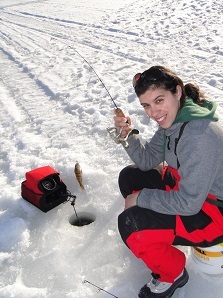 Don't forget, this weekend marks the first set of
 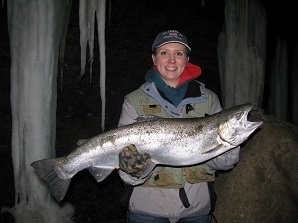 Winter is a time when many anglers are thinking of fishing through the ice rather than in a stream. But some of the highest catch rates and lowest angling effort for steelhead on the Lake Erie tributaries typically occur in January and February.
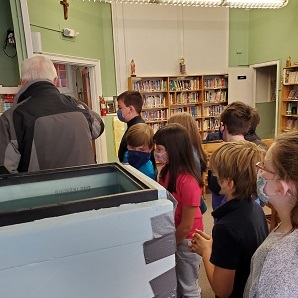 Atlantic salmon eggs are on their way to hatching in 18 schools across New York's North Country, as part of the "Salmon in the Classroom" program sponsored by the Lake Champlain Chapter of Trout Unlimited. The Chapter provides all the equipment and guidance needed for each teacher to raise the salmon from the egg stage in January to fry (about 1½ -2 inches long) that can be released to Lake Champlain waters in May and June. Fertilized eggs are provided in support of this environmental program by DEC’s Adirondack Fish Hatchery, with this year’s eggs starting their journey in the U.S. Fish and Wildlife Service's White River National Fish Hatchery in southern Vermont.
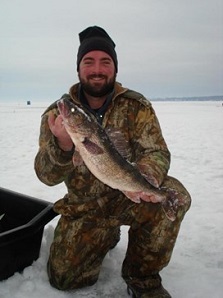 I’m an aquatic biologist with DEC’s Region 7 Bureau of Fisheries based in Cortland, NY. Following an extended tenure in graduate school concurrent with a multi-year stint in hydropower related environmental consulting, I started working with the agency in 2007.
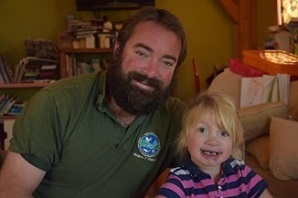 Did I mention I love my job? Any day can be something different, whether it’s running out to assess a reported fish kill, heading to a public meeting to discuss fisheries issues, analyzing data and compiling summaries for reporting, meeting stocking trucks to help plant fish, or grabbing the electrofishing boat to survey a lake by moonlight (and a ridiculous amount of LED lighting). All of these are the best parts of the job as a biologist for NYS – it’s primarily hands-on, conducting informed experimentation and observing and assessing palpable results as they happen in real-time, and offers a chance to do good work that benefits the region and its ardent fishing community. I also relish the opportunities my job affords for interaction with the sporting community – especially those designed to promote the outdoors to our youth. In these days of internet gaming, smartphones, and social networking, it is gratifying to introduce youngsters to fresh-air outdoor activities they might likely miss out on otherwise – their enthusiasm and smiles in these settings are contagious and incredibly rewarding!
|
The New York State Department of Environmental Conservation respects your right to privacy and welcomes your feedback | Update preferences or unsubscribe | Learn more about DEC Delivers |
|
Connect with DEC:    
|
|
| Basil Seggos, Commissioner | |