Hunting and Trapping Newsletter
The New York State Department of Environmental Conservation sent this bulletin on 02/16/2022 11:21 AM EST |
| DEC Delivers - Information to keep you connected and informed from the NYS Department of Environmental Conservation |
| Share or view as a web page || Update preferences or unsubscribe |
Hunting and Trapping Newsletter |
DEC Announces 2021 Bear Harvest
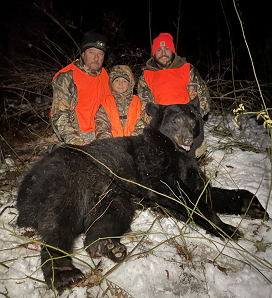
DEC’s 2021 Bear Harvest Summary report (pdf) provides tables, charts, and maps detailing the deer harvest around the state. Past harvest summaries are also available on DEC’s website. Photo: Thomas Mecca Jr. (right) with his black bear taken in the Town of New Albion, Cattaraugus County, December 2021. Pictured with Thomas are his father Tom Mecca and nephew Mark Mecca Jr Be Coyote Conscious: Prevent Conflicts with Coyotes this Winter and Spring
To minimize this risk, DEC recommends that everyone follow the tips outlined below. If a coyote is exhibiting bold behaviors and shows little or no fear of people, contact your Regional Wildlife Office or, in emergency situations, the local police department. Visit DEC's website for more information on coyotes and preventing conflicts with coyotes.
DEC Announces Falconry, Wildlife Rehabilitator, and Leashed Tracking Dog ExaminationsDEC recently announced the following upcoming examinations, scheduled for April 1:
The registration deadline for these free exams is Friday, March 25. To provide broad access to these examinations, DEC is offering them exclusively online. To learn more information including details about registration, please visit our website. For questions or assistance, please contact the Special Licenses Unit by mail (NYS DEC Special Licenses Unit, 625 Broadway, Albany, NY 12233-4752), phone (518-402-8985), fax (518-402-8925), or email SpecialLicenses@dec.ny.gov. |
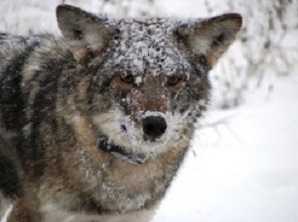 Have you heard or seen coyotes around recently? New York is currently in the midst of coyote breeding season, which generally runs from January – March. During this time of year, coyotes are especially active as they mate and begin to set up dens for pups that will arrive this spring. They also tend to be more territorial, which can increase the risk of conflicts with people and pets.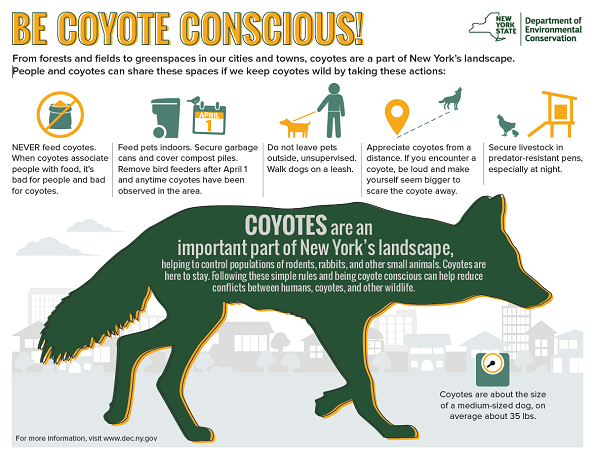
|
The New York State Department of Environmental Conservation respects your right to privacy and welcomes your feedback | Update preferences or unsubscribe | Learn more about DEC Delivers |
|
Connect with DEC:    
|
|
| Basil Seggos, Commissioner | |