Waste less and breath cleaner air in 2022 - Air Mail!
The New York State Department of Environmental Conservation sent this bulletin on 01/21/2022 02:58 PM EST |
| DEC Delivers - Information to keep you connected and informed from the NYS Department of Environmental Conservation |
| Share or view as a web page || Update preferences or unsubscribe |
This Month's Topics: |
Public & Stakeholder Participation Information
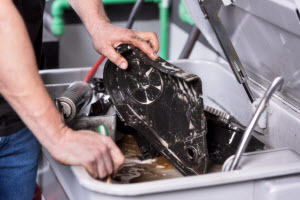
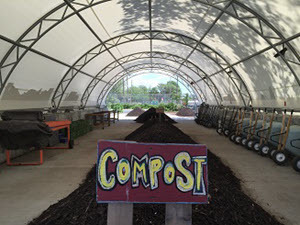
Air Mail! is the publication to announce public and stakeholder information about air quality topics. All NYS residents are environmental stakeholders – we welcome anyone to join the information sessions and other opportunities posted here. DEC Scientists Spark Federal ChangeFor the first time since the passage of the federal Clean Air Act amendments of 1990, a new pollutant was added (PDF) to the Environmental Protection Agency’s (EPA) list of Hazardous Air Pollutants (HAPs). This newly added pollutant is 1-bromopropane (1-BP), also known as n-propyl bromide (n-PB). Even though 1-BP and n-PB are the same pollutant, DEC uses the n-PB acronym. EPA decided to add n-PB to the federal HAPs list in December 2021 after concerned scientists from DEC’s Division of Air Resources sent a petition requesting its inclusion. n-PB is most commonly found in industrial solvents, adhesives, dry cleaning chemicals, and degreasing agents. EPA listed the pollutant due to its potential long-term health impacts, such as kidney, reproductive and developmental toxicity, and cancer. DEC regulates almost 1,100 air toxics, including all the federally listed HAPs. Strict guideline concentrations are set for these air toxics to safeguard the health of residents and protect the environment. The applications of the air toxics regulations can be found in DAR-1: Guidelines for the Evaluation and Control of Ambient Air Contaminants Under 6NYCRR Part 212 (PDF). When n-PB was submitted to DEC for its possible use as an alternative dry cleaning solvent in NYS, the air toxics section began reviewing the substance. Ultimately, they decided to deny n-PB’s use due to concerns over its potential for negative health effects and high toxicity compared to other available products. The air toxics section then submitted a petition to EPA requesting that n-PB be listed as a HAP. Once EPA reviewed the petition, they added n-PB to their list of 187 Hazardous Air Pollutants, making it the first-ever pollutant added since the list's creation in 1990. While air toxics can be released during everyday actions, like driving your car, dry cleaning your clothes, and heating your home, DEC is working hard to reduce emissions of HAPs. To learn more about how DEC controls air toxics, visit our website. Compost, It’s a Rot of FunWhen food waste goes to landfills, the food rots, and the nutrients never return to the soil. When organic material (something originally from a living organism, like a plant or animal) is in a landfill, it decomposes anaerobically (without oxygen) and produces methane, a potent greenhouse gas. Composting allows the organic material to decompose aerobically (with oxygen), producing less methane pollution. In 2018, EPA estimated that roughly 24 percent of landfill trash is food waste; more than any other category of every day garbage. All this organic material in our trash has made landfills the third-largest source of human-related methane emissions in the country. On January 1, 2022, the NYS Food Donation and Food Scraps Recycling law came into effect to reduce the amount of food going into landfills. This law requires large businesses and institutions (PDF) to donate their excess edible food and recycle food scraps (as long as they are within 25 miles of an organics recycling facility). Recycling organic material can also be done at home by composting. When done correctly, you can turn your leftovers, yard trimmings and fall leaves into soil amendments for gardens, lawns, and potted plants. Compost improves soil structure, moisture, and overall health by adding organic matter and beneficial microorganisms. If you want to try it for yourself, check out DEC’s page on composting at home. Even if you don’t have the space for a compost bin or plants to use it with, you can still participate. There are many programs across NYS with food scrap collection or drop-off services. Your food waste could help farms and gardens in your community, all while improving our air quality. Photo Caption: By composting food waste, you can cut down on methane emissions while improving the quality of your soil. Helpful Links
Dates to Remember
Stay Informed about Your Air QualityNYS' ozone season runs from April through September. DEC publishes ground-level ozone forecasts during ozone season and particulate matter pollution forecasts year-round using a scale called the Air Quality Index (AQI). DEC sends out an air quality alert when there is a high AQI value, which indicates polluted air. Individuals with pre-existing respiratory or cardiovascular conditions, and people who exercise outdoors should take caution during an air quality alert. Find out if an Air Quality Alert is in effect by calling the toll-free Ozone Hotline: 1-800-535-1345. The AQI can be accessed in three ways:
Connect with us at Air Mail!Did you enjoy reading this issue? Perhaps your friends and family would too. Share Air Mail! by using the “Share” button below. If you would like to receive Air Mail! in your own email box, sign up now! We would also like to know what you think. Send your Air Mail! questions and comments to the team at DAR.web@dec.ny.gov. |
|
The New York State Department of Environmental Conservation respects your right to privacy and welcomes your feedback | Update preferences or unsubscribe | Learn more about DEC Delivers |
|
Connect with DEC:    
|
|
| Basil Seggos, Commissioner | |