|
Looking back, 2021 proved to be a very busy, but productive year for DEC Fisheries. We were able to get back to just about all of our normal fisheries management and fish culture duties, while also embarking on some new and exciting endeavors.
We hope you enjoy this edition of The Fishing Line as we share some of our most notable highlights and accomplishments. Happy New Year!
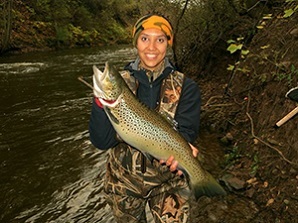 1. In its debut year, New York's new Inland Trout Stream Management Plan is on the road to success by meeting several of it's objectives. New and improved opportunities for trout stream anglers include: 1. In its debut year, New York's new Inland Trout Stream Management Plan is on the road to success by meeting several of it's objectives. New and improved opportunities for trout stream anglers include:
- Year-round fishing opportunities thanks to a catch-and-release (using artificial lures only) season
- Catching larger trout through increased stockings of 12+ inch fish
- In 2022 work will continue to produce a heartier strain of brown trout for stocking
2. Staying connected to anglers through our Fishing Line newsletter and use of angler surveys continued to be a top Bureau priority. The response has been great as we’ve seen an almost 30 percent increase in Fishing Line subscribers over the past year! We hope to continue improving ties with our anglers by routinely providing updates on fisheries management, regulations and fishing opportunities, and by reaching out for your input through online angler surveys so that we can best serve your needs and most appropriately manage our aquatic resources.
Did you know you can share Fishing Line newsletters with your friends on social media? Click on the share button below to get started.
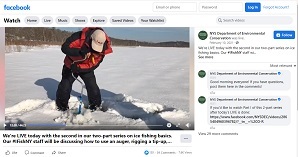 3. As we all continued to navigate through a global pandemic, in-person fishing clinics were largely replaced by virtual outreach through instructional YouTube videos and Facebook Live segments. Check out the following links for some of our highlights from 2021. 3. As we all continued to navigate through a global pandemic, in-person fishing clinics were largely replaced by virtual outreach through instructional YouTube videos and Facebook Live segments. Check out the following links for some of our highlights from 2021.
Have a video idea for this year? Let us know by emailing fwfish@dec.ny.gov.
Instructional Fishing Videos
Spring Trout Stocking with Catskill Fish Hatchery
Trout Season Opening Day Testimonials
Habitat Restoration Project on Oatka Creek
Sturgeon Stocking on Cayuga Lake
Annual Walleye Egg Take at Oneida Fish Hatchery
Ice Fishing Basics
4. Two new state records were established:
- Bowfin - 13 lbs. 8 oz. caught by Chase Soptelean from Yanty Creek, Monroe County on 6/13/21
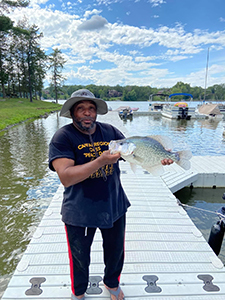
- White Crappie - 4 lbs. 7 oz. caught by Roy Isaac from Sleepy Hollow Lake, Greene County on 8/21/21.
For a complete list of current state records and how to enter the lunkers you catch in our Angler Achievement Awards Program, visit our website.
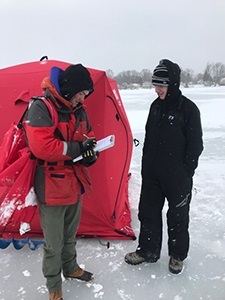
5. 2021 Management Spotlight on Lake Champlain- DEC Region 5 Fisheries staff worked with the Lake Champlain Trout Unlimited (TU) Chapter to conduct the first ever Atlantic salmon net pen project in New York State. TU members assisted staff with feeding and monitoring the salmon smolts as they spent close to a month in net pens at the mouth of the Saranac River in Lake Champlain. The hope was that the salmon would imprint on the Saranac River, translating into higher return rates of spawning adults. The project went well in 2021 and we hope that with some equipment improvements, 2022 will be even better.
The first year of the Lake Champlain open water and ice fishing (PDF) angler survey was completed in 2021. Anglers from the New York side of the lake were interviewed to collect information on their target species and opinion of the lake fishery. The second year of the Ice Fishing Survey is underway and will run until the end of March (or ice-out). Information collected will be used to guide management on the lake. Visit our website in the coming months for 2021 reports on each survey.
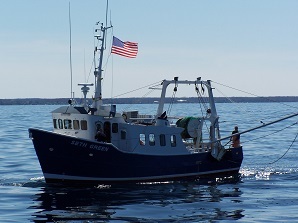 6. Lake Ontario Fisheries Unit - 2021 Highlights - The Lake Ontario Unit was able to get back to business in 2021 after having some programs canceled in 2020. We completed all of our annual surveys in 2021 including the Lake Ontario Fishing Boat Survey (DEC), collaborative lakewide preyfish assessments in spring and fall (DEC,USGS,OMNRF), eastern basin warmwater fisheries survey (DEC), and the adult lake trout survey (DEC and USGS). Lake Ontario Unit staff also contributed to several collaborative research projects that were published in 2021, including lake trout ageing techniques, bloater restoration, larval coregonine distribution, and cisco spawning habitat and diet. 6. Lake Ontario Fisheries Unit - 2021 Highlights - The Lake Ontario Unit was able to get back to business in 2021 after having some programs canceled in 2020. We completed all of our annual surveys in 2021 including the Lake Ontario Fishing Boat Survey (DEC), collaborative lakewide preyfish assessments in spring and fall (DEC,USGS,OMNRF), eastern basin warmwater fisheries survey (DEC), and the adult lake trout survey (DEC and USGS). Lake Ontario Unit staff also contributed to several collaborative research projects that were published in 2021, including lake trout ageing techniques, bloater restoration, larval coregonine distribution, and cisco spawning habitat and diet.
Perhaps the most important task that was completed on Lake Ontario in 2021 was conducting sea lamprey control treatments on four Lake Ontario tributaries in New York. DEC was able to partner with the U.S. Fish and Wildlife Service Lake Champlain Fish and Wildlife Conservation Office and the Great Lakes Fishery Commission to conduct treatments after COVID-19 travel restrictions prevented treatments from being done by Fisheries and Oceans Canada in 2020 and 2021.
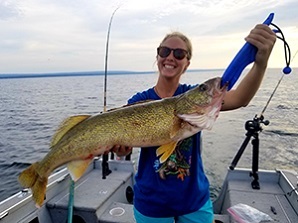 7. Lake Erie Fisheries Unit - 2021 Highlights - The Lake Erie Fisheries Research Unit had an exciting 2021, completing all scheduled surveys and participating in collaborative science that will inform Lake Erie fisheries management in the coming years. Highlights of the year on Lake Erie include: 7. Lake Erie Fisheries Unit - 2021 Highlights - The Lake Erie Fisheries Research Unit had an exciting 2021, completing all scheduled surveys and participating in collaborative science that will inform Lake Erie fisheries management in the coming years. Highlights of the year on Lake Erie include:
- Spectacular April yellow perch fishing, which is becoming a more regular occurrence with solid ice cover becoming a rarity. In response to this change, the Lake Erie angler survey began in April for the first time in 2021.
- New York anglers enjoyed some of the highest yellow perch catch rates on Lake Erie with a record average size of 11.6 inches! Look for quality perch fishing to continue in 2022 as the strong 2019 year class enters the fishery.
- The 6th highest walleye angler catch rate we have ever measured.
- Record numbers of young-of-the-year walleye in the fall trawl survey, more than doubling the previous high measured in 2003! The future is bright for walleye fishing on Lake Erie!
- Amazing fall lake trout angling and trophy-sized fish. The lake trout fishery is an underutilized resource.
- Confirmed identification of wild lake trout fry - a historic discovery and significant milestone for lake trout rehabilitation efforts in Lake Erie. A new analysis also indicated a limited number of wild adults in the population (about 1 in 500 adults are likely wild). Future research is being planned to better evaluate wild adults using otolith chemistry.
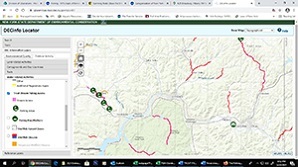 8. We debuted a new interactive trout stream fishing map on DECinfo Locator providing anglers with one stop shopping for information on stocking, fishing access, season dates and regulations. Links to the Trout Stream Fishing Map and a User Guide are available on our website. 8. We debuted a new interactive trout stream fishing map on DECinfo Locator providing anglers with one stop shopping for information on stocking, fishing access, season dates and regulations. Links to the Trout Stream Fishing Map and a User Guide are available on our website.
9. DEC's Fish Hatchery program had a very successful year in 2021, meeting our stocking targets in almost all cases, and having success in all of our wild and domestic egg takes. Each Spring, stockings include over three million yearling trout and salmon stocked into lakes and ponds statewide, and 300,000 fall fingerling brook trout stocked into hundreds of Adirondack lakes and ponds.
In addition, many improvements have been made to hatchery infrastructure in 2021:
- The historic main fish culture building at the Caledonia Hatchery, dating back to the 1800s, has been completely restored; new fish rearing raceways have been installed in the building
-
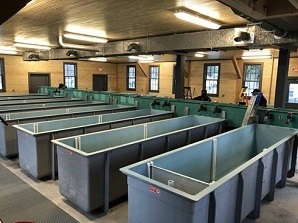 The fish ladder at the Salmon River Hatchery has been replaced, and work is nearing completion on new observation decks surrounding the ladder and outdoor holding ponds. The fish ladder is used in the spring and fall during steelhead and Pacific salmon egg takes, allowing fish to swim upstream from Lake Ontario into the hatchery. The fish ladder at the Salmon River Hatchery has been replaced, and work is nearing completion on new observation decks surrounding the ladder and outdoor holding ponds. The fish ladder is used in the spring and fall during steelhead and Pacific salmon egg takes, allowing fish to swim upstream from Lake Ontario into the hatchery.
- Numerous production wells at the Salmon River Hatchery have been rehabilitated and new monitoring and alarm systems have been installed. These wells supply critically needed cold water to the hatchery for fish production.
- Progress had been made on constructing a new building at the Bath Hatchery for the rearing of cisco. These fish will be part of a cisco restoration program in the Finger Lakes.
- The hatchery manager’s house at the Catskill Hatchery has been renovated, and the residence driveway repaved.
- An electric fence has been installed at the Catskill Hatchery to exclude bears from the hatchery grounds. Bears in the area had become a nuisance – stealing fish feed, destroying hatchery equipment, and posing a safety threat to hatchery staff and visitors.
- The entire Chateaugay Hatchery has been repaved. This project has eliminated numerous potholes and deteriorating pavement, ice and water flows, and general unsafe conditions for hatchery staff and visitors.
- Two fish production wells at the Chautauqua Hatchery have been rehabilitated.
- A new fish production well was drilled at the South Otselic Hatchery, allowing the hatchery to begin producing native-strain brook trout for Adirondack lakes and ponds.
- The roof at the Oneida Hatchery has been extended to cover the hatchery’s dock, allowing the annual walleye egg take to be conducted in safer working conditions.
- A new hatchery manager’s residence is under construction at the Van Hornesville Hatchery. These manager’s residences provide for hatchery emergency response and security.
10. 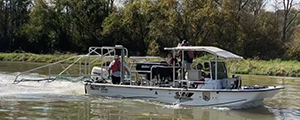 The fishery in Seneca Lake should benefit from sea lamprey control activities on two of its tributaries during the past year. In June, a total of 31 staff from across the state and including partners from US Fish and Wildlife Service Lake Champlain Sea Lamprey Control Team from Vermont (USFWS) treated approximately 11.5 miles of Catharine Creek and three miles of Keuka Outlet. The streams were treated with a lampricide that specifically targets sea lamprey and focuses on larval sea lamprey that typically spend three years but can live up to 10+ years in stream sediments. Treatments were conducted to reduce the population of the parasitic adult phase of sea lamprey in Seneca Lake. Studies on the Great Lakes have shown that one adult lamprey can result in the loss of up to 40 pounds of fish, which in Seneca Lake would consist of primarily trout and salmon. In addition to the June treatments, a different lampricide was applied in October to the Catharine Creek canal from Montour Falls to the mouth of the lake to treat larval lamprey that were likely not affected by the earlier treatments. A specially designed application boat from the USFWS was utilized resulting in a more efficient and effective treatment in this area. Overall, several thousand sea lamprey larvae were eliminated from the Seneca Lake system which should benefit trout and salmon as well as other fishes in the immediate future. The fishery in Seneca Lake should benefit from sea lamprey control activities on two of its tributaries during the past year. In June, a total of 31 staff from across the state and including partners from US Fish and Wildlife Service Lake Champlain Sea Lamprey Control Team from Vermont (USFWS) treated approximately 11.5 miles of Catharine Creek and three miles of Keuka Outlet. The streams were treated with a lampricide that specifically targets sea lamprey and focuses on larval sea lamprey that typically spend three years but can live up to 10+ years in stream sediments. Treatments were conducted to reduce the population of the parasitic adult phase of sea lamprey in Seneca Lake. Studies on the Great Lakes have shown that one adult lamprey can result in the loss of up to 40 pounds of fish, which in Seneca Lake would consist of primarily trout and salmon. In addition to the June treatments, a different lampricide was applied in October to the Catharine Creek canal from Montour Falls to the mouth of the lake to treat larval lamprey that were likely not affected by the earlier treatments. A specially designed application boat from the USFWS was utilized resulting in a more efficient and effective treatment in this area. Overall, several thousand sea lamprey larvae were eliminated from the Seneca Lake system which should benefit trout and salmon as well as other fishes in the immediate future.
|