
DEC Adirondack Outdoor Recreation Bulletin - December 9, 2021
The New York State Department of Environmental Conservation sent this bulletin on 12/09/2021 05:09 PM EST |
| DEC Delivers - Information to keep you connected and informed from the NYS Department of Environmental Conservation |
| Share or view as a web page || Update preferences or unsubscribe |
DEC Adirondack Outdoor Recreation BulletinDecember 9, 2021 |
|
Emergency Situations: If you get lost or injured; keep calm and stay put. If you have cell service, call 911 or the DEC Forest Ranger Emergency Dispatch, 833-NYS-RANGERS. Welcome to the Adirondacks. The Welcome to the Adirondacks webpage is the place to go if you are interested in learning more about the Adirondacks. It provides information about the Forest Preserve, conservation easement lands, outdoor recreation, and Leave No Trace. Love Our NY Lands: All New Yorkers and visitors should be able to access, enjoy, and feel welcome on state lands. These lands belong to all of us, our families, and our neighbors. While enjoying these shared spaces, be respectful of other visitors. Share trails, treat people with kindness, and leave things as you found them for others to enjoy. All of us have a responsibility to protect State lands for future generations. Learn more about how you can Love Our NY Lands. @NYSDECAlerts: Follow @NYSDECAlerts on Twitter for real-time updates to help you prepare. @NYSDECAlerts provides updates for DEC-managed lands throughout New York State, including the Adirondacks. Recreation Highlight: New Recreation Management Plan for Flatrock Mountain Conservation Easement
A new Recreation Management Plan (RMP) for the Flatrock Mountain Conservation Easement has been released. The Flatrock Mountain Conservation Easement encompasses approximately 511 acres southwest of Old Forge in the town of Webb. This property is primarily accessed from State Route 28 and Minnehaha Road. DEC and the property owner, the Northeastern Loggers’ Association, collaborated on the RMP for the conservation easement, which will increase opportunities for recreation in Herkimer County, including:
Visit the DEC website for information about the Flatrock Mountain Conservation Easement, nearby DEC-managed lands, and the RMP. Recent NoticesThe following are the most recent notices pertaining to public lands in the Adirondacks. Please check the Adirondack Backcountry Information web pages for comprehensive and up-to-date information on seasonal road statuses, rock climbing closures, specific trail conditions, and other pertinent information. New: William C. Whitney Wilderness: The Lake Lila Road has been closed for the winter. Lake George Wild Forest: Palmer Pond access road is closed starting at the snowplow turnaround due to a failing culvert. Winter parking is allowed before the snowplow turnaround on the right side of the road facing downhill (east side). Please do not park in the snowplow turnaround or block driveways. High Peaks Wilderness:
Moose River Plains Wild Forest: Due to icy and impassable road conditions, the entrance gates to the Moose River Plains Camping Area at the Cedar River Flow and Limekiln Lake Road entrances have been closed. The gates will be re-opened for snowmobile season when there is adequate snowpack for snowmobiles to safely use the trails. Essex Chain Lakes Complex: The gates on Chain of Lakes Road South, which provides access to the Pine Lake Primitive Area, have been closed for the winter season. Fulton Chain Wild Forest: The Third Lake Creek Trail, also known as the Lake Crossover Road, will have log truck activity on it through the winter of 2021/2022. This trail is the legal right of way access for a private property owner who is having timber management performed on their property. Last Week: High Peaks and Giant Mountain Wilderness: Expect snow and ice above 2,500’ elevation and very wet and muddy trail conditions below 2,500’. Some river crossings may be hazardous or impossible. Microspikes and/or crampons are necessary for travel above 2,500’. Expect full winter conditions at higher elevations. General Notices
Visit the main Adirondack Backcountry Information page for more trip-planning resources, including travel information, weather resources, and seasonally-specific information about Adirondack recreation. Check the Weather: Check the forecast for your destination and pack and plan accordingly. Check the National Weather Service Northern Adirondacks and Southern Adirondacks Mountain Point Forecasts for select summit forecasts. Check both daytime and nighttime temperatures and remember that temperatures will drop as you gain elevation. Check wind chill temperatures and prepare for colder, windier summits. Winter Conditions: Be prepared for winter conditions. Snow and ice are now present on many summits. Be prepared with warm, waterproof layers, extra layers, and proper gear for snow and ice, including microspikes and crampons. In the High Peaks Wilderness, snowshoes or skis are required where snow depth exceeds 8 inches. Warmer weather and rain will bring variable conditions to the region this weekend. Remember that conditions will change as you gain elevation, and cool, wet weather poses a significant risk of hypothermia. Wet and Muddy Trails: Not all trails are covered in snow yet. Wear waterproof shoes and walk through mud, not around it, to help protect fragile trail edges. Gaiters help keep feet dry and trekking poles provide added stability. Sharing the Woods During Hunting Season: Hunting and trapping seasons are underway throughout New York State. Recreationists and hunters alike have a responsibility to keep each other safe during hunting seasons. Dress in bright colors such as hunter orange, put bright colors and bells on pets and equipment, and keep pets leashed to discourage roaming. Interfering with or harassing hunters or trappers is illegal. Visit DEC’s website for more safety tips. Ticks: Ticks may still be present despite colder temperatures. Wear light-colored clothing with a tight weave to spot ticks easily. Tuck pant legs into socks or boots and shirt into pants. Check clothes and any exposed skin frequently for ticks while outdoors. Consider using insect repellent. Stay on cleared, well-traveled trails and walk in the center of trails. Avoid dense woods and bushy areas. Additional tips for tick prevention. Safety & Education
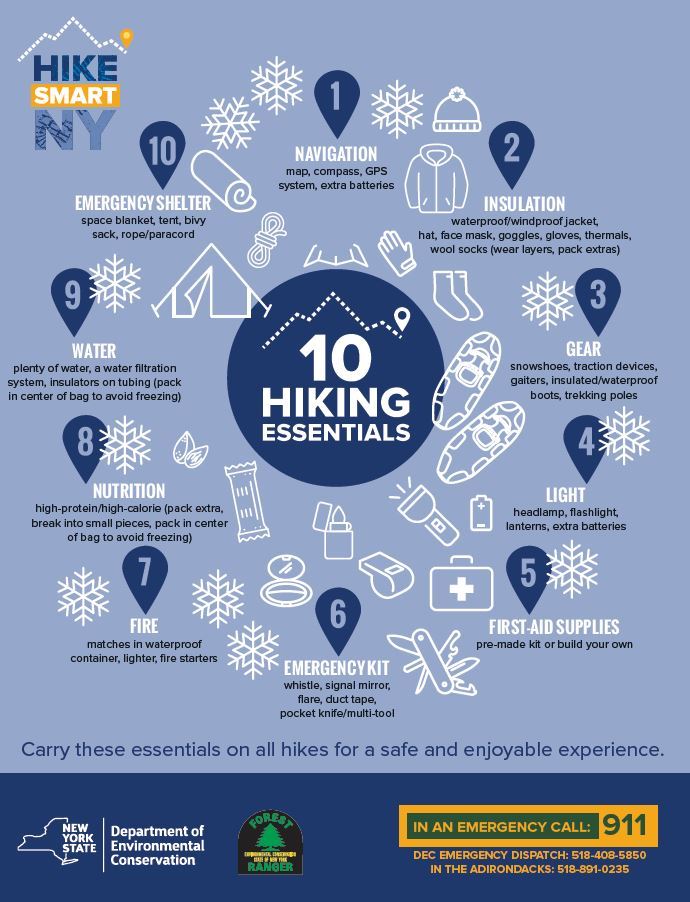
Winter recreation is fun and exciting. It can also be challenging and dangerous. Whether you’re going for a hike, a bike, a paddle, or fishing, Hike Smart NY can help you prepare with a list of 10 essentials, guidance on what to wear, and tips for planning your trip with safety and sustainability in mind. Avoid Hypothermia Hypothermia is a well-known risk during extremely cold weather, but it is also a danger during cool, wet weather. With variable weather in the forecast, keep in mind that hypothermia can occur at almost any temperature if you fail to keep yourself warm and dry. Hypothermia is the result of your body losing heat faster than it can produce it. To prevent hypothermia, dress in layers that will keep you warm and dry and change into dry layers if you sweat through clothes or get wet. Drink plenty of water, and eat high-calorie, high-protein foods to maintain your energy. Being tired, hungry, or dehydrated makes you more susceptible to hypothermia. Know the warning signs of hypothermia:
Hypothermia is a serious medical condition. If someone in your party begins to show signs of hypothermia in the backcountry, act immediately. Warm the person by getting them to shelter, lighting a fire, or wrapping them in a space blanket or bivy sack. Remove any wet clothing and replace it with warm, dry clothing. Warm the center of their body – skin-to-skin contact can help. Warm drinks will also raise core temperature, but do not give the person alcohol. Seek proper medical attention as soon as possible. Leave No Trace
Follow the Seven Principles of Leave No Trace to maintain minimal impact on the environment and the natural resources of the Adirondacks. Use proper trail etiquette to ensure an enjoyable experience for yourself and others and tread lightly! With seven weeks to go in 2021, we have just enough time to review all the Leave No Trace principles before we ring in the new year. Principle 4: Leave What You Find Allow others to enjoy the same experiences you did by leaving rocks, plants, historic artifacts, backcountry infrastructure and other objects of interest as you find them.
|
 This bulletin provides only the most recent notices. Check the

|
The New York State Department of Environmental Conservation respects your right to privacy and welcomes your feedback | Update preferences or unsubscribe | Learn more about DEC Delivers |
|
Connect with DEC:    
|
|
| Basil Seggos, Commissioner | |