Wildlife, Fish, and Marine Life Newsletter
The New York State Department of Environmental Conservation sent this bulletin on 11/22/2021 11:16 AM EST |
| DEC Delivers - Information to keep you connected and informed from the NYS Department of Environmental Conservation |
| Share or view as a web page || Update preferences or unsubscribe |
Wildlife, Fish and Marine Life Newsletter |
DEC Releases Draft Access and Public Use Plan for Utica Marsh Wildlife Management Area
DEC invites the public to provide comments on the Draft Utica Marsh WMA Access and Public Use Plan (PDF) until December 22, 2021. Send comments to NYSDEC Bureau of Wildlife, Region 6, 225 North Main Street, Herkimer, NY, 13350 or by email with the subject line “Utica Marsh WMA draft Access and Public Use Plan.” Utica Marsh WMA contains 193 acres of mostly wetlands in eastern Oneida County just north of the city of Utica. The primary activity on the WMA is wildlife-dependent recreation—trapping, fishing, and wildlife observation. There is a viewing tower which provides the public with a bird's eye view of wildlife. It is also a destination for hiking and bike riding, although these activities are considered secondary—these activities are not necessarily wildlife-dependent, but they are generally compatible with the goals and purposes of the WMA. Report Cold-Stunned Sea Turtle Sightings on New York Beaches
As a result of climate change impacts, warmer water temperatures cause sea turtles to remain in the area longer than usual. When there is a sudden drop in water temperature before sea turtles migrate out of the area, they can fall victim to cold-stunning, a hypothermic condition that results in a lethargic state. Sea turtles that experience cold-stunning will wash ashore on New York beaches and require immediate professional care. DEC works closely with New York Marine Rescue Center and Atlantic Marine Conservation Society (AMSEAS) to support response efforts. If you see a sea turtle wash ashore, please call the New York State Marine Mammal and Sea Turtle Stranding Hotline at (631) 369-9829 and relay as much information as possible. The rescue team needs a detailed explanation of where the animal is located. If possible, write down the coordinates and/or mark the turtle's location with something, such as a stick or driftwood, that will be easy for the team to find. Please do not touch the animal, put the animal back in the water, or remove the animal from the beach. Sea turtles are federally protected animals and are only to be handled by authorized personnel. Any further sudden changes in temperature or additional stress can lead to death. New York Coyote Parasite Survey
Photo by Gregory VanSplunder.
Conservationist Magazine Holiday Promotion
Gift a subscription of Conservationist to your friends and family. |
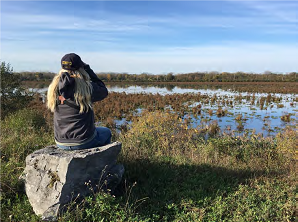 A draft Access and Public Use Plan for Utica Marsh Wildlife Management Area (WMA) is complete and
 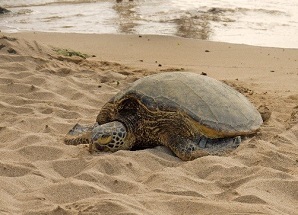 There are
 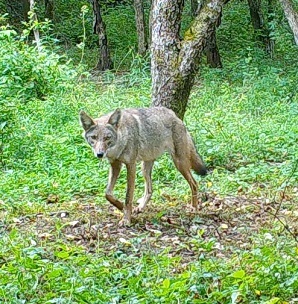 Graduate students at SUNY College of Environmental Science and Forestry (SUNY ESF) are asking for public assistance in the collection of samples as part of a study for an emerging zoonotic parasite. Samples for this study consist of gastrointestinal tracts from coyotes harvested within
  Conservationist makes a great holiday gift for the whole family.
|
The New York State Department of Environmental Conservation respects your right to privacy and welcomes your feedback | Update preferences or unsubscribe | Learn more about DEC Delivers |
|
Connect with DEC:    
|
|
| Basil Seggos, Commissioner | |