Regular Firearm Season for Deer and Bear Begins in the Southern Zone on November 20
The Southern Zone regular hunting season, which runs from Nov. 20 until Dec. 12, is New York's most popular hunting season, with participation from about 85 percent of New York's hunters. Following the regular deer and bear seasons in the Southern Zone, late bowhunting and muzzleloading seasons will run from Dec. 14 through Dec. 22 and again from Dec. 26 to Jan. 1, which is an extension from past years. Hunters taking part in these special seasons must possess a hunting license and either bowhunting or muzzleloading privileges.
In the Northern Zone, the regular deer and bear hunting season opened Oct. 23 and will close on Dec. 5. The Northern Zone includes the Adirondacks, Tug Hill Plateau, Eastern Lake Ontario Plain and the Champlain and St. Lawrence Valleys. A late bowhunting and muzzleloading season for deer will be open in portions of the Northern Zone from Dec. 6 to Dec. 12.
New this year, 12 and 13-year-old hunters can hunt deer with a firearm when accompanied by a licensed, experienced adult in all Southern Zone counties except Erie, Rockland, Suffolk, and Westchester. Also new, DEC has extended the daily hunting hours to run from 30 minutes before sunrise until 30 minutes after sunset, allowing hunters to utilize the full daylight period. Hunters should check the sunrise and sunset times before hunting each day. And remember that all hunters pursuing deer or bear with a firearm are now required to wear fluorescent orange or fluorescent pink clothing, either a hat, vest, or jacket visible in all directions.
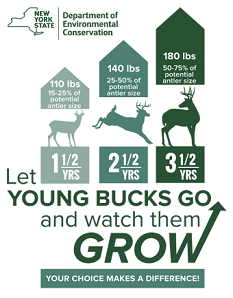 New York Hunters are Enjoying More Older Bucks New York Hunters are Enjoying More Older Bucks
The voluntary choice of hunters to Let Young Bucks Go and Watch Them Grow is shifting our buck harvest toward older, larger animals. Though a mandatory antler point restriction continues in a few areas, in the rest of the state where hunters can choose what type of buck they want to harvest, most are choosing older bucks. Based on voluntary choice of hunters, buck harvest has shifted from more than 60 percent yearlings to 60 percent 2.5-year-old and older bucks over the past decade. Even more pronounced, in several units in southeastern New York without mandatory restrictions, 70-75 percent of the bucks taken by hunters are now more than or equal to 2.5 years old.
How Old is that Deer?
Antlered Bucks – Yearling or Older
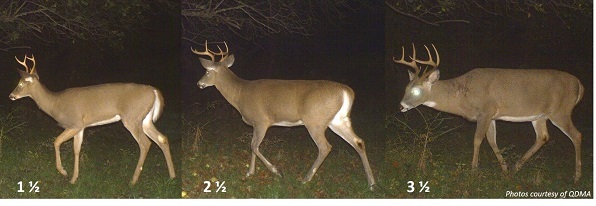 These bucks from Washington County, NY demonstrate typical age-related differences in body size and antler growth. These bucks from Washington County, NY demonstrate typical age-related differences in body size and antler growth.
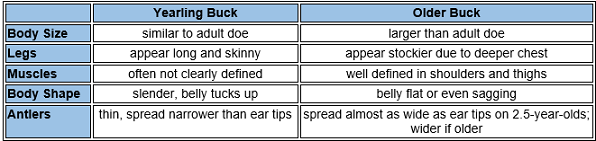
By passing up shots on yearling bucks (1.5 years old), hunters improve their odds of seeing older-age, larger bucks in the years to come. Though antlers can be helpful to distinguish young bucks, sometimes antlers can be misleading. Body characteristics are also very important. Here are some good ways to distinguish between yearling bucks and adult bucks:
Antlerless Deer – Doe or Fawn
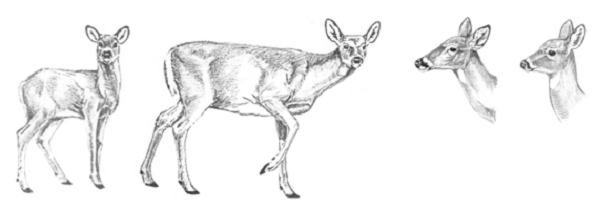
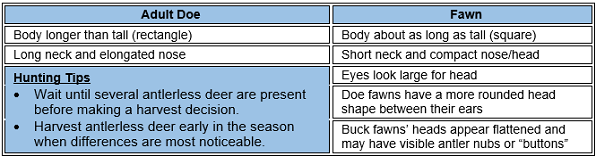
It can be difficult to distinguish adult does from fawn deer, particularly late in the season or anytime if the deer are alone. Though fawns provide excellent table fare, some hunters prefer to target adult deer. Taking adult female deer contributes to management objectives, and passing buck fawns may allow some of them to be available later as antlered bucks. By learning the differences between does and fawns, hunters can make more informed harvest choices.
After the Shot
Check out DEC’s Guide to Aging Deer in New York (PDF) to learn how to age deer by looking at their teeth.
Hunters – Put Safety First this Season
 Last year, there were 22 hunting-related shooting incidents (HRSIs), including three fatalities. We know through our investigations that every HRSI is preventable if you use common sense and follow safety tenets: Last year, there were 22 hunting-related shooting incidents (HRSIs), including three fatalities. We know through our investigations that every HRSI is preventable if you use common sense and follow safety tenets:
- Treat every firearm as if it is loaded.
- Always keep the muzzle pointed in a safe direction.
- Keep your finger off the trigger and outside the trigger guard until you are ready to shoot.
- Always be sure of your target and what is beyond. Once you pull the trigger, you can't take the bullet back.
New for 2021, hunters (and those accompanying them) pursuing deer or bear with a firearm must wear a fluorescent orange or pink shirt, jacket, vest, or hat. Wearing orange or pink prevents other hunters from mistaking a person for an animal or shooting in your direction. Hunters who wear hunter orange are seven times less likely to be shot.
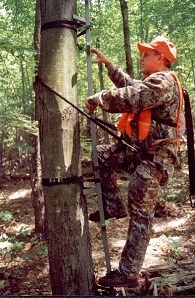
Every year, hunters are seriously injured, paralyzed, or killed falling out of tree stands. Falls from tree stands have become a major cause of hunting-related injuries and fatalities in New York. When using a tree stand:
- Use a full body safety harness and a climbing belt and stay connected from the time you leave the ground to the time you get back down.
- Never climb in or out of a tree stand with a loaded firearm or a loaded crossbow.
- Read the manufacturer's instructions and warnings before you use your tree stand and check your stands (including straps and chains) every season. Replace any worn or missing parts.
- Let a reliable person know where you will be hunting and when you will return.
Visit DEC's website to watch a video about hunter safety and tree stand safety for more tips on how to prevent accidents.
Attention Diving and Sea Duck Hunters on the Great Lakes
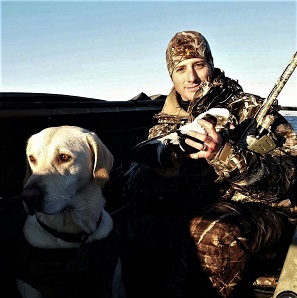 Biologists and researchers from DEC and SUNY Brockport have received a grant from the Great Lakes Research Consortium to examine thiamine levels in diving and sea ducks using the Lake Ontario and Erie watersheds. Thiamine is an essential vitamin needed by all wildlife. Some Great Lakes fish populations show low levels of thiamine leading to poor or no reproduction. Thiamine deficiency in birds remains relatively unknown. Hunters can assist with this study by donating legally-harvested diving and sea ducks from areas on or near the Great Lakes in New York. Biologists and researchers from DEC and SUNY Brockport have received a grant from the Great Lakes Research Consortium to examine thiamine levels in diving and sea ducks using the Lake Ontario and Erie watersheds. Thiamine is an essential vitamin needed by all wildlife. Some Great Lakes fish populations show low levels of thiamine leading to poor or no reproduction. Thiamine deficiency in birds remains relatively unknown. Hunters can assist with this study by donating legally-harvested diving and sea ducks from areas on or near the Great Lakes in New York.
Hunters who have harvested scaup, scoter, long-tailed ducks, merganser, bufflehead or goldeneye and are willing to donate the bird should fill out the form on the link below. To be most useful, hunters should freeze the entire carcass as soon as possible and a project lead will reach out within a few days to discuss collecting the bird(s). The researchers will extract the liver and part of the thigh muscle for lab analyses. Hunters can use other parts of the bird as they normally would. All questions can be directed to the project lead Dr. Jacob Straub (jstraub@brockport.edu; 585-395-2211). Go online and follow the instructions to submit birds you’ve harvested.
|