|
This bulletin provides only the most recent notices. Check the Adirondack Backcountry Information webpages for more detailed information on access, outdoor recreation infrastructure, and conditions. Check the Adirondack Backcountry Information webpages for more detailed information on access, outdoor recreation infrastructure, and conditions.
Emergency Situations: If you get lost or injured; keep calm and stay put. If you have cell service, call 911 or the DEC Forest Ranger Emergency Dispatch, 833-NYS-RANGERS.
Welcome to the Adirondacks. The Welcome to the Adirondacks webpage is the place to go if you are interested in learning more about the Adirondacks. It provides information about the Forest Preserve, conservation easement lands, outdoor recreation, and Leave No Trace.
Love Our NY Lands: All New Yorkers and visitors should be able to access, enjoy, and feel welcome on state lands. These lands belong to all of us, our families, and our neighbors. While enjoying these shared spaces, be respectful of other visitors. Share trails, treat people with kindness and leave things as you found them for others to enjoy. All of us have a responsibility to protect State lands for future generations. Learn more about how you can Love Our NY Lands.
@NYSDECAlerts: Follow @NYSDECAlerts on Twitter for real-time updates to help you prepare. @NYSDECAlerts provides updates for DEC-managed lands throughout New York State, including the Adirondacks.
Recreation Highlight: New Catch & Release Season for Inland Trout Streams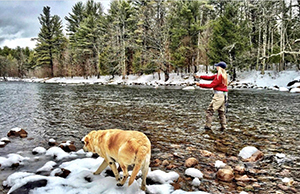
When one door closes, another one opens… or in this case, when one fishing season closes, another one opens.
In years past, October 15 meant the end of trout season here in New York. However, thanks to DEC’s recently implemented Trout Stream Management Plan (PDF), a new catch and release trout stream season (on inland streams) began October 16 and extends through March 31. Now hardy anglers can enjoy trout fishing year-round!
During the catch and release trout season, only artificial lures may be used and trout must be immediately released. Anglers are reminded to avoid disturbing spawning trout and gravel beds where trout eggs may be incubating.
To assess any impact of the new season on wild trout populations, angling pressure and young of year trout abundance will be estimated on a statewide sample of 19 wild trout stream reaches from 2021 through 2024. Visit DEC's website to learn more about the Angler Use and Wild Trout Young of Year Recruitment Study (PDF).
Visit DECinfo Locator to find inland trout streams and review the New York State Freshwater Fishing Regulations Guide (PDF) before you fish.
Recent Notices
The following are the most recent notices pertaining to public lands in the Adirondacks. Please check the Adirondack Backcountry Information web pages for comprehensive and up-to-date information on seasonal road statuses, rock climbing closures, specific trail conditions, and other pertinent information.
NEW:
High Peaks Wilderness:
- The bridge at the start of the Klondike trail is currently unsafe. A reroute has been marked that starts on the South Meadows trail, goes to the Mr. Van ski trail, and then reconnects with the Klondike trail. The reroute will add approximately a half-mile each way.
- Per the conservation easement agreement with Elk Lake Lodge, from the evening of October 22 until the morning of December 6, no hikers may enter the Elk Lake Conservation Easement.
Independence River Wild Forest (Stillwater Reservoir, Big Moose & Three Lakes Conservation Easement Tracts):
- The Stillwater Mountain Fire Tower trail is closed until December 20th. This closure is due to terms of the conservation easement on which the fire tower is located.
- The Hinchings Pond trail will be closed through 10/22 while a trail crew constructs new bridges.
LAST WEEK:
Grass River Wild Forest: The Pleasant Lake Access Road on the Grass River Conservation Easement closed for the season on October 10.
General Notices
Visit the main Adirondack Backcountry Information page for more trip-planning resources, including travel information, weather resources, and seasonally-specific information about Adirondack recreation.
Check the Weather: Check the forecast for your destination and pack and plan accordingly. Check the National Weather Service Northern Adirondacks and Southern Adirondacks Mountain Point Forecasts for select summit forecasts. Check both daytime and nighttime temperatures and remember that temperatures and conditions will likely change as you gain elevation.
Winter Conditions: Winter conditions are starting to appear on some of the tallest Adirondack summits. If you’re planning a hike in the High Peaks, be prepared with warm, waterproof layers, extra layers, and proper gear for snow and ice, including microspikes and crampons.
Fire Danger:
-
Adirondack Park - Low
-
Champlain Region - Low
- Check the fire rating map for daily updates.
Water Conditions: Water levels throughout the Adirondack region range from average to significantly above average for most of the region, with the exception of the Raquette River in South Colton and the Salmon River in nearby Plattsburgh. Check the USGS Current Water Data for New York for stream flow of selected waters. Personal Flotation Devices (PFDs aka lifejackets) are strongly recommended to be worn by all anglers, boaters, and paddlers. Where bridges are not available, do not attempt stream crossings during periods of high, fast-moving water.
Wet and Muddy Trails: Wear waterproof shoes and walk through mud, not around it, to help protect fragile trail edges. Gaiters help keep feet dry and trekking poles provide added stability. Mountain bikers are encouraged to avoid riding in muddy and wet conditions as biking on wet trails can significantly contribute to erosion and trail widening. As with hiking, ride through the center of the trail to avoid impacting trailside soils and plants.
NYSDEC & AMR Pilot Reservation System: A no-cost pilot reservation system is now in effect at the Adirondack Mountain Reserve (AMR). No-cost reservations are required through Oct. 31, 2021, for parking, daily access, and overnight access to trails through the AMR gate and the Noonmark and Round Mountain trailheads accessed through the AMR property. Walk-in users without a reservation will not be permitted. For a complete FAQ list, and to make a reservation, please visit hikeamr.org.
Sharing the Woods During Hunting Season: Hunting and trapping seasons are underway throughout New York State. Recreationists and hunters alike have a responsibility to keep each other safe during hunting seasons. Dress in bright colors such as hunter orange, put bright colors and bells on pets and equipment, and keep pets leashed to discourage roaming. Interfering with or harassing hunters or trappers is illegal. Visit DEC’s website for more safety tips.
No Overnight Camping at Trailheads: Please note that overnight camping is not permitted at trailheads or other roadside locations where a camping disc is not present. This includes individuals sleeping in cars, vans, and campers. Campers should seek out designated roadside campsites marked with a camp here disc or campgrounds.
Bear Canisters Required: NYSDEC requires the use of bear-resistant canisters by overnight users in the Eastern High Peaks Wilderness between April 1 and November 30. NYSDEC encourages campers to use bear-resistant canisters throughout the Adirondack backcountry. Bear canisters should be used to store all food, food garbage, toiletries, and other items with a scent. Canisters should be stored a minimum of 100ft from tents, lean-tos, and cooking sites and kept closed whenever they are not being accessed. Learn more about bear canisters and avoiding human-bear conflicts.
Ticks: Wear light-colored clothing with a tight weave to spot ticks easily. Wear enclosed shoes, long pants, and a long-sleeved shirt. Tuck pant legs into socks or boots and shirt into pants. Check clothes and any exposed skin frequently for ticks while outdoors. Consider using insect repellent. Stay on cleared, well-traveled trails and walk in the center of trails. Avoid dense woods and bushy areas. Additional tips for tick prevention.
Safety & Education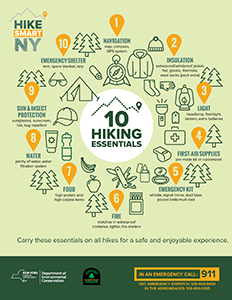
Fall recreation is fun and exciting. It can also be challenging and dangerous. Whether you’re going for a hike, a bike, a paddle, or fishing, Hike Smart NY can help you prepare with a list of 10 essentials, guidance on what to wear, and tips for planning your trip with safety and sustainability in mind.
Be Cautious on Wet Leaves
As foliage season nears an end, many trees have shed their colorful leaves onto trails below. While the crunch and swish of dry leaves on the trail is a signature sound of fall, wet leaves can be a hazard for hikers and bikers.
When fresh fallen leaves get rained on, they can become very slippery. They can hinder the traction of your boot or tire treads and increase your chances of slipping and falling. This is especially true when wet leaves conceal rocks, roots, or muddy patches. Avoid injuries from slipping on wet leaves by taking your time and stepping carefully. When biking, slow down at turns. This might mean your trip takes longer to complete, so plan accordingly. Wear sturdy boots and use bike tires with substantial treads to increase your overall traction. Hiking with trek poles can provide added balance.
Leave No Trace
Follow the Seven Principles of Leave No Trace to maintain minimal impact on the environment and the natural resources of the Adirondacks. Use proper trail etiquette to ensure an enjoyable experience for yourself and others and tread lightly!
Carry In, Carry Out
When visiting the outdoors, remember that if you carry it in, you also need to carry it out. What you leave behind affects other people, plants, water, and wildlife. State lands often do not have any trash receptacles, so remember to clean up before leaving.
- Inspect the area for trash, including food waste.
- Carry a bag to haul out trash.
- Don’t burn garbage or food. Burning food attracts animals.
- Take all gear home with you. Leaving items for others creates litter.
- Pack out any human waste and toilet paper you can’t bury in a cat hole.
|