Hunting and Trapping Newsletter
The New York State Department of Environmental Conservation sent this bulletin on 09/15/2021 10:54 AM EDT |
| DEC Delivers - Information to keep you connected and informed from the NYS Department of Environmental Conservation |
| Share or view as a web page || Update preferences or unsubscribe |
Hunting and Trapping Newsletter |
Early Bear Hunting Seasons Open
Early black bear hunting season opened September 11 in portions of southeastern New York and will open September 18 in northern New York. Hunters can increase their chance of success by keying in on concentrated natural food sources like wild nuts, acorns, berries, and apples, as well as corn fields. In southeastern New York, the early bear season runs from September 11 through September 26 in Wildlife Management Units (WMUs) 3A, 3C, 3H, 3J, 3K, 3M, 3P, 3R, 4P, 4R, and 4W. The early bowhunting season for bears will open in all of the Southern Zone on October 1, followed by the regular firearms season beginning November 20. In northern New York, the early bear season runs from September 18 through October 15 in WMUs 5A, 5C, 5F, 5G, 5H, 5J, 6C, 6F, 6H, and 6J. Bowhunting season for bears also begins on September 18 in the other Northern Zone units (WMUs 6A, 6G, 6K, and 6N). Muzzleloader season opens in all northern WMUs on October 16, followed by the regular firearms season for bears on October 23. Hunters are required to report their bear harvest within seven days, and DEC also encourages hunters to submit a premolar tooth and the scaled-dressed weights of harvested bears. DEC uses teeth to determine the bear's age and weight to monitor physical condition. This data helps DEC biologists monitor bear population dynamics and trends. Hunters who report their harvest and submit a premolar tooth from the bear are eligible to receive a commemorative NYS Black Bear Management Cooperator Patch. Read bear hunting regulations on DEC’s website. To view all WMU locations and boundaries, view the Wildlife Management Units. DEC Proposes Regulation Allowing Counties to Opt Out of Holiday Deer HuntPublic encouraged to share comments on the proposed regulation by November 14th DEC adopted the holiday deer hunt earlier this year, providing hunters with new opportunities to venture afield when families and friends are gathered for the holidays and students are home on school break. The new regulatory proposal was designed to address concerns raised by some communities and stakeholders that landowners might prevent snowmobile access to trail networks that cross private land during the holiday deer hunt, limiting opportunities for snowmobilers during the last week of December. Historically, snow cover deep enough to support snowmobiling is present only occasionally, and in certain locations, in the southern zone during the holiday period. If the proposed regulation is adopted, Southern Zone counties that choose to prohibit hunters from participating in the holiday deer hunt in their county must annually adopt a local law specifying exclusion from the Dec. 26 to Jan. 1 portion of the late bow and muzzleloader season. For this year, counties that pass such a local law will need to send a copy of their adopted law to DEC before Dec. 25. In future years, counties that withdraw must send a copy of their adopted law to DEC by May 1 of each year to allow publication in DEC’s annual hunting and trapping regulations booklet. Counties that do not wish to opt out, need not take such action. Details of the proposal are published in the September 15 issue of the NYS Register. DEC invites public comment on the proposal through November 14, 2021. Comments may be submitted by email or in writing to: Wildlife Regulations, NYSDEC Bureau of Wildlife, 625 Broadway, 5th Floor, Albany, NY 12233-4754. September is Tree Stand Safety Awareness Month
Every year, hunters are seriously injured, paralyzed, or killed falling out of tree stands. Falls from tree stands have become a major cause of hunting related injuries and fatalities in New York. In 2020, DEC investigated 13 tree stand incidents. One hunter was killed and 12 suffered critical injuries. All 13 incidents involved a hunter who was not wearing a harness or the harness was not attached to the stand or the tree at the time of their fall. The proper use of tree stands and full-body harnesses will help to prevent these injuries and fatalities. Hunting from a tree stand is a safe and enjoyable way to hunt as long as we follow a few basic safety principles:
Photo courtesy of C. Perkins DEC Partners with Cornell on Survey of Hunters’ Views on Pheasant Management
We want the results of the survey to reflect the perspectives of all New York hunters; therefore, if you were one of the hunters selected in the sample, we ask that you please complete the questionnaire even if you have never hunted pheasants. Your identity will be kept confidential, and the responses you provide will never be associated with your name. Surveys will be mailed with postage-paid return envelopes or sent via email. Your feedback is important to us, so please respond if you receive the survey. Thanks! |
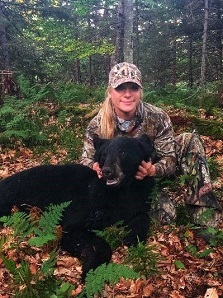 Early Seasons are an Important Tool for Managing Bear Populations
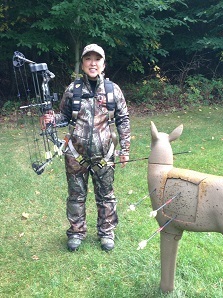 September is Tree Stand Safety Awareness Month. It’s the month many hunters, especially bowhunters, start heading back to the woods to put up stands and get ready for upcoming hunting seasons.
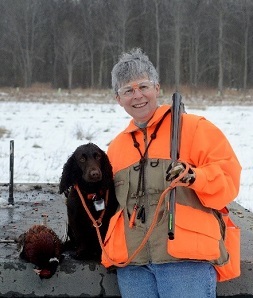 DEC is partnering with Cornell University’s Center for Conservation Social Sciences to engage hunting license holders on their views of pheasant management, hunting opportunities, and the DEC pheasant propagation program. DEC manages pheasants to meet public desires for pheasant hunting and viewing, within biological constraints and available funding. DEC funded this survey to learn what hunters in New York think about the pheasant management program and the priority DEC places on this program compared to other wildlife management programs. Findings from this survey will provide input for future decisions about pheasant management in New York.
|
The New York State Department of Environmental Conservation respects your right to privacy and welcomes your feedback | Update preferences or unsubscribe | Learn more about DEC Delivers |
|
Connect with DEC:    
|
|
| Basil Seggos, Commissioner | |