August's Forests, Plants, and Land Conservation News
The New York State Department of Environmental Conservation sent this bulletin on 08/16/2021 06:16 PM EDT |
| DEC Delivers - Information to keep you connected and informed from the NYS Department of Environmental Conservation |
| Share or view as a web page || Update preferences or unsubscribe |
Forests, Plants, and Land Conservation News |
|
This Month's Topics:
Caring for Your Trees After a Caterpillar OutbreakDo you have trees in your yard that were defoliated during the caterpillar outbreak this year? Most healthy trees can withstand a couple years of leaf loss from caterpillar damage. Long-term damage depends on the type of tree as well as how much defoliation took place:
Losing lots of leaves in summer stresses trees and can weaken them, making them vulnerable to pests, diseases, or even competition from invasive plants that swoop in to steal the now-sunny understory space. If trees in your yard show signs of recovery, keep a close eye on them in upcoming months and watch for potential issues. Give them a little extra care when appropriate like:
If you have concerns, arborists are here to help. If you’re a woodland owner who saw major forest defoliation, watch for new leaves this summer. If this is not the first year of the outbreak in your area and you have concerns for next year, contact a forester for a consultation. Trees are pretty resilient, but sometimes they can use a little help from their human friends to get them through tough times. A watchful eye and a little extra care can go a long way in helping your trees get healthy again. iMapInvasives in the ClassroomTeachers and educators - are you looking for a hands-on science activity to get your students interacting with the natural world and working with real scientific data, all while contributing to conservation in New York State? Join NYiMapInvasives for a virtual event and learn how you can use iMapInvasives in the classroom!
Don’t have two weeks to spare for an invasive species unit? Not a problem! The Invasive Species Curriculum is flexible and can be adapted for shorter units or activities. An added bonus is that using iMapInvasives can be a great activity even in remote-learning settings. Register on iMap's website to reserve your spot and get a link to the webinar. We hope to see you there! Photo courtesy of the New York Natural Heritage Program Report Your Turkey Sightings This August
Pictured: turkey hen and poults by Gordon Ellmers Teamwork on the Trails
Wondering what sort of projects these partners and professionals have tackled so far this year? Visit our Trail Contract Reports webpage to see mid-summer reports from some of our partners, with more to come soon! Pictured: Student Conservation Association (SCA) natural resource stewards at Salmon River Falls by Deanna Oliveri
Apply Now for Regenerate NY Cost-Share Grants
Applicants will need to apply through Grants Gateway. Private landowners are encouraged to team up with a cooperating forester who may provide application support. Check out the Regenerate NY webpage on DEC's website for more information. Photo by Leslie Robertson for the National Association of State Foresters We Want to Hear From You!Is there a topic you'd like to lean more about, or a public event or workshop related to forests, plants, or land conservation you'd like the greater community to know about? Email us at landsforests@dec.ny.gov with the subject line "DEC Delivers" and it could be featured in a future Forests, Plants, and Land Conservation newsletter. Urban and Community Forestry CornerThank you so much to everyone who attended our ReLeaf conference last month. We hope you enjoyed it! If you missed it, keep an eye on the NYS Urban Forestry Council’s website for some of the recordings in the coming weeks. Upcoming Events Join us for fall workshops across New York State! Space is limited, so be sure to register early.
Community Spotlight - Geneseo, NY
You can read more about the event on the Livingston County News website. Urban Forestry News Are you looking for ways to get involved and help trees? Do you know if your community has an Adopt-a-Tree or Volunteer Tree Steward program? Through these programs, volunteers can learn how to properly take care of trees and help provide watering, mulching, and other tree care to the trees on their streets and in their neighborhoods. To get you started here are some of the Tree Steward and Adopt-a-Tree programs in NY – but check with your town, village, or city to see if you have one in your area.
DEC Celebrates the Conservationist’s 75th Anniversary
That first issue of the Conservationist generated more than 9,000 reader letters, swamping the mailroom with subscription requests, suggestions, and questions. In addition to the bread-and-butter natural resource articles of its early days (e.g., hunting, fishing, forestry), the magazine grew to include more articles about environmental quality (e.g., air, water, and land pollution control) as the nation’s environmental consciousness grew after the first Earth Day in 1970. That was also the day the Conservation Department became the Department of Environmental Conservation. Throughout our 75-year history, the Conservationist has sought to entertain and educate, and to motivate people to make a positive difference in our world. To reference a concept that has been used to describe the cumulative impacts of water pollution runoff: while each of us may not think our individual actions make a difference, taken together, our voices and actions are magnified, and our collective efforts can bring about important environmental change for our local communities, which often benefits our state and nation, and our future. To encourage new subscribers and in celebration of the 75th anniversary of the magazine, DEC is offering a special $2 subscription rate for both in-person and online subscribers, including gift subscriptions, to the Conservationist during the upcoming Great New York State Fair, Aug. 20 - Sept. 6, 2021. This special rate will be limited to 7,500 online and in person subscribers. To start receiving the Conservationist at home and in your email box, subscribe today by visiting DEC's website or calling 1-800-678-6399. |
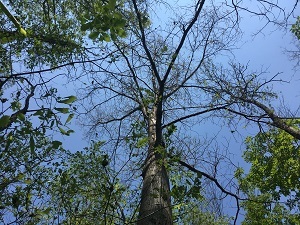 Hardwoods – A healthy leaf-bearing tree should have grown new leaves by now, though leaves may be smaller than usual. If your tree lost all its leaves and does not grow any new ones by summer's end, watch it in the spring. If it still does not leaf out next spring, it has died.
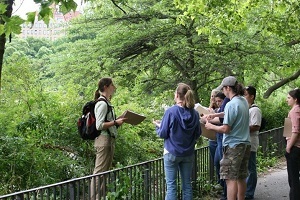 iMapInvasives is an excellent tool for engaging students in science courses. Students can learn about invasive species, explore NY’s invasive species distribution data, and report new observations to the database, all without requiring advanced software or experience.
 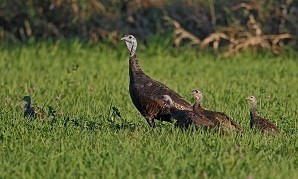 While you are exploring the forests and fields around your home or driving through the state’s beautiful landscapes this summer, be sure to keep an eye out for wild turkeys. DEC uses reported observations of wild turkeys to track changes in population size and productivity (number of poults produced per adult hen) over time and in different parts of the state. It also helps forecast hunting prospects for the coming fall season and for subsequent spring seasons. You can
 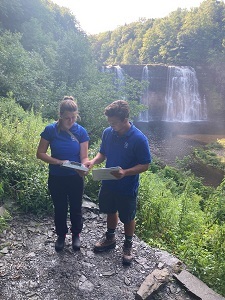 Did you know that DEC’s Division of Lands and Forests manages nearly five million acres of State land? It’s a big task, but we get by with a little help from our friends. DEC enters into contracts with partner organizations and outdoor professionals to maintain DEC lands so that they may be enjoyed safely and sustainably by the millions of visitors who explore them each year.
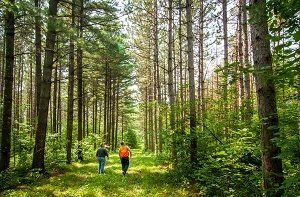 Do you own between 10 and 1,000 acres of forest land and have interest in improving your woods? DEC’s Regenerate NY program provides cost-share grants to New York landowners looking to enhance forest regeneration on their property. Landowners who want to plant trees, control invasive species, restore a degraded forest stand, or exclude deer are encouraged to apply for project funding. To find out more about getting funding for your forest, please
 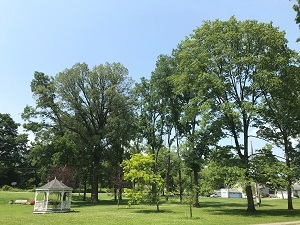 This past April, Boy Scout Troop 4070 in Geneseo organized a tree planting and gardening event at Long Point Park, supported in part by a grant from the NYS Urban Forestry Council. Long Point Park is the only public access point to Conesus Lake and offers picnic and park space for the community. The Scouts planted three trees in the park during the event which also included talks on invasive species in the lake and free saplings and bushes for attendees to take home. The park has struggled in recent years, losing trees to emerald ash borer (EAB), and having many trees hit hard by the LDD (gypsy moth) outbreak this past year. The newly planted trees will help the park remain a shaded green space for years to come.
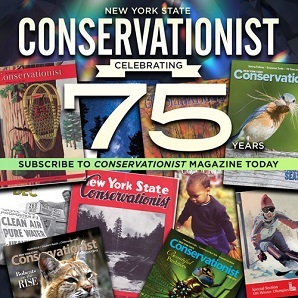 DEC’s wildly popular magazine,
|
The New York State Department of Environmental Conservation respects your right to privacy and welcomes your feedback | Update preferences or unsubscribe | Learn more about DEC Delivers |
|
Connect with DEC:    
|
|
| Basil Seggos, Commissioner | |