Hunting and Trapping Newsletter
The New York State Department of Environmental Conservation sent this bulletin on 07/20/2021 02:29 PM EDT |
| DEC Delivers - Information to keep you connected and informed from the NYS Department of Environmental Conservation |
| Share or view as a web page || Update preferences or unsubscribe |
Hunting and Trapping Newsletter |
Deer Management Assistance Program – Application Deadline is August 1
To learn more about DMAP, determine if you are eligible, and download the DMAP application, visit DEC's website. The DMAP application deadline is August 1, 2021. Migratory Game Bird Management
Due to COVID-19, DEC did not band geese last year but this year got back in the game and handled approximately 4,000 geese in total. Photo courtesy of Briana All. Antler Development Begins
By now, the healthiest bucks are putting on up to a quarter inch or more of new antler a day, with antlers branching and tines developing. At its peak, antlers are one of the fastest growing animal tissues. Large antlers are driven by both age, nutrition, and genetics, with age and nutrition being the most significant factors in New York. A yearling buck with short spike antlers its first year might grow an impressive 10-point rack by the time he is 3½ years old, if given the chance! As you watch the antlers develop on a young buck this summer, consider letting that buck walk when you encounter him this fall. As more hunters choose to pass young bucks, all hunters will enjoy the opportunity to see and take more, older bucks. Let Young Bucks Go and Watch Them Grow! Photo courtesy of John Mack. |
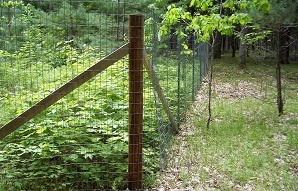 DEC’s Deer Management Assistance Program (DMAP) offers an avenue for landowners to meet deer management needs on their property, while providing an incentive to give licensed hunters access to deer and deer hunting. Permittees use DMAP to address crop damage, forest regeneration problems (the photo to the right depicts new forest growth in a 15-year deer exclosure), protect areas of sensitive and rare plants, enhance municipal deer harvest, and produce custom deer hunting opportunities.
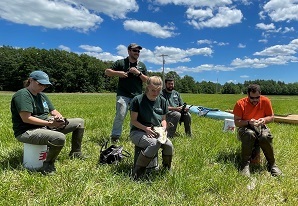 Each year, DEC biologists, technicians, partner agencies/universities and volunteers from around New York State band over 3,500 Canada geese and nearly 8,000 migratory game birds (e.g. geese, ducks, woodcock, and rails). The banding programs are vital to properly manage these populations and to ensure they are abundant for future generations to enjoy.
 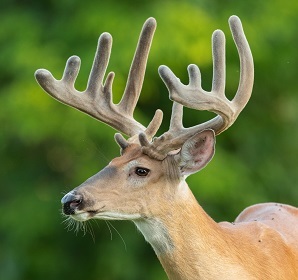 If you have been fortunate to spot a white-tailed buck in the past few weeks, whether it was grazing on your garden or running across the road, you may have noticed small, fuzzy antlers forming. Adult male deer shed and regrow their antlers each year. The soft material that now covers the forming antlers is known as “velvet.” As day length grows longer in the spring months, it triggers hormones that initiate the growth of velvet. The velvet is lined with blood cells that help promote and support antler growth during the summer months. Later this summer, the velvet will dry, and bucks will rub it off leaving hard, boney antlers.
|
The New York State Department of Environmental Conservation respects your right to privacy and welcomes your feedback | Update preferences or unsubscribe | Learn more about DEC Delivers |
|
Connect with DEC:    
|
|
| Basil Seggos, Commissioner | |