Protecting Pollinators and Reporting Violations – Air Mail!
The New York State Department of Environmental Conservation sent this bulletin on 06/25/2021 11:58 AM EDT |
| DEC Delivers - Information to keep you connected and informed from the NYS Department of Environmental Conservation |
| Share or view as a web page || Update preferences or unsubscribe |
This Month's Topics: |
Public & Stakeholder Participation Information:
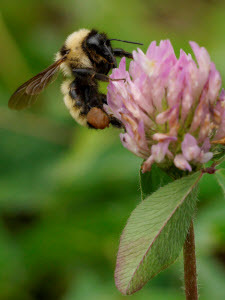
Air Mail! is the publication to announce public and stakeholder information about air quality topics. All NYS residents are environmental stakeholders – we welcome anyone to join the information sessions and other opportunities posted here. Protecting our Air and PollinatorsNYS is home to many pollinators, including bees, flies, wasps, beetles, butterflies, moths, and hummingbirds. These animals are critical to our environment and agricultural economy, providing approximately $344 million worth of pollination services each year. NYS is committed to promoting the health and recovery of pollinators through the New York State Pollinator Protection Plan (PDF) and 2020 Pollinator Protection Plan Update (PDF). Many plants rely on pollinating insects to reproduce and provide food for humans and animals. A study by Penn State found that bees may have a more challenging time locating plants when ground-level ozone levels are moderate to high. Ozone breaks down the scent molecules released by flowers that attract pollinators like bees. For example, the researchers found that one scent molecule they tested lasts nearly 40 hours in an ozone-free environment. However, it lasts only an hour in an ozone concentration of 120 parts per billion. The Penn State study also ran computer simulations to see how air pollution could impact bee foraging (finding food). They found that even just 60 parts per billion of ozone (a concentration the U.S. Environmental Protection Agency considers moderate) was enough to slow the bees’ ability to detect flowers. We can thank our pollinators for the continued existence of a huge variety of plants in NYS. Please do your part during National Pollinator Week (and every day) to decrease ozone-causing air pollution and protect our pollinators. Photo Caption: A yellow bumble bee visiting a flower. Yellow bumble bees are listed as Critically Imperiled (S1) in NYS by the New York Natural Heritage Program. Photo Credit: Miles Todaro, taken in Bridgehamton, NY. Suspect an Environmental Violation?When it comes to neighborhood safety, you can be a big help to the environment and DEC by reporting when you see something or someone illegally polluting the air. If you notice a suspected violation, there are several ways to let us know about it:
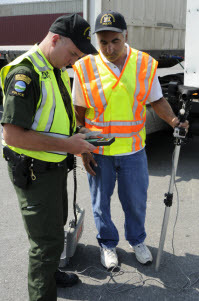
To help ensure a swift response to your complaint or tip, make sure to provide detailed information about what, where, and when you observed the air pollution event. You may request to file the complaint anonymously. Please use your best judgment when submitting a complaint and do your best to avoid risky situations altogether. Always observe from a safe distance if you think harmful gases or materials may be involved, and never trespass. Don’t be afraid to report potential violations, even if you think someone else already has. Tips from the public help DEC make sure we can all enjoy a clean environment and healthy air. Photo Caption: ECOs enforce the state’s environmental conservation laws. They can ticket members of the public as well as issue violations to businesses and industry for violating environmental conservation laws. Taking the Bus to Enjoy Some Clean Air FunHelp keep our air clean this summer by utilizing public transportation to run errands and take trips. If you are in the Capital Region of NY, then you can take the free Nature Bus (PDF). It serves Helpful Links:
Dates to Remember:
Stay Informed about Your Air QualityNYS' ozone season runs from April through September. DEC publishes ground-level ozone forecasts during ozone season and particulate matter pollution forecasts year-round using a scale called the Air Quality Index (AQI). DEC sends out an air quality alert when there is a high AQI value, which indicates polluted air. Individuals with pre-existing respiratory or cardiovascular conditions, and people who exercise outdoors should take caution during an air quality alert. Find out if an Air Quality Alert is in effect by calling the toll-free Ozone Hotline: 1-800-535-1345. The AQI can be accessed in three ways:
We would like to know what you think. Please send your Air Mail! questions or comments to us at DAR.web@dec.ny.gov. |
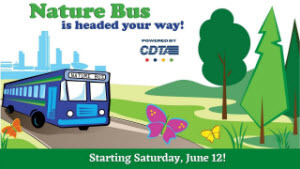 Albany city communities in Albany County this summer. Jump on board in the morning and spend your day exploring trees of the world at
|
The New York State Department of Environmental Conservation respects your right to privacy and welcomes your feedback | Update preferences or unsubscribe | Learn more about DEC Delivers |
|
Connect with DEC:    
|
|
| Basil Seggos, Commissioner | |