Saltwater Fishing & Boating Newsletter
The New York State Department of Environmental Conservation sent this bulletin on 06/17/2021 02:02 PM EDT |
| DEC Delivers - Information to keep you connected and informed from the NYS Department of Environmental Conservation |
| Share or view as a web page || Update preferences or unsubscribe |
Saltwater Fishing & Boating Newsletter |
In This Issue:
Changes to Commercial Fishing LimitsHorseshoe Crab Trip Limit ChangeFor holders of New York State Horseshoe Crab Permit only.
All horseshoe crab harvest must be reported on the vessel trip report (VTR). Weekly submission of horseshoe crab VTRs is required from April through July. If you need extra VTRs, or would like information on online reporting, please call 631-444-0857. Summer Flounder Trip Limit ChangeFor holders of a Summer Flounder Permit only.
This action is taken pursuant to the quota distribution schedule of subdivision 40.1 (u)(1)(2) and 44.3 (b)(2) of 6 NYCRR. Visit Commercial Harvest Limits for all current trip limits in effect. Get Involved and Become a Citizen ScientistDEC offers a variety of opportunities to participate in marine science research and conservation efforts. Participating in citizen science programs offers hands-on experiences in data collection and research methods, while also providing valuable data to scientists to make informed decisions to better conserve important local marine species. Learn about some of the projects you can help get involved with below: 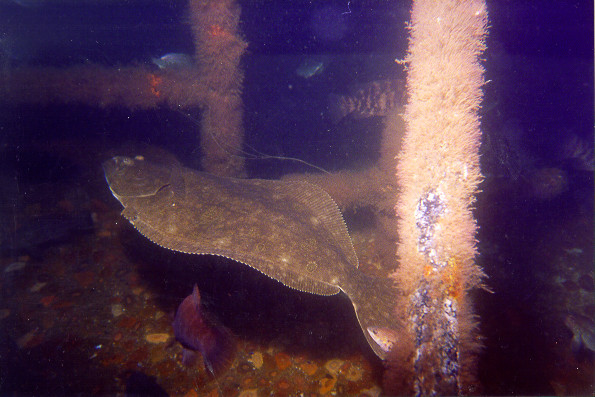
Artificial Reef Fishing & Diving Survey If you're fishing or diving on one of New York's artificial reefs, submit a digital survey of your observations. All the information you provide is important supplemental reef monitoring data and helps NYSDEC effectively manage and enhance our artificial reefs. (Photo of fluke taken by Rob Schepis) Atlantic Sturgeon Salvage Program Report sightings of live or dead sturgeon to help us better understand the occurrence of Atlantic Sturgeon in New York's waters. Report sturgeon in the Hudson River to 845-256-3073 and in marine waters to 631-444-0444, or by emailing us. 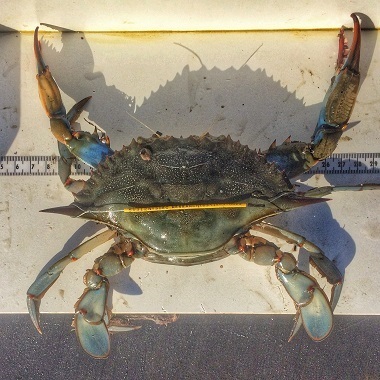
Blue Crab Recreational Survey & Tagging Program Do you fish recreationally for blue crab in New York's marine district? If so, we would like you to participate in our Volunteer Blue Crab Fishery Survey. Blue crabs are commonly targeted by recreational fishermen in New York, and monitoring catch and effort from the recreational community is vital to properly manage their populations. Also, if you catch a crab with a yellow-wired tag on it, please report it to DEC Blue Crab Tagging Program. Shark Spotter Submit your observations of sharks in the wild to help biologists record their presence in New York State waters and further understand local shark ecology and behavior. If you are fishing, boating, or enjoying the beach and observe a shark, please report your sighting using the DEC Shark Spotter digital survey. Striped Bass Cooperative Angler By joining the Striped Bass Cooperative Anglers Program (SBCA), you can take part in an effort to help manage and maintain a healthy striped bass population. Volunteer anglers will record fishing trip information and take scale samples from striped bass to be submitted to DEC. At the end of the season, the data is used to determine the fishing effort and helps to assess the striped bass population in the region. Long Island Coastal Bioblitz Seatuck Environmental Association, Long Island Sound Study, Peconic Estuary Partnership, South Shore Estuary Reserve, New York Sea Grant, and the Long Island Invasive Species Management Area (LIISMA) are hosting a bioblitz from June 26 to July 3, to engage the Long Island community in exploring all of the island’s incredible habitats and species diversity. The information collected during the bioblitz will help guide environmental groups in better preserving important habitats and wildlife. A training webinar will be provided on June 23 at 7:00 p.m. to introduce participants to the bioblitz format. For more information and to register for the training webinar, visit LI Coastal Bioblitz. For more exciting citizen science opportunities, visit Wildlife Monitoring Network Long Island, a one-stop-shop for wildlife monitoring surveys that are conducted for species found throughout Long Island. Register for New York's Recreational Marine Fishing Registry
The registry is required when fishing in the marine and coastal district waters or when fishing in the Hudson River and its tributaries for "migratory fish of the sea", such as striped bass. Register through DECALS online, by calling 1-866-933-2257, or visiting a License Issuing Agent. Also, be sure to always check New York's Recreational Saltwater Fishing Regulations for the current size limits, possession limits, and seasons. When out on the water this summer, keep an eye out for NOAA Fisheries Marine Recreational Information Program (MRIP) field interviewers that collect information on saltwater fishing activity at fishing access sites, such as boat ramps, docks, piers, bridges, and jetties. These shoreside interviews are part of the Access Point Angler Intercept Survey, which collects vital data used to produce estimates of total recreational catch. During the interview, an interviewer asks about your day of fishing and any fish you may have kept or released. They also weigh and measure the fish you kept - important information needed for fisheries stock assessments. All interviews are confidential, and interviewers play no role in law enforcement. Learn more about MRIP on NOAA Fisheries website. For more information on fishing in New York's marine waters, visit Saltwater Fishing. Public Comment DeadlinesProposed Changes to Whelk Harvesting DEC announced proposed changes to whelk harvesting regulations in New York's Marine and Coastal District to adopt a minimum size limit for whelk. The proposed changes will help protect immature females in the population and increase their potential to reach reproductive maturity. Proposed regulation changes include:
The proposed regulations and additional information are available on DEC's website. The proposal is available for public comment through June 21, 2021. Send written comments on the proposed regulations to: Kim McKown Recreational Striped Bass Circle Hook Requirements Effective April 21, 2021, anglers are required to use non-offset (inline) circle hooks when recreational fishing for striped bass with bait, which is defined as any whole or part of a marine or aquatic organism or terrestrial invertebrate. The full text of the regulation is available on DEC's website. The public comment period is open from May 12 through June 28, 2021.
The full text of the regulation is available on DEC's website. The public comment period is open through June 28, 2021. Submit written comments to: Carol Hoffman Visit Recreational Saltwater Fishing Regulations for current regulations in effect. |
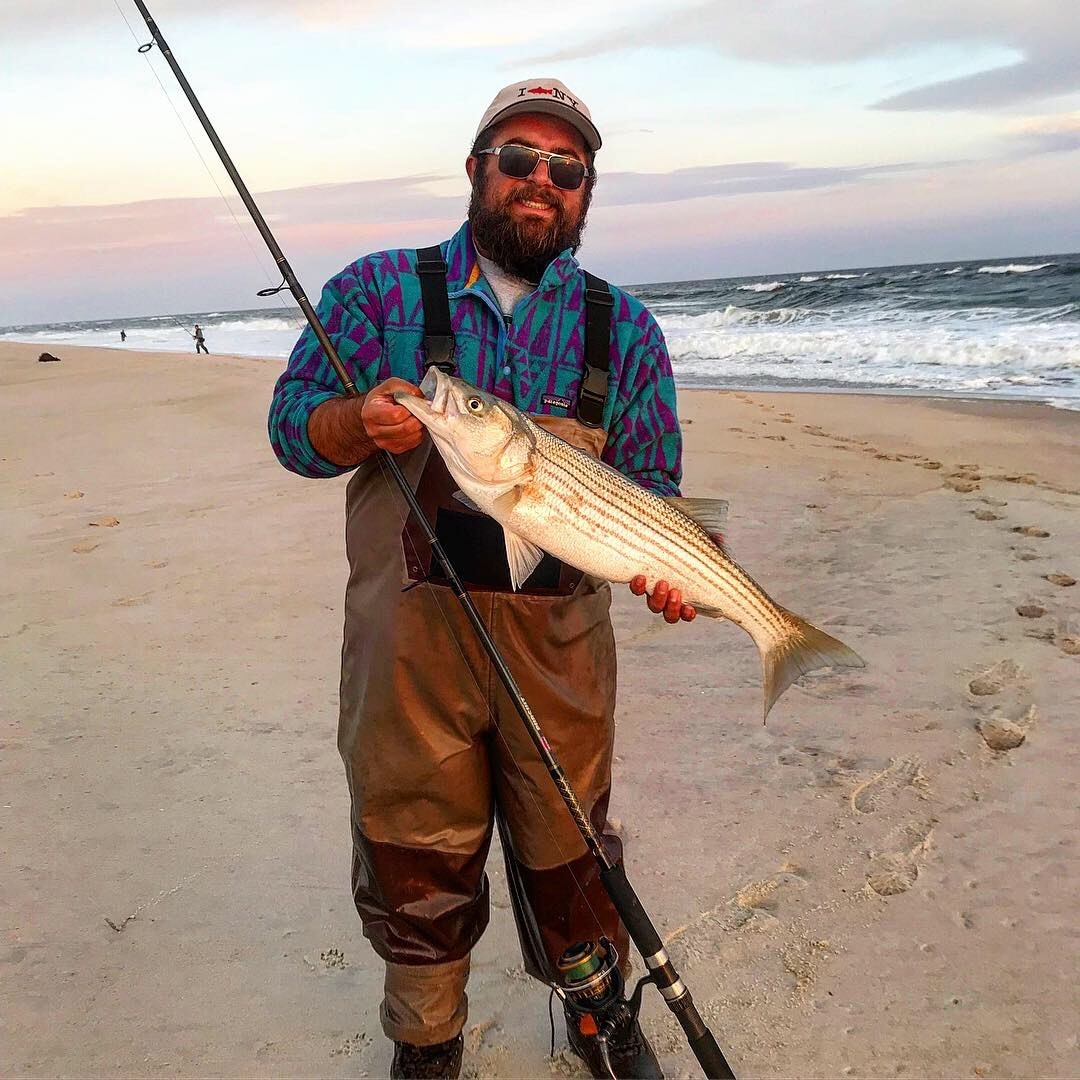 The marine waters of New York host varied and exciting fishing opportunities for recreational anglers. Before going fishing, enroll in the annual no-fee
|
The New York State Department of Environmental Conservation respects your right to privacy and welcomes your feedback | Update preferences or unsubscribe | Learn more about DEC Delivers |
|
Connect with DEC:    
|
|
| Basil Seggos, Commissioner | |