
DEC Adirondack Outdoor Recreation Bulletin - May 27, 2021
The New York State Department of Environmental Conservation sent this bulletin on 05/27/2021 05:25 PM EDT |
| DEC Delivers - Information to keep you connected and informed from the NYS Department of Environmental Conservation |
| Share or view as a web page || Update preferences or unsubscribe |
DEC Adirondack Outdoor Recreation BulletinMay 27, 2021 |
|
This bulletin provides only the most recent notices. Check the Adirondack Backcountry Information webpages for more detailed information on access, outdoor recreation infrastructure, and conditions. Emergency Situations: If you get lost or injured; keep calm and stay put. If you have cell service, call 911 or the DEC Forest Ranger Emergency Dispatch, 518-891-0235. Welcome to the Adirondacks. The Welcome to the Adirondacks webpage is the place to go if you are interested in learning more about the Adirondacks. It provides information about the Forest Preserve, conservation easement lands, outdoor recreation, and Leave No Trace. Love Our NY Lands. All New Yorkers and visitors should be able to access, enjoy, and feel welcome on state lands. These lands belong to all of us, our families, and our neighbors. While enjoying these shared spaces, be respectful of other visitors. Share trails, treat people with kindness, and leave things as you found them for others to enjoy. All of us have a responsibility to protect State lands for future generations. Learn more about how you can Love Our NY Lands. Hiker Information Stations
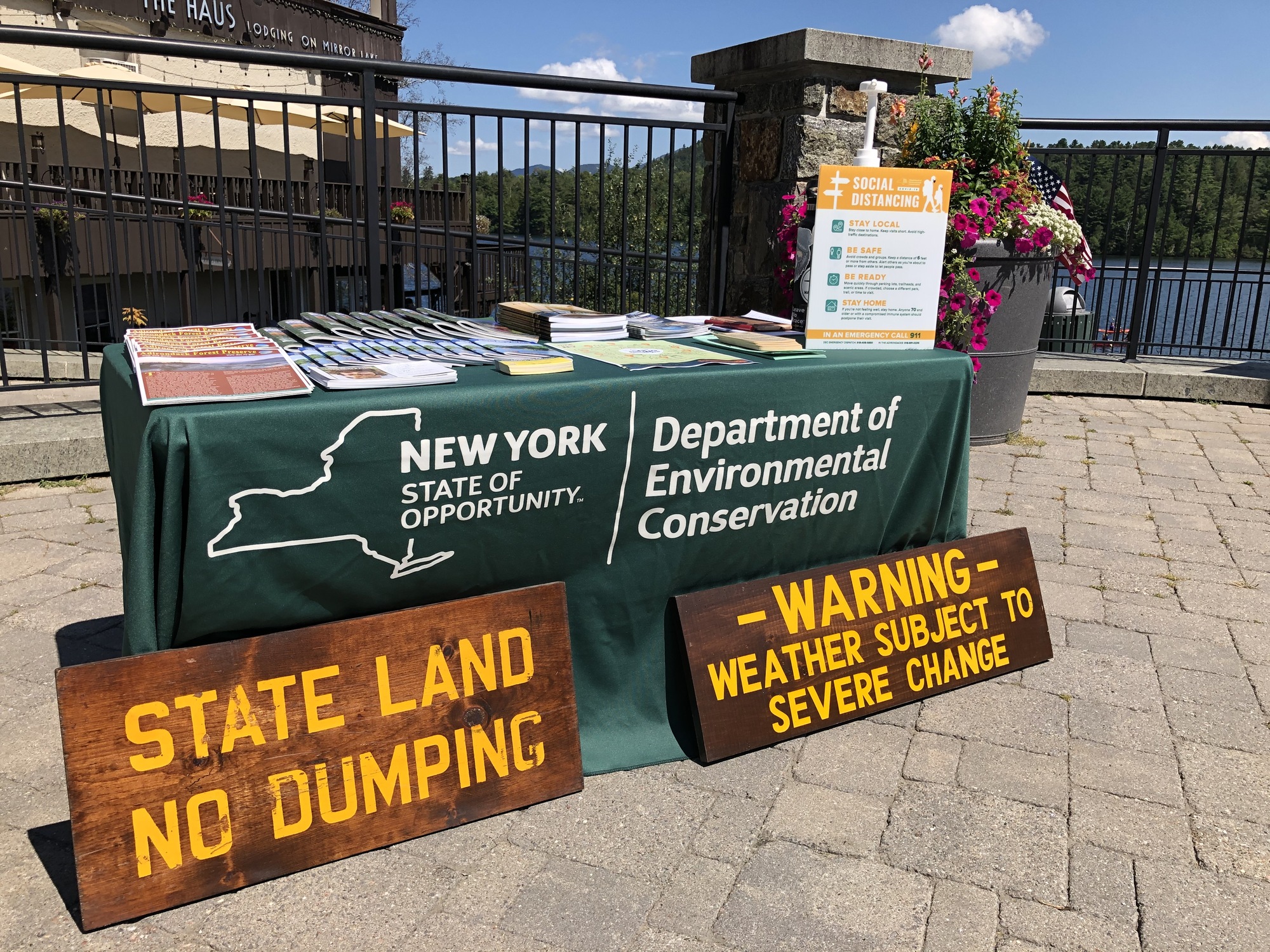
DEC’s Adirondack Hiker Information Stations will return this weekend and operate each weekend until Columbus Day, providing education and information to hikers and other recreationists during the busy spring, summer, and fall seasons. DEC encourages visitors to stop by a Hiker Information Station ahead of their weekend hiking trip. These stations provide information about parking, alternative hiking locations, local land use rules and regulations, safety and preparedness, and Leave No Trace. Please visit us at the following locations:
Prospect Mountain Opening Weekend
Please note the shuttle to the summit of Prospect Mountain is not available at this time. Until shuttles become available, admission fees will not be charged to access the highway. The accessible parking at the summit is currently under construction. Limited accessible parking spots will continue to be available during construction, but temporary closures of some areas may occur. Call (518) 668-5198 for current accessibility information. Recreation Highlight: “If You Care, Leave them There”
In the spring and summer, you may come across young wildlife that appear to be abandoned. In an effort to reduce the spread of COVID-19, New Yorkers are spending more time at home than normal and seeing more young birds and other wildlife as a result. While some are learning survival from one or both parents, others normally receive little or no parental care. Often, wild animal parents stay away from their young when people are near. The young are left hidden in a safe place and the parent may be nearby. Because of their behavior, the most common species to be mistakenly "rescued" by humans are young fawns, cottontail rabbits, and fledgling birds. When people attempt to handle or raise wildlife, these well-meaning acts of kindness tend to have the opposite result. Many of the animals soon die despite their best efforts. Recent NoticesThe following are the most recent notices pertaining to public lands in the Adirondacks. Please check the Adirondack Backcountry Information webpages for comprehensive and up-to-date information on seasonal road statuses, rock climbing closures, specific trail conditions, and other pertinent information. New: Saranac Lakes Wild Forest: A beaver dam is partially obstructing Spider Creek’s passage under Route 30 between Follensby Clear Pond and Upper Saranac Lake. Hinckley Reservoir Day Use Area: The Hinckley Reservoir Day Use Area, located in Herkimer County, will open for public recreation beginning Saturday, May 29. The area will be closed to swimming, although the beach remains open to visitors. Recreation opportunities at Hinckley include picnicking, paddling, and use of the beach. Swimming is not allowed because lifeguards are not currently available. For public safety, swimming is only permitted only when a lifeguard is on duty. Lake George Wild Forest:
Moose River Plains Complex: The entrance gates to Moose River Plains Camping Area has re-opened for the season following closure for the spring mud season. Road shoulders may still be soft in areas.
Raquette Boreal Complex (includes Raquette River Wild Forest, Raquette Jordan Boreal Primitive Area and nearby conservation easement tracts): Gates have re-opened following spring mud season. Ferris Lake Wild Forest: Powley Road is completely open. All storm damage and washouts have been repaired and the road is open and passable the entire length of the road. Pine Lake Primitive Area: Chain of Lakes Road (south) in the town of Indian Lake is open to the Hudson River. Township 19 Easement: O’Neil Flow Road in the town of Indian Lake is open for the season. Last Week: Terry Mountain State Forest: The Redd Road gate is now open. Lake George Wild Forest:
William C. Whitney Wilderness: The road to Lake Lila is now open. General Notices
Visit the main Adirondack Backcountry Information page for more trip-planning resources, including travel information, weather resources, and seasonally-specific information about Adirondack recreation. Fire Danger:
Muddy Trails Advisory: The Adirondacks are still under a muddy trails advisory. Hikers are encouraged to postpone hikes on trails above 2,500 feet until high elevation trails have dried and hardened. Snow and ice continue to melt at high elevations. Thin soils are susceptible to erosion and sensitive alpine vegetation can be easily damaged. Until conditions improve, explore lower elevation trails close to home and enjoy other forms of recreation. Visit DEC's website for a list of alternate Adirondack day hikes. Water Conditions: Water levels throughout the Adirondack region are below average or low for this time of year. Check the USGS Current Water Data for New York for stream flow of selected waters. Water temperatures are still cold in many places. Personal Flotation Devices (PFDs aka lifejackets) are strongly recommended to be worn by all anglers, boaters, and paddlers. Where bridges are not available, do not attempt stream crossings during periods of high, fast moving water. Ticks: Wear light-colored clothing with a tight weave to spot ticks easily. Wear enclosed shoes, long pants and a long-sleeved shirt. Tuck pant legs into socks or boots and shirt into pants. Check clothes and any exposed skin frequently for ticks while outdoors. Consider using insect repellent. Stay on cleared, well-traveled trails and walk in the center of trails. Avoid dense woods and bushy areas. Additional tips for tick prevention. Bear Canisters Required: NYSDEC requires the use of bear-resistant canisters by overnight users in the Eastern High Peaks Wilderness between April 1 And November 30. NYSDEC encourages campers to use bear-resistant canisters throughout the Adirondack backcountry. Bear canisters should be used to store all food, food garbage, toiletries, and other items with a scent. Canisters should be stored a minimum of 100ft from tents, lean-tos and cooking sites and kept closed whenever they are not being accessed. Learn more about bear canisters and avoiding human-bear conflicts. Adirondack Rock Climbing Closures: DEC closes certain rock climbing routes in the Adirondacks to protect nesting peregrine falcons. For a full list of closures, visit Adirondack Rock Climbing Route Closures. Once peregrine nest sites are determined, climbing routes that will not disturb nesting will be reopened. Routes that remain closed will reopen after the young have fledged. Thank you for your cooperation. For more information please contact the Bureau of Wildlife at (518) 623-1240. Seasonal Access Roads: Many seasonal access roads have re-opened following closures for the spring mud season. Check the Adirondack Backcountry Information pages for updates on specific road closures and openings. NYSDEC & AMR Pilot Reservation System: A no-cost pilot reservation system is now in effect at the Adirondack Mountain Reserve (AMR). The pilot program addresses public safety at a heavily traveled stretch on Route 73 in the town of Keene. AMR is a privately owned 7,000-acre land parcel that allows for limited public access through a conservation easement agreement with DEC. The pilot reservation system does not apply to other areas in the Adirondack Park. No-cost reservations are required May 1 through Oct. 31, 2021 for parking, daily access, and overnight access to trails through the AMR gate and the Noonmark and Round Mountain trailheads accessed through the AMR property. Reservations are available for dates a maximum of two weeks out. Walk-in users without a reservation will not be permitted. For a complete list of frequently asked questions, and to make a reservation, please visit hikeamr.org. Safety & Education
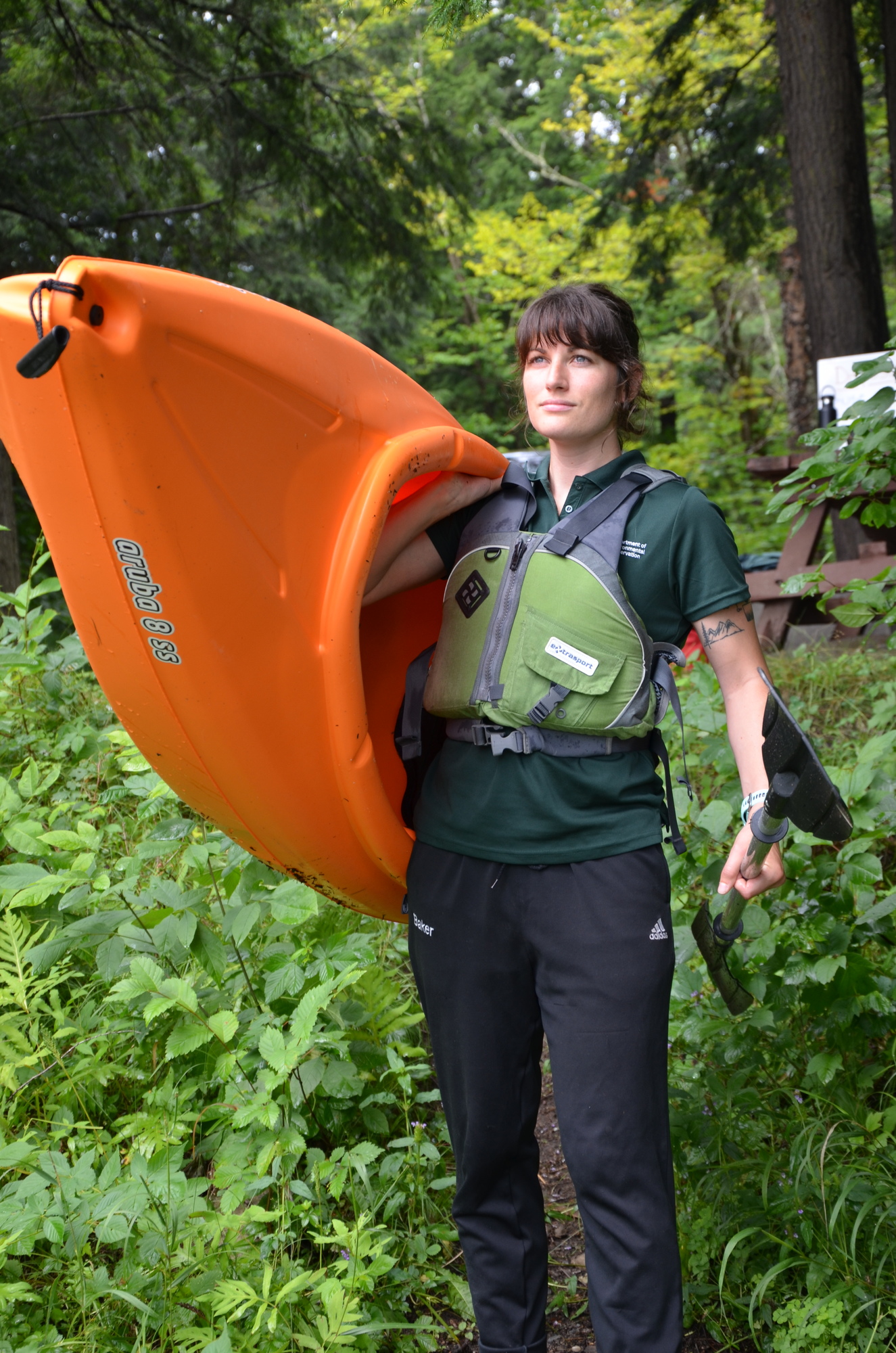
Spring recreation is fun and exciting. It can also be challenging and dangerous. Whether you’re going for a hike, a bike ride, a paddle, or fishing, Hike Smart NY can help you prepare with a list of 10 essentials, guidance on what to wear, and tips for planning your trip with safety and sustainability in mind. Paddling Safety Now that spring has brought warmer weather to the Adirondacks, many people are starting to get out on the water to enjoy paddling. The Adirondacks offers plentiful options for paddling – from wide open lakes to remote ponds and fast-moving rivers to winding waterways through dense marshlands. Whether you paddle in a canoe, a kayak, or on a stand up paddleboard, make sure you wear a Personal Floatation Device (PFD). Immersion in cold waters can quickly cause hypothermia, shock, and an inability to move. Falling into swift currents can easily result in being pulled and kept under water and collisions with rocks, logs and other objects causing injury. A properly fitted PFD can prevent drowning in these instances. State law requires all children under 12 to wear a PFD while on a watercraft. State law also requires all people on a pleasure vessel less than 21 feet long to wear a PFD between November 1 and May 1. Just because it is no longer required does not mean you should leave the PFD at home. Paddle safe by wearing your PFD at all times and following these other paddling safety tips:
Leave No Trace
Follow the Seven Principles of Leave No Trace to maintain minimal impact on the environment and the natural resources of the Adirondacks. Use proper trail etiquette to ensure an enjoyable experience for yourself and others, and tread lightly! Leave No Trace Tech Tips Leave No Trace education doesn’t need to be long-winded – sometimes all you need is a quick tech tip! Leave No Trace Tech Tips are bite-sized bits of Leave No Trace knowledge that provide handy reminders and easy-to-digest new information to help you leave even less trace this recreation season.
Tech Tip #9 – Be Careful with Fire Burn all wood to ash and be sure the fire is completely out and cold before you leave to avoid starting a wildfire. |
 Prospect Mountain Veterans Memorial Highway



|
The New York State Department of Environmental Conservation respects your right to privacy and welcomes your feedback | Update preferences or unsubscribe | Learn more about DEC Delivers |
|
Connect with DEC:    
|
|
| Basil Seggos, Commissioner | |