
DEC Adirondack Outdoor Recreation Bulletin - March 25, 2021
The New York State Department of Environmental Conservation sent this bulletin on 03/25/2021 04:35 PM EDT |
| DEC Delivers - Information to keep you connected and informed from the NYS Department of Environmental Conservation |
| Share or view as a web page || Update preferences or unsubscribe |
DEC Adirondack Outdoor Recreation BulletinMarch 25, 2021 |
|
This bulletin provides only the most recent notices. Check the Adirondack Backcountry Information webpages for more detailed information on access, outdoor recreation infrastructure, and conditions. Emergency Situations: If you get lost or injured; keep calm and stay put. If you have cell service, call 911 or the DEC Forest Ranger Emergency Dispatch, 518-891-0235. Welcome to the Adirondacks. The Welcome to the Adirondacks webpage is the place to go if you are interested in learning more about the Adirondacks. It provides information about the Forest Preserve, conservation easement lands, outdoor recreation, and Leave No Trace. Recreation Highlight: Draft Recreation Management Plan for Flatrock Mountain Conservation Easement Available for Public Comment
DEC is encouraging public comment on the draft Recreation Management Plan (RMP) for Flatrock Mountain Conservation Easement. The 511-acre Flatrock Mountain Conservation Easement tract is located southwest of Old Forge in the town of Webb, Herkimer County, between State Route 28 and Middle Branch Moose River. The draft RMP proposes:
The draft RMP and a PowerPoint presentation are available for public review. DEC will accept public comments through April 23, 2021, by email: r6.ump@dec.ny.gov or by regular mail, addressed to Michael Marsh, Forester, NYS-DEC 225 N. Main Street Herkimer, NY 13350. Recent NoticesThe following are the most recent notices pertaining to public lands in the Adirondacks. Please check the Adirondack Backcountry Information webpages for comprehensive and up-to-date information on seasonal road statuses, rock climbing closures, specific trail conditions, and other pertinent information. New: Northern Adirondacks: There is a flood watch in effect for the northern regions of the Adirondacks this weekend. Heavy rainfall combined with continued snowmelt is expected to swell rivers and waterways. Use extreme caution when driving or walking near waterways and at water crossings. Do not attempt to drive through flooded roads or flooded waterways. High Peaks Wilderness:
Saranac Lakes Wild Forest: All snowmobile trail gates in the unit will be closed this week. Debar Mountain Wild Forest: All snowmobile trail gates in the unit will be closed this week. Sable Highlands CE/Chateaugay Woodlands:
Kings Bay Wildlife Management Area: The gate that provides winter access for ice fishing on Catfish Bay has been closed for the season. Perkins Clearing Conservation Easement: The gates on Perkins Clearing Road and Jessup River Road are now locked for mud season. These gates typically re-open in late May. Essex Chain Lakes Complex: Snowmobile trail C8A is now closed for the season. Independence River Wild Forest: All snowmobile trail gates in the unit will be closed this week, including those on the Three Lakes Conservation Easement. Watson’s East Triangle Wild Forest: All snowmobile trail gates in the unit will be closed this week, including those on the Croghan and Oswegatchie Conservation Easements. Black River Wild Forest: Gates providing access to the following roads and trails have been closed for the spring mud season:
Last Week: High Peaks Wilderness: The gate on Coreys Road will remain closed until mid-May. Moose River Plains Complex: Gates on the Limekiln Lake-Cedar River Road are closed for mud season. Lake Desolation State Forest and Conservation Easement: Snowmobile trails in the Lake Desolation area are closed. Trails in northwestern Saratoga County are managed by the Saratoga Snowmobile Association. Siamese Ponds Wilderness: The seasonal section of the Old Farm Road that leads to the State parking lot is closed for mud season. Terry Mountain State Forest: The gate on Redd Road is closed. Taylor Pond Wild Forest: Snowmobile gates within this unit are closed. Lake George Wild Forest: Shelving Rock Road, which provides access to the Hogtown parking area, Dacy Clearing, and the Shelving Rock Day Use Area, has been closed for mud season. The gate is approximately 1 mile before the Hogtown Parking area. Private landowners have access beyond this, so do not block the gate. Snowmobile gates in this area are closed as well. Raquette Boreal Complex: Seasonal access gates are closed for mud season. Aldrich Pond Wild Forest: Seasonal access gates are closed for mud season. Bog River Complex: Seasonal access gates are closed for mud season. Cranberry Lake Complex: Seasonal access gates are closed for mud season. Grass River Complex:
Black River Wild Forest: Gates providing access to the following roads and trails are anticipated to close for mud season:
Fulton Chain Wild Forest: Gates on both ends of the Safford Pond Trail (aka Town of Webb Trail 10) are closed for mud season. Flatrock Mountain Conservation Easement: Gates on both ends of the trail that passes through the easement property are close for mud season. Ferris Lake Wild Forest: The following gates are closed for mud season.
General Notices
Visit the main Adirondack Backcountry Information page for more trip-planning resources, including travel information, weather resources, and seasonally-specific information about Adirondack recreation. Winter Conditions: Check the forecast for your destination and pack and plan accordingly. Conditions will be more severe on summits, with freezing temperatures, snow, ice, and strong winds. Take wind chill into consideration when preparing for temperatures. Check the National Weather Service Northern Adirondacks and Southern Adirondacks Mountain Point Forecasts for selected summits. Snow Accumulation: Snow accumulation data is collected every other week at a variety of Adirondack locations. Find the most recent snow accumulation data for the area you plan to visit. Interactive maps are also available on the National Weather Service website. Ice Safety: A minimum of three to four inches of solid ice is the general rule for safety. Ice thickness, however, is not uniform on any body of water. Learn more about ice safety. As temperatures warm and ice begins to melt, use extreme caution, especially at outlets. Snowmobiling: Many trails are now closed due to spring conditions. Check local club, county, and state webpages and resources, including the NYSSA Snowmobile Webmap, for up-to-date snowmobile trail information. Seasonal Access Roads: Many seasonal access roads that have been closed for the winter season will remain closed until the end of spring mud season. Some roads that were opened for snowmobile traffic are beginning to close for spring mud season as well. Check the Adirondack Backcountry Information pages for updates on specific road closures and openings. Prevent the Spread of COVID-19: COVID-19 continues to spread throughout New York State, including in the Adirondacks. Help prevent the spread and keep yourself safe by continuing to Play Smart, Play Safe, Play Local. Safety & Education
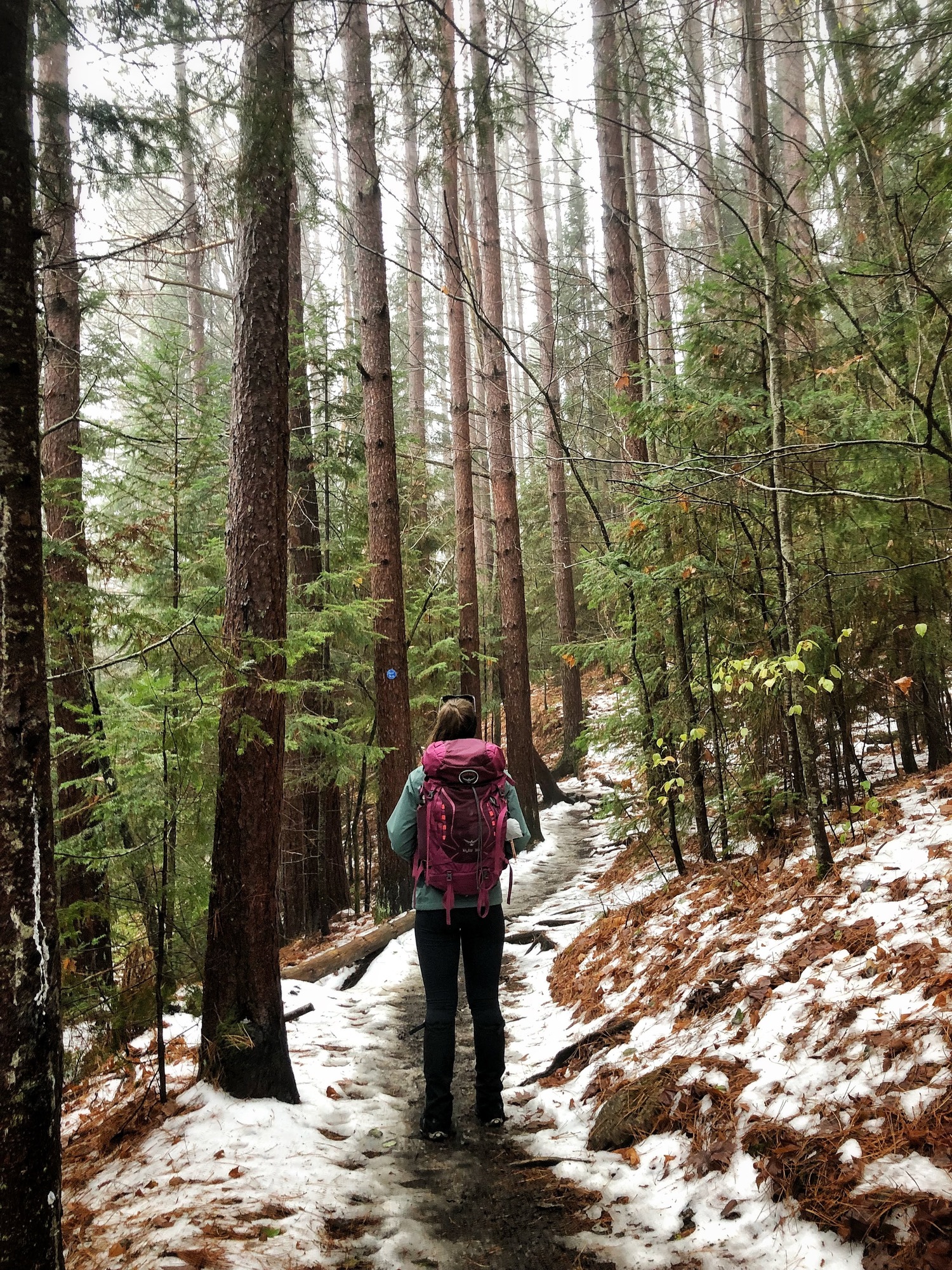
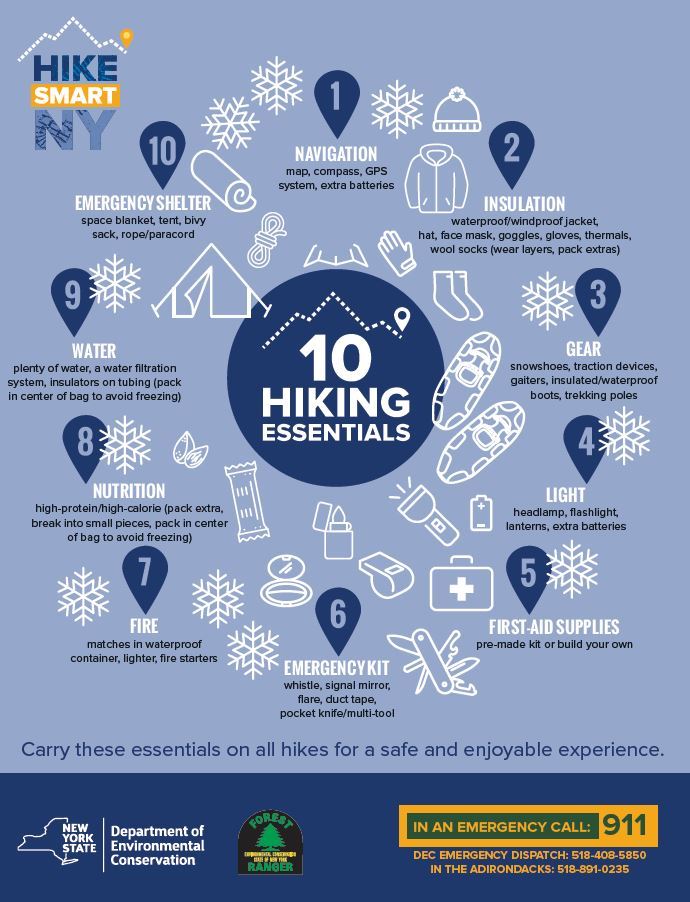
Spring recreation is fun and exciting. It can also be challenging and dangerous. Whether you’re going for a hike, a ski, snowmobiling or ice fishing, Hike Smart NY can help you prepare with a list of 10 essentials, guidance on what to wear, and tips for planning your trip with safety and sustainability in mind. Hiking Muddy Trails In the Adirondacks we have another name for spring - mud season. As the deep snow that accumulated all winter finally melts, the ground becomes saturated and dirt trails get muddy. Add in spring rains and things start to get very mushy. In these unfavorable conditions, there are steps you can take to protect yourself and the trails. Help protect the integrity of trails by walking through mud, not around it. Walking around muddy sections can lead to trail widening and damage trailside vegetation. Choose lower elevation hikes to avoid the most delicate trails. This will also help you avoid the most dangerous conditions, where the combination of mud, ice, and rotten snow on steep slopes can lead to slips and falls. During mud season, it is important to protect your feet from the elements. Wear waterproof boots and bring extra dry socks. Change your socks as often as is necessary to keep your feet warm and dry. Gaiters can also help keep your feet and lower legs dry. Dry feet and legs are less liable to get cold, which in turn helps you prevent hypothermia. Keeping your feet dry on longer hikes also prevents unpleasant skin conditions like trench foot. Leave No Trace
Follow the Seven Principles of Leave No Trace to maintain minimal impact on the environment and the natural resources of the Adirondacks. Use proper trail etiquette to ensure an enjoyable experience for yourself and others, and tread lightly! Respect Wildlife – Be Prepared for Bears As bears begin to emerge from their dens, they use their sensitive noses to find food. Camp food and other human-related food sources such as bird feeders, pet food, and garbage can attract bears and lead to potential conflicts. Feeding bears either intentionally, which is illegal, or unintentionally through careless property management, has consequences for entire communities, as well as the bears themselves. To reduce the potential for human-bear conflicts at home, remove any attractants. Take down bird feeders and clean up any remaining bird seed by April 1, store garbage inside secure buildings, and feed pets indoors. Campers should store food properly in bear canisters or other effective methods of bear-resistant storage and use the camping triangle to minimize food smell at tent and lean-to sites. The camping triangle refers to three points – one for sleeping, one for cooking and eating, and one for storing your food. These three points should all be about 100 yards away from each other to prevent attracting bears to your sleeping area or leading them to your food stores. By taking these simple steps, you can help to ensure bears will find food naturally, which in turn protects people, property, and bears. For more information, visit DEC’s webpage on reducing human-bear conflicts. |

|
The New York State Department of Environmental Conservation respects your right to privacy and welcomes your feedback | Update preferences or unsubscribe | Learn more about DEC Delivers |
|
Connect with DEC:    
|
|
| Basil Seggos, Commissioner | |