
DEC Adirondack Outdoor Recreation Bulletin - March 18, 2021
The New York State Department of Environmental Conservation sent this bulletin on 03/18/2021 03:35 PM EDT |
| DEC Delivers - Information to keep you connected and informed from the NYS Department of Environmental Conservation |
| Share or view as a web page || Update preferences or unsubscribe |
DEC Adirondack Outdoor Recreation BulletinMarch 18, 2021 |
|
This bulletin provides only the most recent notices. Check the Adirondack Backcountry Information webpages for more detailed information on access, outdoor recreation infrastructure, and conditions. Emergency Situations: If you get lost or injured; keep calm and stay put. If you have cell service, call 911 or the DEC Forest Ranger Emergency Dispatch, 518-891-0235. Welcome to the Adirondacks. The Welcome to the Adirondacks webpage is the place to go if you are interested in learning more about the Adirondacks. It provides information about the Forest Preserve, conservation easement lands, outdoor recreation, and Leave No Trace. Recreation Highlight: Prevent the Spread of Aquatic Invasive Species: Best Practices for Adirondack Anglers
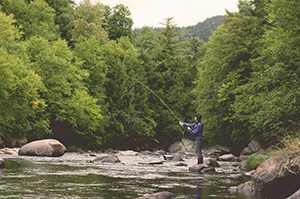
Join the Adirondack Park Invasive Plant Program on Wednesday, March 24 at 10 a.m. for a special, one-hour presentation on preventing the spread of aquatic invasive species in Adirondack waters. From competitive plants to hungry invertebrates, invasive species harming aquatic habitats are almost always introduced to new areas by people—on our waders, on our boats, or in our bait buckets. Protect the waters you love to fish and prepare for the upcoming Adirondack fishing season by understanding best practices to prevent the spread of invasive plants and animals. RSVP for this free virtual event now. Recent NoticesThe following are the most recent notices pertaining to public lands in the Adirondacks. Please check the Adirondack Backcountry Information webpages for comprehensive and up-to-date information on seasonal road statuses, rock climbing closures, specific trail conditions, and other pertinent information. New High Peaks Wilderness:
Moose River Plains Complex: Gates on the Limekiln Lake-Cedar River Road are closed for mud season. Lake Desolation State Forest and Conservation Easement: Snowmobile trails in the Lake Desolation area are closed. Trails in northwestern Saratoga County are managed by the Saratoga Snowmobile Association. Siamese Ponds Wilderness: The seasonal section of the Old Farm Road that leads to the State parking lot is closed for mud season. Terry Mountain State Forest: The gate on Redd Road will close next week. Taylor Pond Wild Forest: Snowmobile gates within this unit will close next week. Lake George Wild Forest: Shelving Rock Road, which provides access to the Hogtown parking area, Dacy Clearing, and the Shelving Rock Day Use Area, has been closed for mud season. The gate is approximately 1 mile before the Hogtown Parking area. Private landowners have access beyond this, so do not block the gate. Snowmobile gates in this area are closed as well. Raquette Boreal Complex: Mud gate closures have begun for the spring mud season. All gates are anticipated to be closed by the end of next week. Aldrich Pond Wild Forest: Mud gate closures have begun for the spring mud season. All gates are anticipated to be closed by the end of next week. Bog River Complex: Mud gate closures have begun for the spring mud season. All gates are anticipated to be closed by the end of next week. Cranberry Lake Complex: Mud gate closures have begun for the spring mud season. All gates are anticipated to be closed by the end of next week. Grass River Complex:
Black River Wild Forest: Gates providing access to the following roads and trails are anticipated to close for mud season next week:
Fulton Chain Wild Forest: Gates on both ends of the Safford Pond Trail (aka Town of Webb Trail 10) are anticipated to close for mud season next week. Flatrock Mountain Conservation Easement: Gates on both ends of the trail that passes through the easement property are anticipated to close for mud season next week. Ferris Lake Wild Forest: The following gates are anticipated to close for mud season next week.
General Notices
Visit the main Adirondack Backcountry Information page for more trip-planning resources, including travel information, weather resources, and seasonally-specific information about Adirondack recreation. Winter Conditions: Check the forecast for your destination and pack and plan accordingly. Conditions will be more severe on summits, with below freezing temperatures, snow, ice, and strong winds. Take wind chill into consideration when preparing for temperatures. Check the National Weather Service Northern Adirondacks and Southern Adirondacks Mountain Point Forecasts for selected summits. Snow Accumulation: Snow accumulation data is collected every other week at a variety of Adirondack locations. Find the most recent snow accumulation data for the area you plan to visit. Interactive maps are also available on the National Weather Service website. Ice Safety: A minimum of three to four inches of solid ice is the general rule for safety. Ice thickness, however, is not uniform on any body of water. Learn more about ice safety. Snowmobiling: Many trails are closing due to spring conditions. Check local club, county, and state webpages and resources, including the NYSSA Snowmobile Webmap, for up-to-date snowmobile trail information. Seasonal Access Roads: Many seasonal access roads that have been closed for the winter season will remain closed until the end of spring mud season. Some roads that were opened for snowmobile traffic are beginning to close for spring mud season as well. Check the Adirondack Backcountry Information pages for updates on specific road closures and openings. Prevent the Spread of COVID-19: COVID-19 continues to spread throughout New York State, including in the Adirondacks. Help prevent the spread and keep yourself safe by continuing to Play Smart, Play Safe, Play Local. Safety & Education
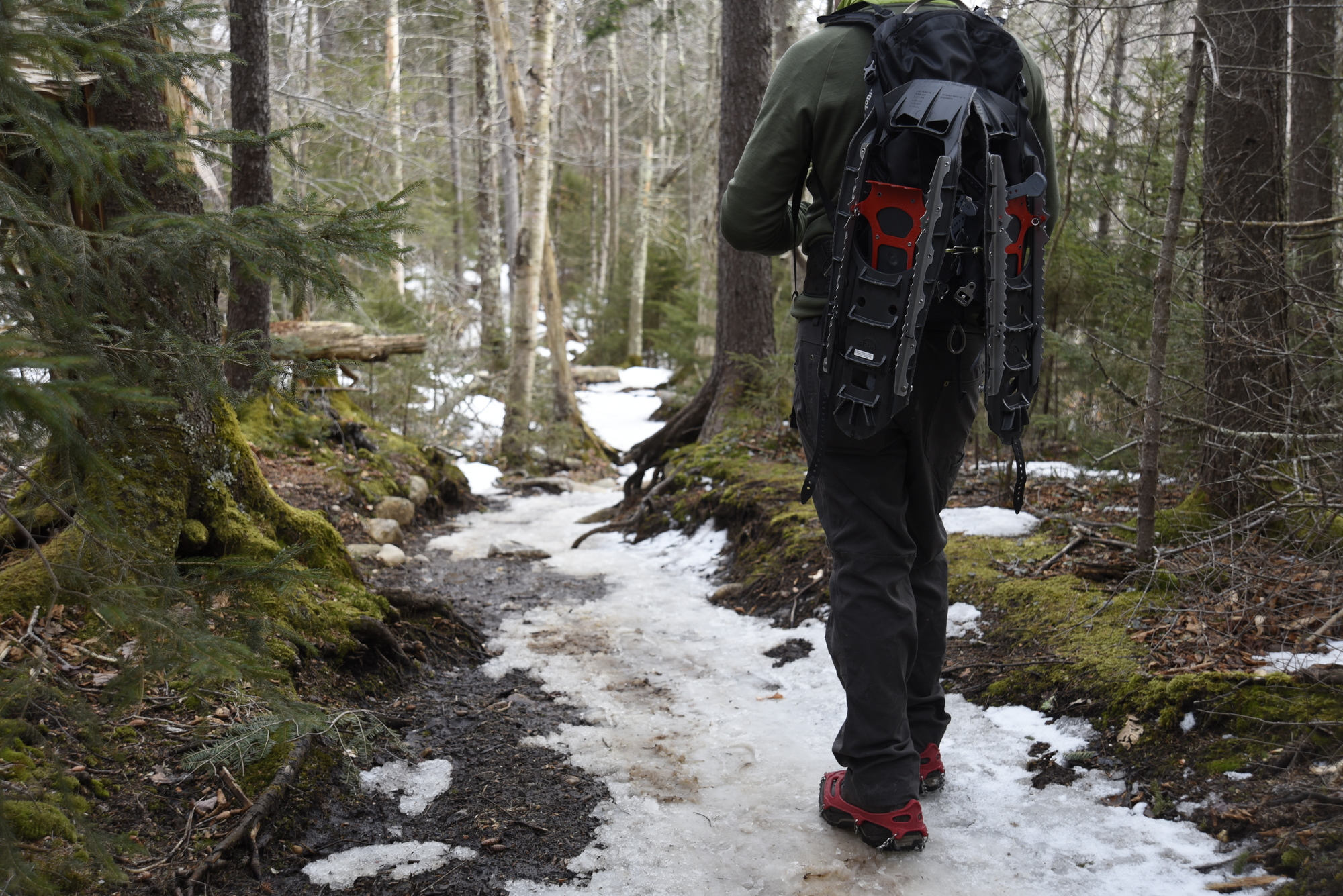
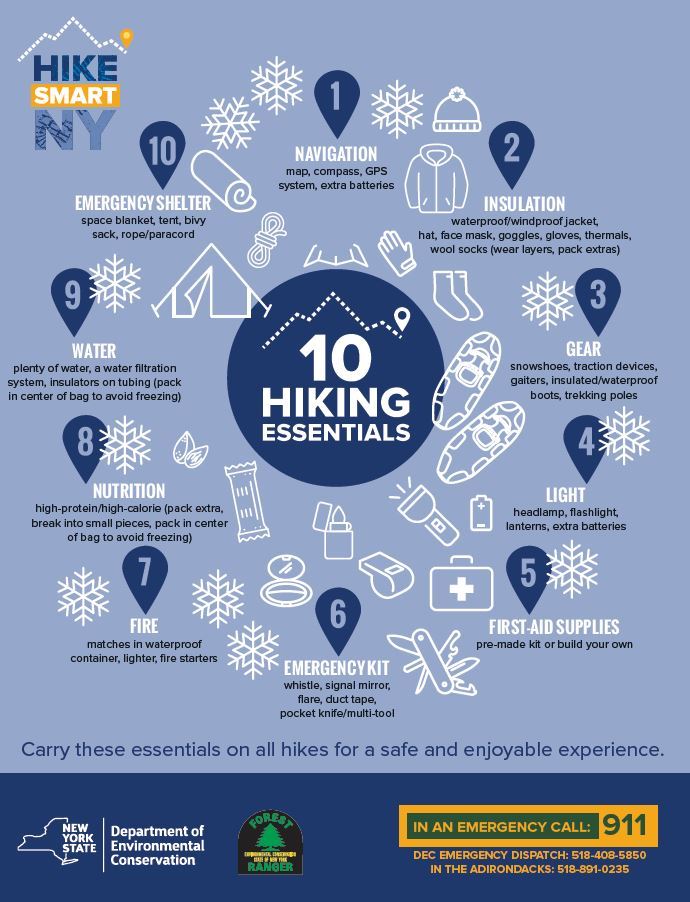
Winter recreation is fun and exciting. It can also be challenging and dangerous. Whether you’re going for a hike, a ski, snowmobiling or ice fishing, Hike Smart NY can help you prepare with a list of 10 essentials, guidance on what to wear, and tips for planning your trip with safety and sustainability in mind. Hiking on Monorails Spring hiking can be a balancing act, especially when you encounter monorail conditions. Monorails form when soft snow at the sides of trails melts away but the snow at the center of the trail, which has been packed down from repeated use, remains. These thin strips of hardened snow often turn to ice in the freeze/thaw cycle of spring. Monorail conditions can make hiking difficult. Even once the majority the of snow has melted, it is important to still bring and wear appropriate foot traction devices to make travel on monorails easier and safer. Microspikes can be sufficient for flat sections of trail, but crampons will be most effective for ice on steep grades. Consider using trekking poles to assist with balance. Being prepared to walk on monorails also allows you to stick to the center of the trail, which protects delicate trail edges and prevents trail widening. Leave No Trace
Follow the Seven Principles of Leave No Trace to maintain minimal impact on the environment and the natural resources of the Adirondacks. Use proper trail etiquette to ensure an enjoyable experience for yourself and others, and tread lightly! A Brief History of Leave No Trace The Leave No Trace Center for Outdoor Ethics’ mission is to protect the outdoors by teaching and inspiring people to enjoy it responsibly. The Center accomplishes this mission by delivering cutting-edge education and research to millions of people every year. But how did Leave No Trace come to be? It is important to first note that the concept of stewardship for the outdoors is centuries old and is a pillar of many Native American and Indigenous cultures. The Leave No Trace program as we know it today took root in 1987 when a “no trace” program for wilderness and backcountry travel was developed by the U.S. Forest Service, National Park Service and Bureau of Land Management and the three organizations cooperatively distributed a pamphlet titled, “Leave No Trace Land Ethics.” Soon after, in the early 1990s, the National Outdoor Leadership School (NOLS) was asked to develop education training for the program. In 1993, an Outdoor Recreation Summit with land management agencies, NGOs and members of the outdoor industry convened to form an independent Leave No Trace organization. Leave No Trace, Inc., was incorporated as a 501(c)(3), nonprofit organization in 1994 and later that year entered into the first of a series of Memorandums of Understandings with the four primary federal land management agencies. They have since been joined by the United States Army Corps of Engineers and the National Association of State Parks Directors. Today, the Leave No Trace Center for Outdoor Ethics reaches over 15 million Americans and people from dozens of countries each year with conservation initiatives, education, training, research and outreach. A national, volunteer-based board of directors made up of leaders from the outdoor industry, national youth-serving organizations, nonprofit organizations, and the scientific community provide strategic leadership and set policy. A staff headquartered in Boulder, Colorado, carry out the organization’s programs and mission-related work. |
|
The New York State Department of Environmental Conservation respects your right to privacy and welcomes your feedback | Update preferences or unsubscribe | Learn more about DEC Delivers |
|
Connect with DEC:    
|
|
| Basil Seggos, Commissioner | |