
DEC Adirondack Outdoor Recreation Bulletin - February 18, 2021
The New York State Department of Environmental Conservation sent this bulletin on 02/18/2021 04:50 PM EST |
| DEC Delivers - Information to keep you connected and informed from the NYS Department of Environmental Conservation |
| Share or view as a web page || Update preferences or unsubscribe |
DEC Adirondack Outdoor Recreation BulletinFebruary 18, 2021 |
|
This bulletin provides only the most recent notices. Check the Adirondack Backcountry Information webpages for more detailed information on access, outdoor recreation infrastructure, and conditions. Emergency Situations: If you get lost or injured; keep calm and stay put. If you have cell service, call 911 or the DEC Forest Ranger Emergency Dispatch, 518-891-0235. Welcome to the Adirondacks. The Welcome to the Adirondacks webpage is the place to go if you are interested in learning more about the Adirondacks. It provides information about the Forest Preserve, conservation easement lands, outdoor recreation, and Leave No Trace. Recreation Highlight: Snowshoe Requirements in the High Peaks Wilderness
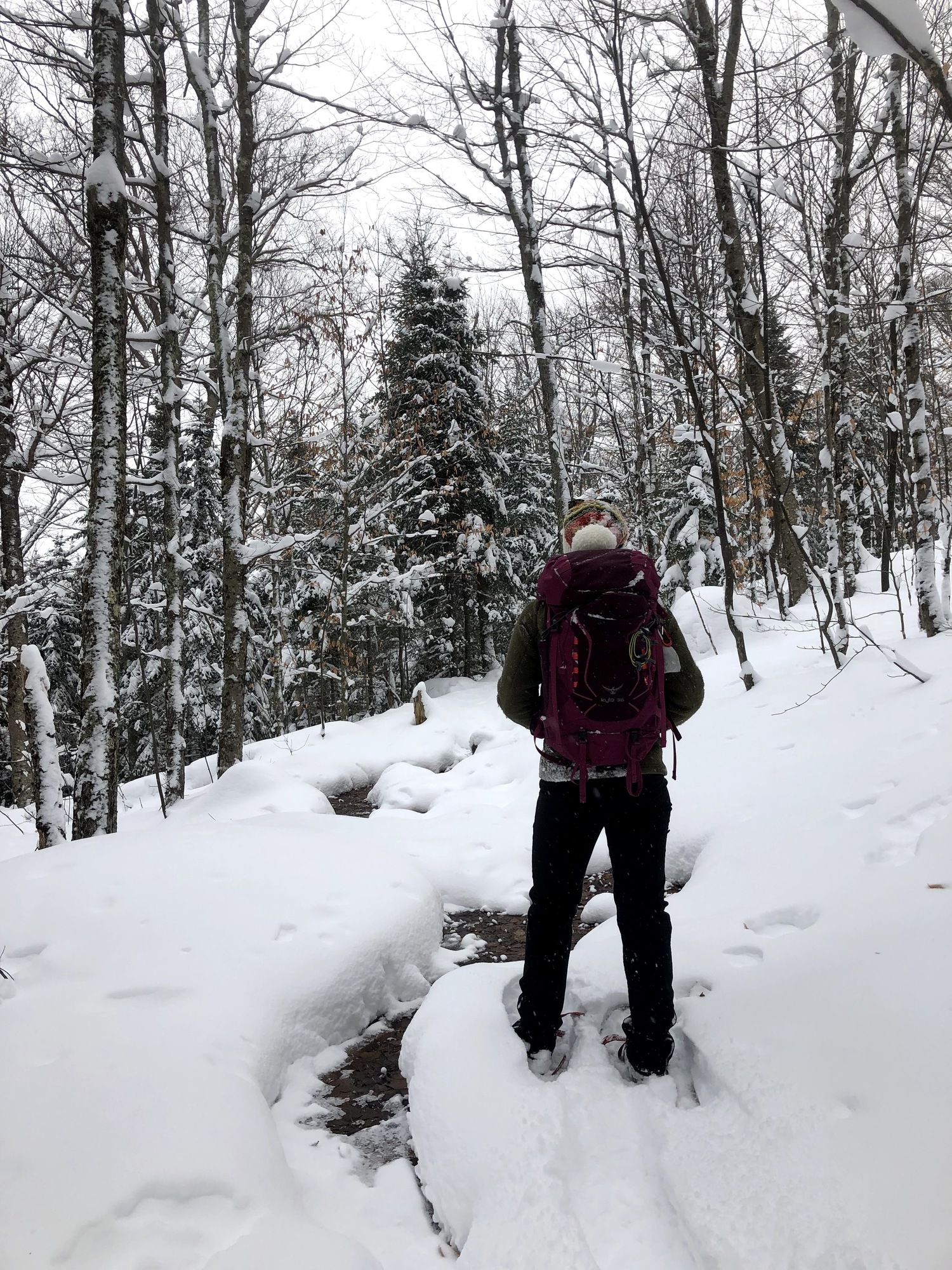
If you’re planning to hike in the High Peaks region this winter, you may have heard that snowshoes are required to be worn once snow depths reach eight inches. But why is that, and what does it mean for you? Snow can get very deep in the High Peaks Wilderness. Currently, there is close to three feet of snow at base elevations and five to six feet on summits. When snow gets this deep, staying on the surface is vital to your safety and the safety of others. Snowshoes redistribute weight and help hikers float on the surface of deep snow. This prevents the deep holes, known as postholes, created by bare boots. Note that carrying snowshoes with you is not sufficient – they must be worn to prevent falls and postholing. It might seem like snowshoes are unnecessary when trails become packed down from repeated travel, but that is not the case. Snow alongside the hardpacked trails will still be soft. Imagine stepping off to the side to let another group pass and falling feet down into the snow. Such falls can lead to injury and leave dangerous traps along the trail. Even on hardpacked trails bare boots can still create holes and divots in the snow that might cause others – especially skiers – to fall. There are some instances when you might have to switch your snowshoes for other traction devices. When you encounter thick, steep ice, swap out your snowshoes for crampons. As soon as you are past the ice, put your snowshoes back on. It takes practice to be able to walk in snowshoes comfortably. Practice at home, in familiar locations, and on short walks before attempting a big hike. Using trekking poles can help with balance. Recent NoticesThe following are the most recent notices pertaining to public lands in the Adirondacks. Please check the Adirondack Backcountry Information webpages for comprehensive and up-to-date information on seasonal road statuses, rock climbing closures, specific trail conditions, and other pertinent information. New High Peaks Wilderness:
Saranac Lake Wild Forest: The C7 snowmobile trail between Tupper Lake and Lake Clear can be used by snowmobiles. Work on the rail removal project is paused until spring. Riders should pay attention for any caution or warning signs. Last Week Lake George Wild Forest: The Dacy Clearing Road gate is now open for snowmobiles. Black River Wild Forest: The Wolf Lake Landing Road in McKeever is a groomed snowmobile trail during the winter. This includes where the McKeever Trailhead Parking Area is located. Vehicles should not attempt to drive into the McKeever Trailhead, nor down the Wolf Lake Landing Road, when the road is covered with snow and/or ice. Multiple vehicles have become stuck when attempting to drive in and needed to be towed out. There is no official winter parking at this location. General Notices
Visit the main Adirondack Backcountry Information page for more trip-planning resources, including travel information, weather resources, and seasonally-specific information about Adirondack recreation. Winter Conditions: Check the forecast for your destination and pack and plan accordingly. Conditions will be more severe on summits with below freezing temperatures, snow, ice, and strong winds. Take wind chill into consideration when preparing for temperatures. Check the National Weather Service Northern Adirondacks and Southern Adirondacks Mountain Point Forecasts for selected summits. Avalanche Risk: Backcountry downhill skiers, snowboarders, and others who may traverse slides or steep, open terrain in the High Peaks Region of the Adirondacks should be aware of and prepared for avalanche conditions. Additional information on avalanche danger, preparedness, and safety precautions is available on the DEC website. Snow Accumulation: Snow accumulation data is collected every other week at a variety of Adirondack locations. Find the most recent snow accumulation data for the area you plan to visit. Interactive maps are also available on the National Weather Service website. Ice Safety: A minimum of three to four inches of solid ice is the general rule for safety. Ice thickness, however, is not uniform on any body of water. Learn more about ice safety. Snowmobiling: Check local club, county, and state webpages and resources, including the NYSSA Snowmobile Webmap, for up-to-date snowmobile trail information. Lake George Boating Access Survey for Mossy Point and Roger’s Rock Boat Launches: DEC is conducting a survey to elicit public feedback on the overnight gate closure program at Mossy Point and Roger’s Rock boat launches. The information gathered will inform a more permanent program for future boating seasons and support the state's ongoing efforts to protect Lake George from invasive pests. We encourage boaters that have used either access sites to take a brief survey. The survey and comment period will remain open until March 12, 2021. Comments may also be submitted by email to info.r5@dec.ny.gov. Seasonal Access Roads: Most seasonal access roads have closed for the winter season. Check the Adirondack Backcountry Information pages for updates on specific road closures. Some roads may remain open if conditions allow. Prevent the Spread of COVID-19: COVID-19 continues to spread throughout New York State, including in the Adirondacks. Help prevent the spread and keep yourself safe by continuing to Play Smart, Play Safe, Play Local. Safety & Education
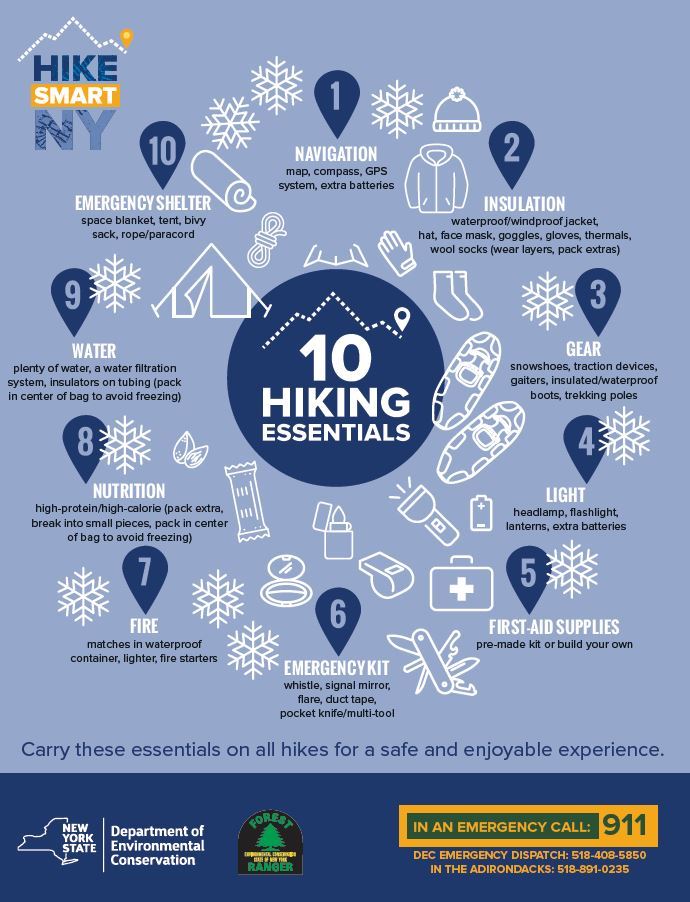
Winter recreation is fun and exciting. It can also be challenging and dangerous. Whether you’re going for a hike, a ski, snowmobiling or ice fishing, Hike Smart NY can help you prepare with a list of 10 essentials, guidance on what to wear, and tips for planning your trip with safety and sustainability in mind. Take Avalanche Precautions Backcountry downhill skiers, snowboarders, and others who may traverse slides or steep, open terrain in the High Peaks Region of the Adirondacks should be aware of and prepared for avalanche conditions. Avalanche danger increases during and immediately after major snowfalls and during thaws. As snow accumulates over time, it develops distinct layers formed by rain and melt/freeze cycles. When new snow falls onto previous snowpack, it adds weight and downward pressure. Lower snow layers may be reactive to the added stresses of recent snows, creating conditions conducive to avalanches. Avalanches can occur in any situation where snow, slope, and weather conditions combine to create the proper conditions. While the majority of steep, open terrain is found in the High Peaks region of the Adirondacks, avalanche-prone terrain is found on mountains throughout the Adirondacks. Take the following precautions when traveling in avalanche-prone terrain:
Additional information on avalanche danger, preparedness, and safety precautions is available on the DEC website. Leave No Trace
Follow the Seven Principles of Leave No Trace to maintain minimal impact on the environment and the natural resources of the Adirondacks. Use proper trail etiquette to ensure an enjoyable experience for yourself and others, and tread lightly! Help a Critter Out – Dispose of Food Scraps Responsibly It’s not uncommon to spot banana peels, apple cores, pistachio shells, or orange peels along the trail or sprinkled across a summit. It’s easy to think of these items as harmless organic material – after all, they originally came from nature themselves. But food scraps can be just as detrimental as a plastic food wrapper or other trash, especially to local wildlife. Did you know it can take up to two years for a banana or orange peel to decompose? Long before it breaks down, it is likely to come into contact with squirrels, rabbits, deer or other native critters. While humans have adapted to eating a variety of non-native foods, wildlife have not. Ingesting non-native or processed food scraps can make them ill. Animals such as chipmunks that store food for the winter might collect food scraps and then lose their entire supply when the scraps begin to mold and contaminate the rest of the cache. Food scraps also attract wildlife to areas frequented by humans, increasing the risk of human-animal interactions. Bears always appreciate an easy meal, and if they become accustomed to finding food scraps in a particular area, they will keep returning. Some animals may even become dependent on food scraps and fail to support themselves during the off-season when humans aren’t around to leave their trash. To prevent food scraps from affecting local wildlife, throw them out in designated trash cans or at home. Carry an extra bag with you to store trash until you can dispose of it responsibly. You can even cut down on scraps by preparing food ahead of your hike. Pre-peel oranges, pre-shell nuts, and choose snacks with minimal waste. And remember, no matter how cute a critter is, never feed them intentionally. |

|
The New York State Department of Environmental Conservation respects your right to privacy and welcomes your feedback | Update preferences or unsubscribe | Learn more about DEC Delivers |
|
Connect with DEC:    
|
|
| Basil Seggos, Commissioner | |