
DEC Adirondack Outdoor Recreation Bulletin - January 14, 2021
The New York State Department of Environmental Conservation sent this bulletin on 01/14/2021 04:31 PM EST |
| DEC Delivers - Information to keep you connected and informed from the NYS Department of Environmental Conservation |
| Share or view as a web page || Update preferences or unsubscribe |
DEC Adirondack Outdoor Recreation BulletinJanuary 14, 2021 |
|
This bulletin provides only the most recent notices. Check the Adirondack Backcountry Information webpages for more detailed information on access, outdoor recreation infrastructure, and conditions. Emergency Situations: If you get lost or injured; keep calm and stay put. If you have cell service, call 911 or the DEC Forest Ranger Emergency Dispatch, 518-891-0235. Welcome to the Adirondacks. The Welcome to the Adirondacks webpage is the place to go if you are interested in learning more about the Adirondacks. It provides information about the Forest Preserve, conservation easement lands, outdoor recreation, and Leave No Trace. Recreation Highlight: Ice Fishing on Lake Champlain
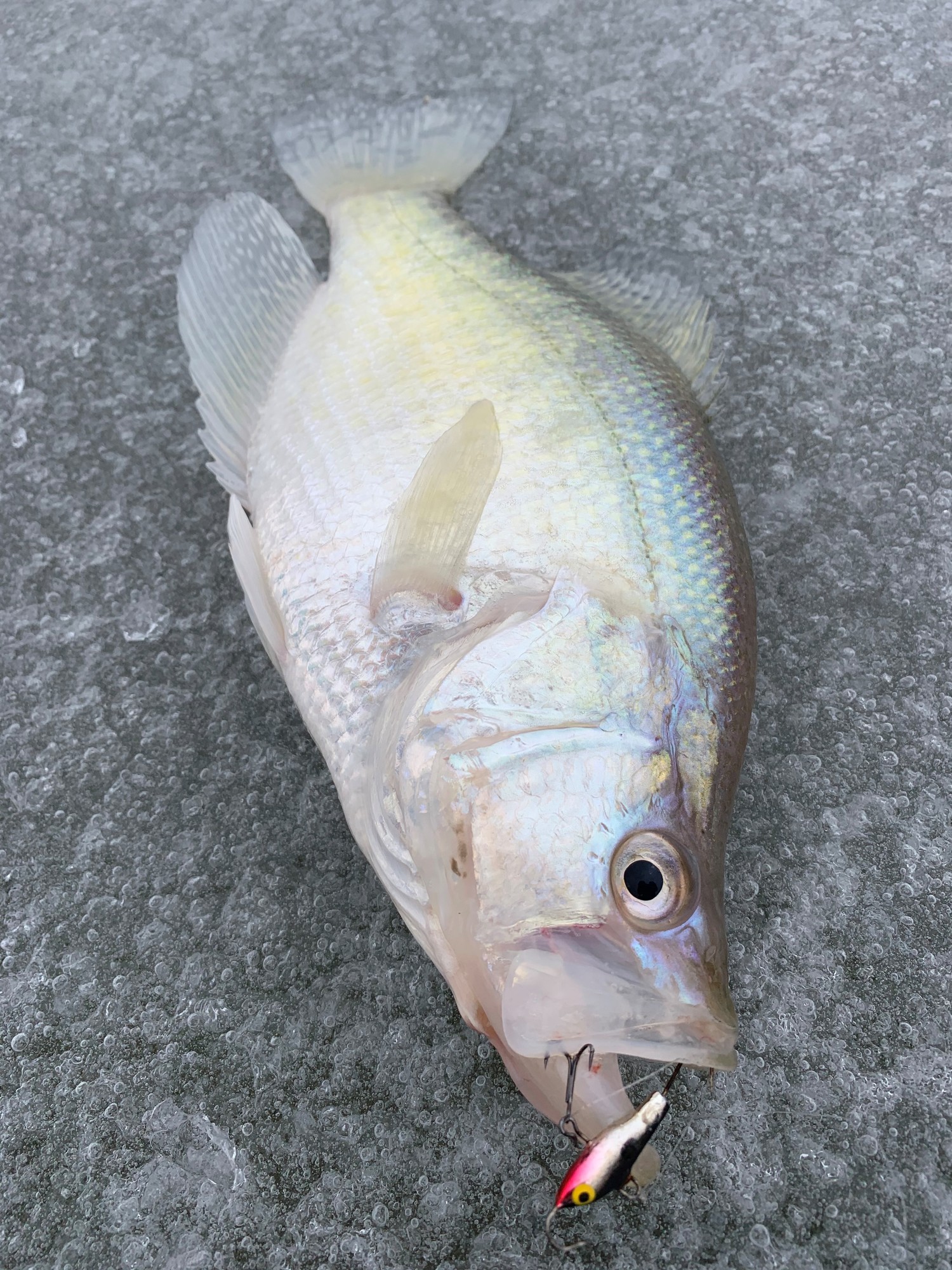
Ice fishing is a great way to experience the outdoors during the winter months, and the Adirondacks boast an excellent variety of ice fishing destinations. One of the most popular places is Lake Champlain. Lake Champlain offers anglers the opportunity to ice fish for lake trout, landlocked salmon, black bass, northern pike, pickerel, crappie, yellow perch, sunfish and more. Whether you fish from a shanty or just set up a bucket, a day on the ice can offer great fishing, fantastic views, and a lot of fun. Now through March, DEC is conducting an ice fishing creel survey on Lake Champlain. The survey is part of a larger, two-year effort to survey both ice and open water anglers. Data gathered will serve as a baseline to help DEC Fisheries biologists better understand angler use and expectations, while also informing management actions on Lake Champlain. Creel agents will be stationed at Plattsburgh Boat Launch on Cumberland Bay, Willsboro Bay Boat Launch, Bulwagga Bay Campground, and South Bay Boat Launch. We encourage anglers coming off the ice to participate in this voluntary survey. Learn more about ice fishing regulations, ice safety, and other places to ice fish in the Adirondacks on DEC’s ice fishing webpage. Recent NoticesThe following are the most recent notices pertaining to public lands in the Adirondacks. Please check the Adirondack Backcountry Information webpages for comprehensive and up-to-date information on seasonal road statuses, rock climbing closures, specific trail conditions, and other pertinent information. New High Peaks Wilderness:
Perkins Clearing/Speculator Tree Farm Easement:
Saranac Lakes Wild Forest:
Vanderwhacker Wild Forest: Snowmobile Trail C8A is open from the gate at Lake Harris through to Indian Lake. Snowpack is inconsistent and thin but rideable. Last Week Moose River Plains Complex: The entrance gates to the Moose River Plains on Limekiln Lake-Cedar River Road are now open to snowmobile traffic only. Conditions remain poor due to minimal snow accumulation. The roads remain closed to public motor vehicles for the winter season. General Notices
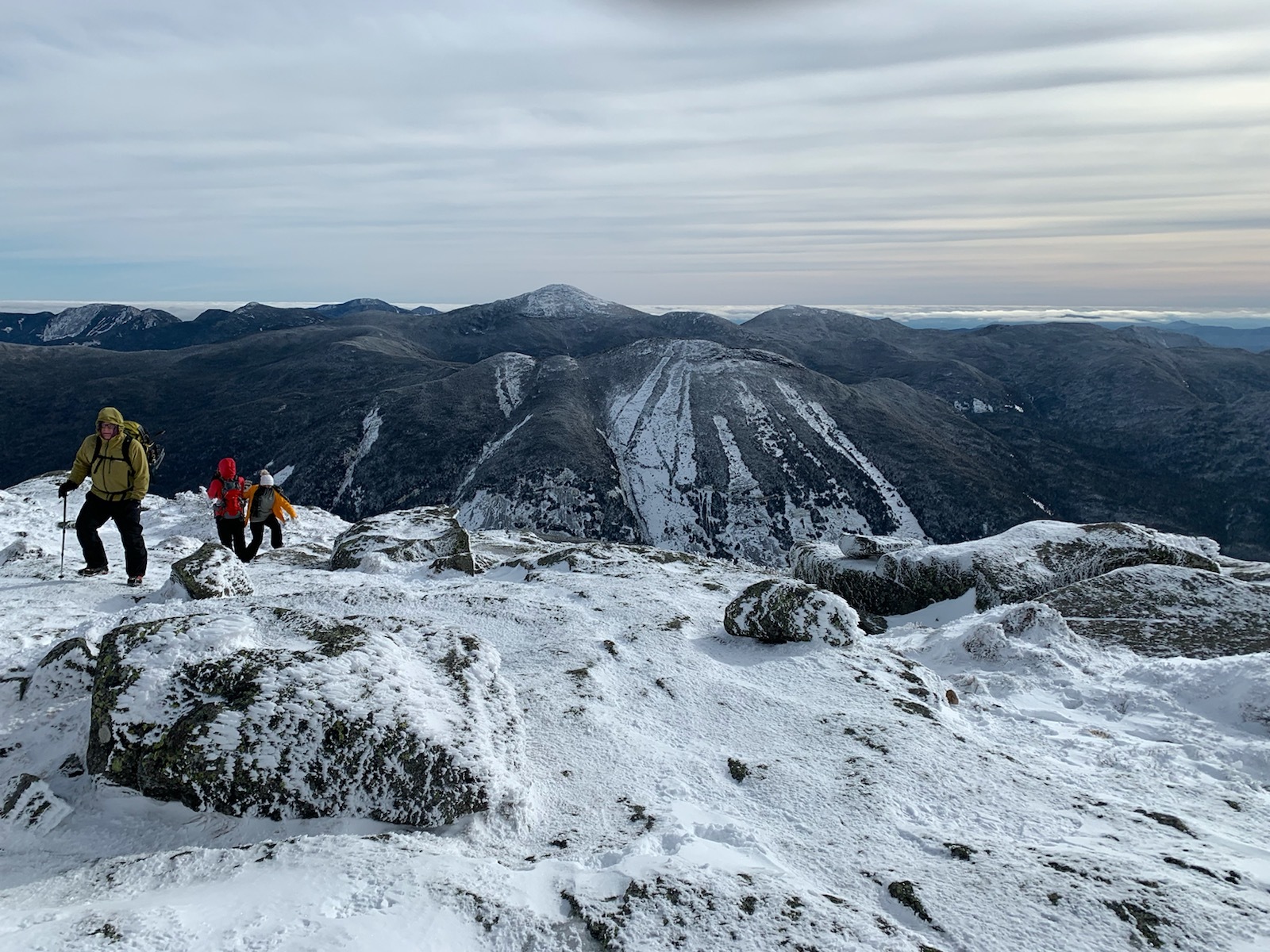
Visit the main Adirondack Backcountry Information page for more trip-planning resources, including travel information, weather resources, and seasonally-specific information about Adirondack recreation. Winter Conditions: Check the forecast for your destination and pack and plan accordingly. Conditions will be more severe on summits with below freezing temperatures, snow, ice, and strong winds. Take wind chill into consideration when preparing for temperatures. Check the National Weather Service Northern Adirondacks and Southern Adirondacks Mountain Point Forecasts for selected summits. Snow Accumulation: The following provides current snowpack depths in inches as of 01/05/21 at a selection of Adirondack locations. Snow accumulation data is collected every other week. Additional data and interactive maps are available on the National Weather Service website.
Ice Safety: A minimum of three to four inches of solid ice is the general rule for safety. Ice thickness, however, is not uniform on any body of water. Learn more about ice safety. Snowmobiling: Some seasonal access roads will transition to snowmobile use once sufficient snowpack accumulates. Check local club, county, and state webpages and resources, including the NYSSA Snowmobile Webmap, for up-to-date snowmobile trail information. Seasonal Access Roads: Many seasonal access roads have closed following the end of Northern Zone big game hunting season. Check the Adirondack Backcountry Information pages for updates on specific road closures. Some roads may remain open if conditions allow. Debar Mountain Complex Draft Generic Environmental Impact Statement (DGEIS) and Draft UMP Public Comment Opportunities: DEC and APA will be conducting two virtual public hearings on Tuesday, January 19, 2021. Due to restrictions related to COVID-19, these hearings will not be held in person. To participate, please select one of the hyperlinks below at the scheduled time:
Prevent the Spread of COVID-19: New cases of COVID-19 are on the rise throughout New York State, including in the Adirondacks. Help prevent the spread and keep yourself safe by continuing to Play Smart, Play Safe, Play Local. Safety & Education
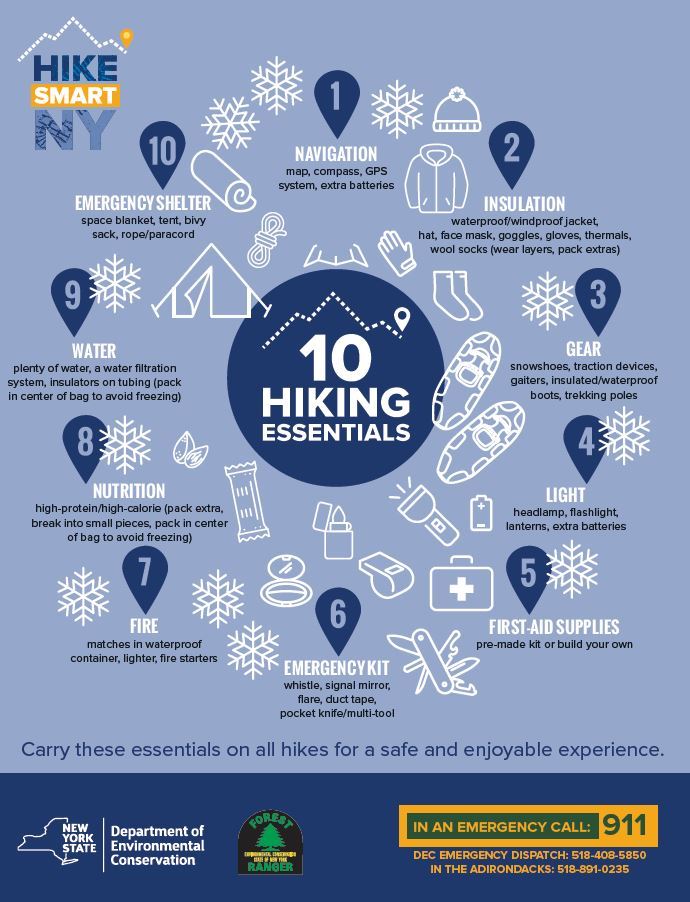
Winter recreation is fun and exciting. It can also be challenging and dangerous. Whether you’re going for a hike, a ski, snowmobiling, or ice fishing, Hike Smart NY can help you prepare with a list of 10 essentials, guidance on what to wear, and tips for planning your trip with safety and sustainability in mind. Dress for Success: Wear Layers On Monday, DEC Forest Rangers Mecus and LaPierre addressed winter hiking preparedness in a Facebook LIVE event. They provided great information on how to properly layer clothing to stay dry, warm, and safe during a winter hike. Check out the full video for a layering demonstration, a review of the 10 essentials, and what to pack in your emergency kit. When hiking in the winter, preventing hypothermia is vital to your safety and success. Hypothermia occurs when your body loses heat faster than it can produce heat, causing a dangerously low body temperature. Cool wet weather is as dangerous for hypothermia as extremely cold temperatures. To prevent conditions of hypothermia, stay dry, dress in layers, keep yourself hydrated, eat often, and manage your sweat. Sweat is the enemy of winter hiking. As sweat dries it cools, creating ideal conditions for hypothermia. Add or remove layers as you hike to keep yourself warm while avoiding sweating. You may have to stop repeatedly on your hike to add, remove, or change into extra dry layers. Practice your layering system at home or in a familiar location to find what works best for you. Prepare for the elements by bringing and wearing the following items:
Leave No Trace
Follow the Seven Principles of Leave No Trace to maintain minimal impact on the environment and the natural resources of the Adirondacks. Use proper trail etiquette to ensure an enjoyable experience for yourself and others, and tread lightly! The Best Way to Go in the Snow Going to the bathroom outdoors in the winter can be intimidating. First, it’s cold. Second, there are a lot of layers to remove. And third, how do you go when you can’t dig a cat hole? While we can’t help you with the first two problems, we’re here to help with the third! Check out these three tips to Leave No Trace while going in the snow.
|

|
The New York State Department of Environmental Conservation respects your right to privacy and welcomes your feedback | Update preferences or unsubscribe | Learn more about DEC Delivers |
|
Connect with DEC:    
|
|
| Basil Seggos, Commissioner | |