
DEC Adirondack Outdoor Recreation Bulletin - January 7, 2021
The New York State Department of Environmental Conservation sent this bulletin on 01/07/2021 04:47 PM EST |
| DEC Delivers - Information to keep you connected and informed from the NYS Department of Environmental Conservation |
| Share or view as a web page || Update preferences or unsubscribe |
DEC Adirondack Outdoor Recreation BulletinJanuary 7, 2021 |
|
This bulletin provides only the most recent notices. Check the Adirondack Backcountry Information webpages for more detailed information on access, outdoor recreation infrastructure, and conditions. Emergency Situations: If you get lost or injured; keep calm and stay put. If you have cell service, call 911 or the DEC Forest Ranger Emergency Dispatch, 518-891-0235. Welcome to the Adirondacks. The Welcome to the Adirondacks webpage is the place to go if you are interested in learning more about the Adirondacks. It provides information about the Forest Preserve, conservation easement lands, outdoor recreation, and Leave No Trace. A New Look for 2021
In an effort to provide you with the information you want and need to plan a safe and enjoyable outdoor experience in the Adirondacks, we are making some changes to the format of this bulletin in the New Year. The bulletin will continue to provide recent notices, conditions updates, relevant hiking information, and Leave No Trace tips and education. Much of the repetitive information will be moved to the Adirondack Backcountry Information pages to make room for fresh, engaging content. We will add additional information on recreation opportunities, highlights, and safety and education. We welcome feedback on these changes. Please email Info.R5@dec.ny.gov with questions, concerns, and comments.
Recreation Highlight: Foxy Brown X-Ski Trail
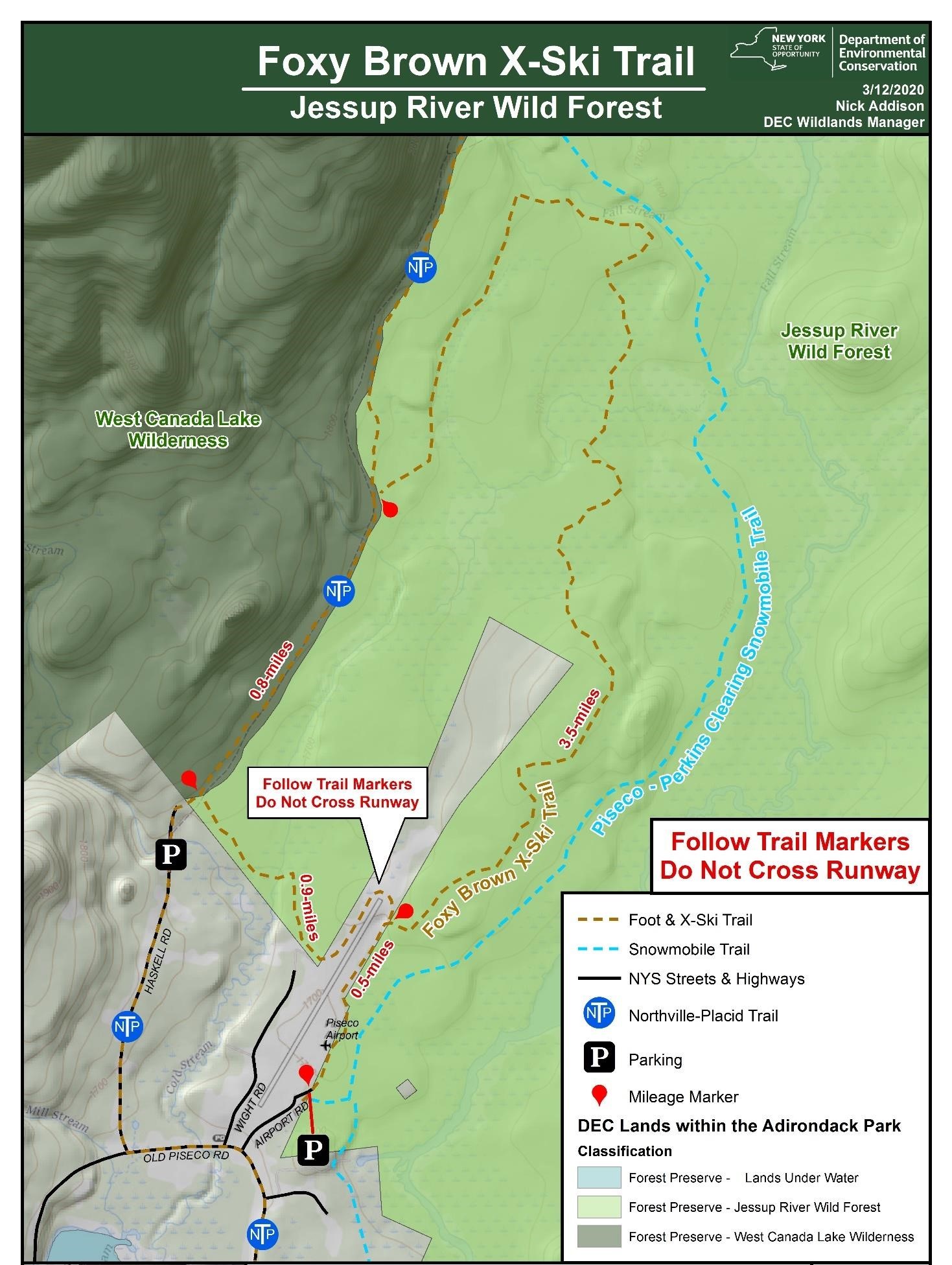
The Foxy Brown X-Ski Trail is a 5.6-mile trail located within the Jessup River Wild Forest. After traveling along the Piseco Airport runway, the trail routes users primarily through a northern hardwood forest. To complete the loop, users must cross the runway, so be sure to check for oncoming aircraft before traveling back to the trailhead and parking area. In 2019, DEC entered into a Volunteer Stewardship Agreement with Piseco Lake Association (PLA) allowing PLA to maintain the trail. During the 2020 field season, DEC Lands & Forest staff and PLA volunteers made the following improvements:
Recent NoticesThe following are the most recent notices pertaining to public lands in the Adirondacks. Please check the Adirondack Backcountry Information webpages for comprehensive and up-to-date information on seasonal road statuses, rock climbing closures, specific trail conditions, and other pertinent information. New High Peaks Wilderness:
Moose River Plains Complex: The entrance gates to the Moose River Plains on Limekiln Lake-Cedar River Road are now open to snowmobile traffic only. Conditions remain poor due to minimal snow accumulation. The roads remain closed to public motor vehicles for the winter season. Last Week High Peaks Wilderness:
Vanderwhacker Wild Forest:
Hoffman Notch Wilderness: The Branch Parking Lot for access to the north end of the Notch Trail will not be plowed this winter season. Hammond Pond Wild Forest: The Ensign Pond Parking Lot for access to Ensign Pond will not be plowed this winter season. General Notices
Visit the main Adirondack Backcountry Information page for more trip-planning resources, including travel information, weather resources, and seasonally-specific information about Adirondack recreation. Winter Conditions: Check the forecast for your destination, and pack and plan accordingly. Conditions will be more severe on summits with below freezing temperatures, snow, ice, and strong winds possibly. Take wind chill into consideration when preparing for temperatures. Check the National Weather Service Northern Adirondacks and Southern Adirondacks Mountain Point Forecasts for selected summits. Snow Accumulation: The following provides current snowpack depths in inches as of 01/05/21 at a selection of Adirondack locations. Additional data and interactive maps are available on the National Weather Service website.
Ice Safety: A minimum of three to four inches of solid ice is the general rule for safety. Ice thickness, however, is not uniform on any body of water. Learn more about ice safety. Snowmobiling: Some seasonal access roads will transition to snowmobile use once sufficient snowpack accumulates. Check local club, county, and state webpages and resources, including the NYSSA Snowmobile Webmap, for up-to-date snowmobile trail information. Seasonal Access Roads: Many seasonal access roads have closed following the end of Northern Zone big game hunting season. Check the Adirondack Backcountry Information pages for updates on specific road closures. Some roads may remain open if conditions allow. Prevent the Spread of COVID-19: New cases of COVID-19 are on the rise throughout New York State, including in the Adirondacks. Help prevent the spread and keep yourself safe by continuing to Play Smart, Play Safe, Play Local. Safety & Education
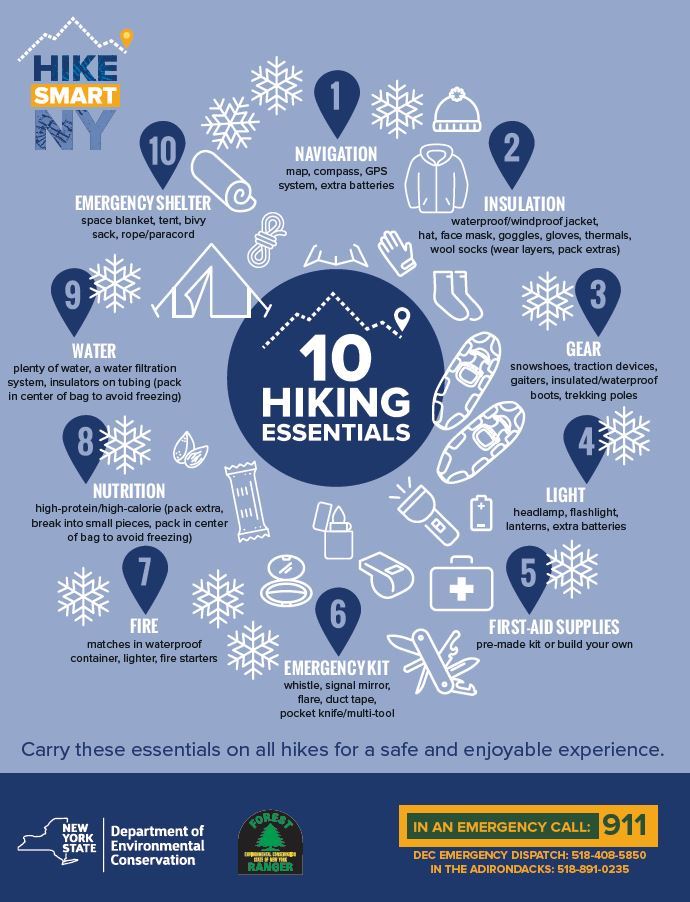
Winter recreation is fun and exciting. It can also be challenging and dangerous. Whether you’re going for a hike, a ski, snowmobiling or ice fishing, Hike Smart NY can help you prepare with a list of 10 essentials, guidance on what to wear, and tips for planning your trip with safety and sustainability in mind. The 10 Hiking Essentials The following items are essential for a safe and successful hike, but they are also important items for any winter experience. Before you head out for your next winter adventure, make sure you have the following:
Learn more about winter hiking preparation. Join us on Facebook Live at 10 a.m. on Monday, January 11 for a presentation on winter recreation safety and preparation by DEC Forest Rangers Mecus and LaPierre. They'll cover how to prepare, what to bring, what to wear, and tips from the experts. Leave No Trace
Follow the Seven Principles of Leave No Trace to maintain minimal impact on the environment and the natural resources of the Adirondacks. Use proper trail etiquette to ensure an enjoyable experience for yourself and others and tread lightly! Say No to Yellow Snow Help keep trailside snow looking clean and fresh by cleaning up after your pet. Dogs will be dogs, and they will do their business along the trail. As a pet owner, you can avoid user experience impacts and environmental effects by picking up and properly disposing of your pet’s waste. If your furry friend goes number two, use a bag to pick up their waste and throw it out at home or in a designated trash can. It might seem like poop just disappears beneath the powder, but solid waste can remain for months frozen in the snow. When snow melts in the spring, that waste remains, and it can have negative effects on the quality of soil and nearby waterbodies and the health of local wildlife. Poop traps are also an unpleasant find for those who hike the trail in the spring. Urine is harder to pick up, but it can still be covered up. If your dog creates yellow snow, consider keeping trailsides white by covering your dog’s pee or shoveling the affected snow further off the trail – just be sure you don’t push it closer to water sources! |

|
The New York State Department of Environmental Conservation respects your right to privacy and welcomes your feedback | Update preferences or unsubscribe | Learn more about DEC Delivers |
|
Connect with DEC:    
|
|
| Basil Seggos, Commissioner | |