Wildlife, Fish & Marine Life Newsletter
The New York State Department of Environmental Conservation sent this bulletin on 12/23/2020 11:50 AM EST |
| DEC Delivers - Information to keep you connected and informed from the NYS Department of Environmental Conservation |
| Share or view as a web page || Update preferences or unsubscribe |
Wildlife, Fish, and Marine Life Newsletter |
Keep Standing Dead Trees in your Woodlot
In woodlands where snags are sparse or absent, it’s possible to create a few by topping, girdling, or simply leaving several mature trees as legacy trees that may become snags in the future. Biologists recommend having at least three large snags (>12” diameter) per acre to benefit wildlife. These stately spires also add structural complexity, provide an element of visual interest, store carbon, reflect a forest stand’s past, and will enrich soils in the future. Photo by Katherine Yard. #AdventureAtHome: Winter Seal Watching
Share the shore with seals and other marine wildlife! Always keep a safe distance of 150 feet, or three school bus lengths of distance between you and the seals. Seals are sensitive and can be easily disturbed while resting on land. Help protect them and yourselves by giving space when wildlife watching. See previous weeks of #AdventureAtHome content by visiting our website. Help for Injured Hawk in New York County
Photo of ECO McCarthy and hospital staff with juvenile hawk. |
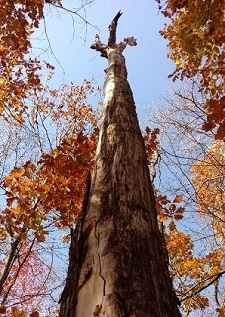 Some of the most important trees in your woodlot are the ones that are no longer alive. Large, standing dead or dying trees—called snags—are an important part of healthy forests and a critical habitat feature for wildlife. They provide places for many birds and mammals to forage, den, nest, perch, and roost. Snags are very important for cavity-nesting birds like
 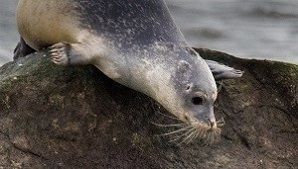 ‘Tis the season for seal watching!
 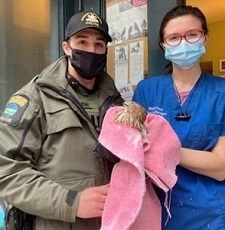 On December 2, Environmental Conservation Officer (ECO) McCarthy responded to an injured Cooper's Hawk on a rooftop of New York-Presbyterian/Allen Hospital in Manhattan. The juvenile hawk had flown into a glass window and subsequently broke her wing. ECO McCarthy captured the injured hawk and transported it to the Wild Bird Fund where the hawk is being treated by professional rehabilitators and will be released back into the wild.
|
The New York State Department of Environmental Conservation respects your right to privacy and welcomes your feedback | Update preferences or unsubscribe | Learn more about DEC Delivers |
|
Connect with DEC:    
|
|
| Basil Seggos, Commissioner | |