November Invasive Species News
The New York State Department of Environmental Conservation sent this bulletin on 11/30/2020 03:26 PM EST |
| DEC Delivers - Information to keep you connected and informed from the NYS Department of Environmental Conservation |
| Share or view as a web page || Update preferences or unsubscribe |
Invasive Species News |
|
This Month's Topics:
Update on Lake George Hemlock Woolly Adelgid TreatmentDEC and partners have completed this year's treatment to control and prevent the spread of hemlock woolly adelgid (HWA) on Forest Preserve lands in Washington County as part of an ongoing, multi-year effort. DEC confirmed the HWA infestation in August. The affected hemlock trees were located in the Glen Island Campground on the shore of Lake George, along the shoreline of Shelving Rock Special Management Area, at the Buck Mountain Trailhead, and on Dome Island. You can view DEC footage of the treatments here:
Treatment began October 6 and was conducted over a three-week period by DEC's Division of Lands and Forests. DEC crews from across the state were supported by partners from the Capital Region Partnership for Regional Invasive Species Management and APIPP. Within approximately 138 acres, 2,500 hemlock trees were treated to kill present HWA and protect from future infestations. Trees were treated with both imidacloprid (long lasting) and dinotefuran (quick acting) pesticides and were primarily treated with a targeted basal bark spray application to limit any impacts to non-target species. Additionally, 80 trees in sensitive locations were treated by a direct injection method to further reduce impacts on non-target species and to the watershed. As part of a biological control effort to combat HWA within the infestation area, DEC partners at the New York State Hemlock Initiative released 620 Laricobius beetles, which feed on adelgids. You Can Help Protect Our Forests from HWA
Do you enjoy getting outdoors in the Saint Lawrence/Eastern Lake Ontario region? Then be sure to check out the next article in this newsletter about a special HWA-related opportunity. Photo: The white woolly ovisacs of HWA can be found on the underside of infested hemlock branches. Virtual Hike Challenge in Saint Lawrence/Eastern Lake Ontario Region
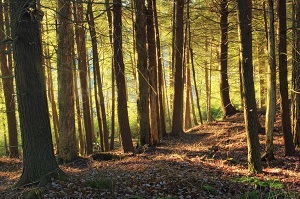
Interested in getting involved? Be sure to tune into a webinar with SLELO on Thursday, December 3 from 1 p.m. - 2 p.m. to prepare for the Challenge by learning how to spot signs of HWA and report them using a mobile app. You can find more information about the Challenge, including highlighted trails, on the SLELO PRISM website. Happy hiking! Photo: From supporting wildlife to protecting water quality, hemlocks provide priceless benefits in our forests. Learn more about why we love hemlocks on the NYS Hemlock Initiative website. (Photo by Nicholas Tonelli, Flickr) Report Spotted Lanternfly Egg Masses this Winter
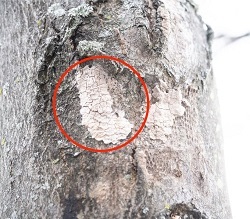
If you believe you have found a SLF egg mass, take a photo and note the location. Then report it to the NYS Department of Agriculture and Markets by filling out their online reporting form. Together, we can slow the spread of SLF and catch new infestations early. Photo: Spotted lanternfly egg masses are about 1.5 inches long and resemble dried, cracked mud. Upcoming Learning OpportunitiesSpotted Lanternfly Identification and Reporting (Western NY PRISM) – Tuesday, December 1 from 11 a.m. - 12:30 p.m. - Thom Allgaier, Invasive Species Coordinator for the NYS Department of Agriculture and Markets, and other experts will weigh-in on the current response to spotted lanternfly (SLF) in the Finger Lakes region. They will also discuss how to identify and report SLF this winter, and where we go from here. Register in advance online. Hike to Protect Hemlocks (SLELO PRISM) – Thursday, December 3 from 1 p.m. - 2 p.m. - The purpose of this webinar is to recruit volunteers to take hikes on local trails to keep an eye out for hemlock woolly adelgid (HWA). Attendees will learn to recognize signs of an HWA infestation and report observations using a mobile app. Public hiking trails with trailside hemlock stands in the eastern Lake Ontario region will be showcased along with an opportunity to adopt trails to monitor for HWA. Registration link available on the SLELO PRISM website. Take Action Against Invasive Species (Western NY PRISM) - Wednesday, December 9 from 6 p.m. - 7 p.m. - Join the Buffalo Women of Environmental Learning & Leadership (BWELL) and WNY PRISM for a webinar on how you can take action against invasive species including fall and winter ID tips, and a brief introduction into iMapInvasives. Register in advance online. Invasive Species and Climate Change Symposium (Northeast Regional Invasive Species and Climate Change Management Network) – Wednesday January 20 and Thursday January 21, 12:30 p.m. - 5 p.m. each day - The objective of this meeting is to bring together natural resource managers, scientists, and the invasive species community to discuss challenges and solutions to incorporating climate change into invasive species management. View the agenda and find registration info on the NRISCC website. Planning for Emerald Ash Borer – Best Practices for Managing Adirondack Ash Woodlands (Adirondack Park Invasive Plant Program) – Tuesday, January 26 from 10 -11:30 a.m. - Join APIPP to learn how you can prepare mixed Adirondack woodlands for the impacts of emerald ash borer (EAB). Geared toward land and estate managers, woodlot owners, entities or municipalities, and homeowners with multiple acres, this workshop will review best practices in preparing for, limiting the spread of, identifying, and living with EAB. Find registration info on APIPP's website. |
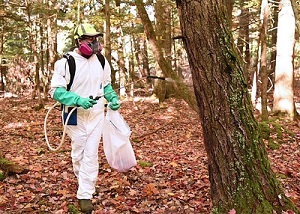 After the initial finding of HWA, DEC,
 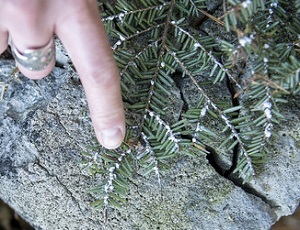 We all can help slow the spread of HWA by cleaning equipment or gear after it has been near an infestation and by leaving infested material where it was found. You can also look for and report signs of hemlock woolly adelgid to help DEC track and manage its spread. Signs of HWA on hemlock trees include white woolly masses (ovisacs) on the underside of branches at the base of needles (see photo to the right), gray-tinted foliage, and needle loss. If you believe you have found signs of HWA, take a photo and note the location. Then you may choose to contact either
  Our friends at
  New York State could use your help to watch for and report signs of the
|
The New York State Department of Environmental Conservation respects your right to privacy and welcomes your feedback | Update preferences or unsubscribe | Learn more about DEC Delivers |
|
Connect with DEC:    
|
|
| Basil Seggos, Commissioner | |