October's Forests, Plants, and Land Conservation News
The New York State Department of Environmental Conservation sent this bulletin on 10/20/2020 09:00 AM EDT |
| DEC Delivers - Information to keep you connected and informed from the NYS Department of Environmental Conservation |
| Share or view as a web page || Update preferences or unsubscribe |
Forests, Plants, and Land Conservation News |
|
This month's topics:
Hike Smart this FallBefore you hit the trail on your next outdoor adventure, be sure to check out DEC's Hike Smart NY page to learn about safety, best practices, and preparedness. While recreating on state lands, please follow the Hiker Responsibility Code and avoid busy trailheads. Discover trails less traveled and visit at a time when trails may not be as busy.
Be prepared. Trails are wet and muddy in areas. Wear waterproof shoes and walk through mud, not around it, to protect trail edges. Seasonal temperatures are dropping, and temperatures are even lower on high summits. Many exposed summits are windy. When you check the weather, be prepared you could encounter ice or snow at high elevations this time of year. Wear appropriate base layers, bring waterproof and windproof outer layers, and pack extra base layers and socks. If conditions become unfavorable, turn around. You can always complete your hike another day. Be respectful of hunters. Most small game and some waterfowl and big game hunting seasons are open. Hikers should be aware that they may meet hunters bearing firearms or archery equipment while hiking on trails. Recognize that these are fellow outdoor recreationists with the legal right to participate in these activities in areas where it is permitted. Hunting accidents involving non-hunters are extremely rare. Hikers may choose to wear bright colors as an extra precaution. Manage your time wisely. Be mindful of sunrise and sunset times and plan accordingly. Start long hikes early to ensure you will have enough sunlight to finish before dark, and always bring a headlamp. Check the approximate sunset time before you hit the road. October is Firewood Month - Follow the NYS Firewood Regulation to Protect Your ForestsDEC marked the beginning of the fall camping season by reminding New Yorkers and visitors to prevent the spread of damaging invasive species by following state firewood requirements when obtaining firewood for campfires. In recognition of October as National Firewood Awareness Month, DEC released a new PSA to help raise awareness about firewood movement and its role in spreading invasive species.
In 2009, New York State enacted a regulation to prevent this accidental and often long-distance spread by limiting the transportation of firewood. The regulation pertains to all species of wood, cut or not cut, split or not split, destined for use as fuel. Logs are subject to the regulation if their intended use is as firewood. The regulation states that:
For more information on the firewood regulation, visit our website. Contact DEC at foresthealth@dec.ny.gov or call toll-free at 1-866-640-0652 with questions about the regulation. Photo: The Asian longhorned beetle is just one of the invasive forest pests that can hitch a ride in firewood without being detected. (Photo by E. Richard Hoebeke, Cornell University) Tooley Pond Conservation Easement Gets an Upgrade
When asked about the project, SCA crewmember Emily Brown said that it "feels good to work on a project that will provide lasting memories to those who use it." The campsite was built to last and will provide recreational opportunities on the property for years to come.
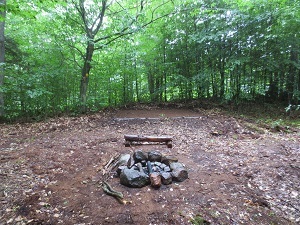
The Tooley Pond Conservation Easement is open year-round for a multitude of uses. There is a parking area located at the trailhead for the Allen Pond Trail. The trail is only 0.5 miles long, marked with red trail disks, and the new campsite is towards the end of the trail, near the pond. Please note that the road up to the parking area is only open to motor vehicles seasonally, from May 15th to September 15th. Photo (top): The SCA crew, left to right - Alex Horvath, Emily Brown, Dorothy Lambert, Hansen Menzies, and crew leader Matt DiNome Photo (bottom): The newly completed campsite Don't Be Confused by Spotted Lanternfly Look-alikes this Fall
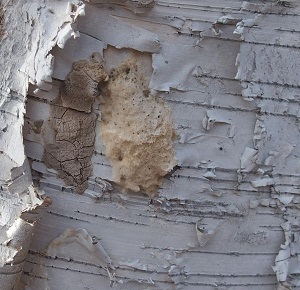
When you’re keeping a watchful eye, know that SLF can be confused with other common insects you might spot flying around this fall. This time of year, the eastern boxelder bug or even gypsy moth eggs may catch your eye. Our new SLF poster is here to help, with photos of SLF as well as some common look-alikes. The eastern boxelder bug has black and red markings similar to those of an invasive spotted lanternfly nymph, but the elongated body and red eyes of the eastern boxelder bug help set it apart from SLF. You might find eastern boxelder bugs lounging in sunny spots or even in your home but not to worry - unlike spotted lanternfly they’re harmless.
Everyone can help protect New York’s agriculture by keeping an eye out for spotted lanternfly. Be sure to share our new SLF poster to help your friends and family know what to look for. If you believe you’ve seen the invasive spotted lanternfly, please send a photo and the location to spottedlanternfly@agriculture.ny.gov. Image (top): DEC's new spotted lanternfly look-alikes poster Photo (bottom): A spotted lanternfly egg mass on the left, next to a gypsy moth egg mass on the right (Photo credit: Emelie Swackhamer, Penn State Extension) Conservationist Magazine
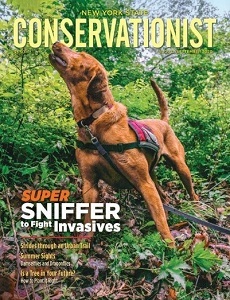
Subscribe online or call 1-800-678-6399 to receive the Conservationist year-round. Urban and Community Forestry (UCF) CornerCommunity Highlight - Keene, NY
Photos: Christi and Charlie delivering trees to the school. Fall ReLeaf WorkshopsMany of our fall workshops are going virtual! Check out our upcoming events and find registration links below. More details and up-to-date information are available on our website. Long Island ReLeaf Workshop and Meeting (in-person) - Wednesday, 10/21 from 9 a.m. to 11 a.m. - Join Long Island ReLeaf for a committee meeting and mini-workshop at the Clark Botanic Gardens. The meeting starts at 9 am and is followed by an arboretum tour at 10 a.m., wrapping up at 11 a.m. Registration is required, space is limited, masks required and social distancing will be enforced. Register online. Building and Maintaining Your Healthy Community Forest (webinar) - Wednesday, 10/28 from 9 a.m. to 11 a.m. Starting a new program or maintaining a fledgling program to care for your community trees on streets and in parks can be a challenge. Join Southern Adirondack ReLeaf to learn about the steps to becoming a Tree City USA, the benefits of the program, and how to find and apply for funding for your program. The southern Adirondacks has had several notable outbreaks this year of invasive species that threaten trees – including hemlock woolly adelgid and emerald ash borer. Preparing early to manage these threats can be key to keeping your community forest healthy! Registration is free but required in advance; register online. What We're Reading
|
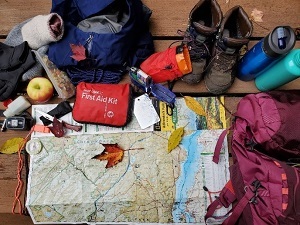 Review regulations. Before you head to your next hiking destination, take a moment to review the rules and regulations for the area you will be visiting. Each state land property has rules in place to help protect visitors and the natural resources of the site.
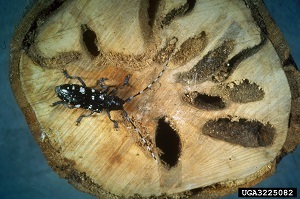 Many people take wood from their properties as they head out to camp, hunt, or enjoy the great outdoors, but most don't realize their wood may be hiding the eggs, larvae, spores, adults, or even seeds of invasive threats. Transporting infested firewood allows invasives to spread further and faster than these pests could or would have on their own.
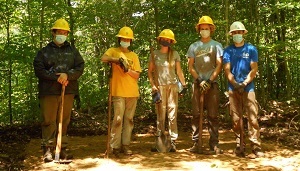 A 5-person Student Conservation Association (SCA) crew recently constructed some new amenities on the Tooley Pond Conservation Easement in the town of Clare in Saint Lawrence County. The team built a primitive campsite on the Allen Pond Trail, complete with a new trail to the campsite, an earthen tent pad and a rock ring fireplace, and a trail to a box privy site near the campsite. The project took just two and a half days to complete.
  As part of the terms negotiated for the Tooley Pond Conservation Easement dated June 1999, DEC has the right to permit camping by the public in the same manner as currently regulated on state lands, provided that any designated campsites are described in a recreation management plan (RMP). Multiple campsites were proposed in the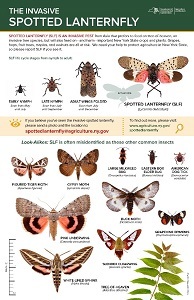
 With high rates of
  Check out
 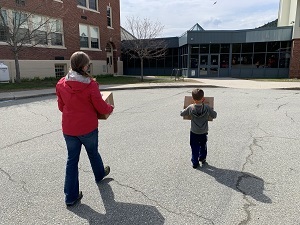 The COVID-19 pandemic has upended so much, including Arbor Day celebrations this past spring. Many schools had signed up to receive seedlings and had plans for student planting events. Our Region 5 forester Christi Barber didn’t let the change of plans stop her though! Christi had arranged for students in the Keene Central School District to receive seedlings for Earth Day and Arbor Day. When spring plans were disrupted by the pandemic, Christi arranged to distribute a seedling to each family with the weekly lunch delivery in mid-May.
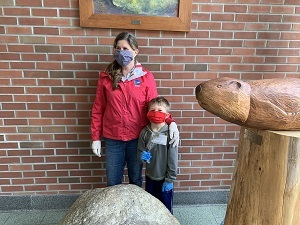 Each seedling package included a letter from Christi and her son Charlie (who attends the district) about how to plant the seedlings and explained the importance of trees, while also including links to educational resources on forestry and Arbor Day. They provided surplus seedlings to local post offices for families who wanted more than one. Students and their families planted the trees, and were encouraged to take photos to submit for a photo contest with the school’s "Green Team." Now that school is back in session, the photo contest will be judged and a winner selected.
|
The New York State Department of Environmental Conservation respects your right to privacy and welcomes your feedback | Update preferences or unsubscribe | Learn more about DEC Delivers. |
|
Connect with DEC:     2020 Census: New York counts on you |
|
| Basil Seggos, Commissioner | |