September Invasive Species News
The New York State Department of Environmental Conservation sent this bulletin on 09/30/2020 02:47 PM EDT |
| DEC Delivers - Information to keep you connected and informed from the NYS Department of Environmental Conservation |
| Share or view as a web page || Update preferences or unsubscribe |
Invasive Species News |
This Month's Topics:
DEC's Survey Efforts Help Protect NY's Waters
Monitoring efforts help us engage in early detection and rapid response (EDRR), as well as long-term management. EDRR is always best, it focuses on finding and controlling new populations of invasive species before they have become widespread. The more monitoring we engage in, the more likely we are to catch an invasive species early. For many invasive species, there are a variety of successful control methods to choose from including physical, biological, or chemical controls. Unfortunately, we can’t get ahead of every invasive species, which is where longer-term monitoring and management comes into play. Data on established populations help us create and implement better management plans. Mohawk River Survey DEC’s efforts to survey the Mohawk River include a three-year survey in partnership with Adirondack Research, a consulting firm that specializes in invasive species. The survey effort is in its first year and will provide valuable information to help us protect this important waterway.
Hudson River Surveys DEC’s aquatic invasive species specialists have been monitoring the Hudson River Estuary and its watershed to ensure that invasive hydrilla (Hydrilla verticillata) has not spread from the Croton River. Hydrilla poses a major threat to native fish species as well as recreation opportunities. In recent years DEC, along with SOLitude Lake Management and Northeast Aquatic Research, have conducted surveys at more than 47 sites along the Hudson. Luckily, no hydrilla has been found in the Hudson River to date.
Adirondack Surveys The Adirondack Mountain Club has been leading monitoring efforts in the Adirondacks, in partnership with DEC and the Adirondack Park Invasive Plant Program. A total of 15 backcountry surveys have been completed this year. The most recent surveys focused on waters in the Lake George Wilderness Area and, luckily, found no invasive species!
Help Us in the Battle Against Invasive Species Please report invasive species findings to NY iMapInvasives using your mobile app or online platform. For aquatic invasive species, you also have the option of contacting DEC with photos and location information via email at isinfo@dec.ny.gov.
Recent Invasive Species FindingsIn August, new invasive species findings in New York State made headlines.
DEC and partners are actively working to manage these infestations and slow their spread. As always, we encourage the public to report new sightings of these and other invasive species. Check out the webpages for EAB, HWA, and SLF for photos of infestation signs, current known locations, and how to report. You may also report invasive plants and animals using the NY iMapInvasives mobile app or online platform. Photo: A spotted lanternfly adult (left) and nymph (right) (photo by USDA) Boat Stewards Begin to Wrap Up Another Successful Season
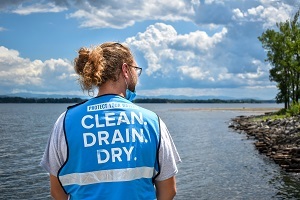
When you’re enjoying the water this fall, please continue to support our stewards’ good work and protect NY’s waters by remembering to clean, drain, and dry your watercraft. Photo by the Adirondack Watershed Institute Upcoming Learning Opportunities
DEC Announces Enforcement of New York's Plastic Bag Ban to Start Oct. 19, 2020
Pursuant to an Order of the New York State Supreme Court, Albany County, DEC agreed to provide the parties and the Court at least 30 days' notice prior to commencing enforcement. DEC is currently conducting extensive outreach to stakeholders, including grocery stores, retailers, and others, to provide notice of the start of enforcement and answer questions. DEC continues to encourage New Yorkers to use reusable bags wherever and whenever they shop with the #BYOBagNY campaign, launched earlier this year.Additional information about exemptions to the plastic bag ban, frequently asked questions, and posters, flyers, and tip strips to download, as well as tips for keeping reusable bags clean are available on DEC's website. New Yorkers use an estimated 23 billion plastic bags annually—each for about 12 minutes—and approximately 85 percent of this staggering total ends up in landfills, recycling machines, waterways, and streets. In March 2017, Governor Cuomo created the New York State Plastic Bag Task Force, chaired by DEC Commissioner Seggos. The task force met several times to develop a uniform, comprehensive, and equitable solution to the challenge of plastic bag waste. The final report analyzed the impacts of single-use plastic bags and provided options for legislation that could help develop a statewide solution. In addition, following passage of the New York State Plastic Bag Waste Reduction Act, DEC held a series of meetings with industry stakeholders across the state to invite input from the public and guide the agency's development of rules and regulations to implement the law. For more information about the plastic bag ban, reusable bags, or to file a complaint about entities using single-use plastic carryout bags, visit DEC’s website, email plasticbags@dec.ny.gov, or call (518) 402-8706. |
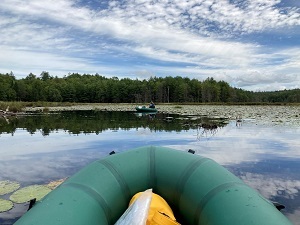
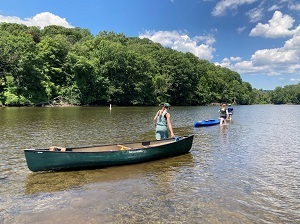 DEC's aquatic invasive species team has been coordinating surveys to detect and map invasive species in New York State's waters. Surveys help us better understand invasive species infestations and inform our management efforts. Since we can't monitor every waterway, surveys are targeted on higher risk areas. Recent survey efforts have focused on the Mohawk River, Hudson River, and several Adirondack lakes.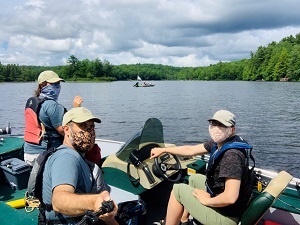
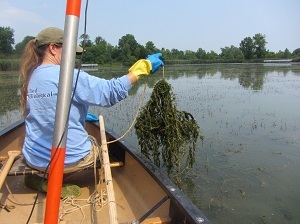
 Our partners at the
  The boating season may have unofficially ended Labor Day weekend, but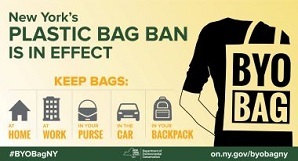
|
The New York State Department of Environmental Conservation respects your right to privacy and welcomes your feedback | Update preferences or unsubscribe | Learn more about DEC Delivers. |
|
Connect with DEC:     2020 Census: New York counts on you |
|
| Basil Seggos, Commissioner | |