
Wildlife, Fish & Marine Life Newsletter
The New York State Department of Environmental Conservation sent this bulletin on 06/24/2020 11:53 AM EDT |
| DEC Delivers - Information to keep you connected and informed from the NYS Department of Environmental Conservation |
| Share or view as a web page || Update preferences or unsubscribe |
Wildlife, Fish, and Marine Life Newsletter |
Learn About our State Reptile, the Snapping Turtle
Snapping turtles (Chelydra serpentina) are often described as aggressive, but a better term is defensive. They try to avoid confrontation and are more likely to defend themselves on dry land. When they are on land, try to give them some extra space, and they will move on. In fact, if you see one on land it is usually a female who is looking to lay eggs. Snappers spend most of their lives in the water, where they will generally swim away from people when encountered and are usually docile. Unfortunately, like many turtle species, snapping turtles face serious threats—being struck while crossing roads or collection for the food and pet trade. It is illegal to collect or relocate a snapping turtle without a permit, and they can only be hunted in season with a valid hunting license. Learn more about snapping turtles in the April 2017 Conservationist (PDF). Photo by Marcelo del Puerto. Wildlife Spotlight: the Gray Treefrog
Patterning and coloration are variable, but they are generally covered in ragged dark blotches over a gray to light green background. Gray treefrogs have a light spot bordered by a dark edge beneath the eye and bright yellow coloration on the inside surface of their thighs. Adults are 1.5-2 inches, and have toe pads that act as a suction cup for climbing. Their call is an unmistakable, powerful trill that varies in length between individuals. To some, this call may be reminiscent of a raccoon, minus the random chatter. The call is so powerful, that to the human ear the pulse of their trill can be felt reverberating through the bones of the inner ear! Check out this video of a gray treefrog calling. Living With Bears: How To Avoid Conflict
As bears approach breeding season in June, yearling (one-year old) bears disperse to find their own space and adult male bears increase their movements in search of mates. Inevitably, some of these bears, particularly yearlings, wander through places they would not normally be, like suburban or urban neighborhoods. If everyone takes steps to live responsibly with bears, a bear passing through will quickly make its way to more suitable habitat and find natural food opportunities. Once a bear gets food from human sources, it often seeks out similar opportunities and may become increasingly problematic, which is bad for people and the bear. Bears that frequently visit developed areas are more likely to be hit by vehicles, illegally killed by people who perceive them as a threat, or euthanized for dangerous behavior. You can reduce human-bear conflicts and save a bear’s life by removing bear attractants near your home or camp:
Photo: Damage from a bear that learned to associate food with human dwellings. Alewife Moving Upstream in the Hutchinson River
A monitoring site located at Pelham Lake Dam in Willson's Woods (Westchester County) is being studied to see if a fishway (fish ladder) would help migratory fish swim further upstream. This spring, project partners recorded the first known sighting of an alewife below the dam since dams were built along the river in the 19th century! The goals of Long Island Sound Study’s fishway projects are to remove dams or build fish ladders over or around barriers. These projects have helped open up hundreds of river miles for migratory fish to swim from Long Island Sound into streams in Connecticut, Long Island, and the Bronx. This project is supported by funding from the Ocean and Great Lakes Environmental Protection Fund. Read more in the Long Island Sound Study’s Sound Spotlight. |
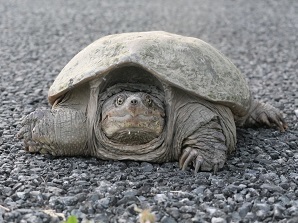 This time of year many people are seeing snapping turtles digging in their yards or swimming in home ponds. Snapping turtles and other turtles make their nests in easily dug soil, so they may lay their eggs in backyards and gardens. If the nest can be allowed to remain, hatchlings will emerge in August or September but sometimes overwintering until spring. If the area where the nest has been laid must be disturbed, contact your
 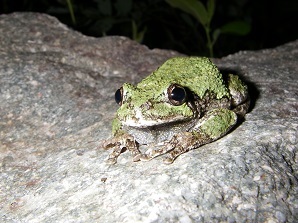 The last species of Anuran (frog) to breed in New York, from late May into July, is the
 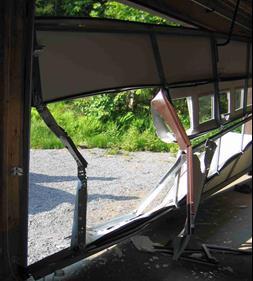 Recently, DEC has received more reports of
 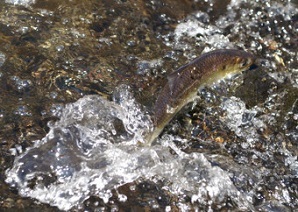 Alewife, also known as river herring, are a native species to New York’s marine waters and tidal rivers. Similar to striped bass or salmon, alewife live mainly in the ocean and travel into freshwater rivers to spawn. Since the 1800s, industrial dams have obstructed alewife from reaching historic spawning grounds, impacting their ability to reproduce and maintain healthy, sustainable populations.
|
The New York State Department of Environmental Conservation respects your right to privacy and welcomes your feedback | Update preferences or unsubscribe | Learn more about DEC Delivers. |
|
Connect with DEC:     2020 Census: New York counts on you |
|
| Basil Seggos, Commissioner | |