How big is the Asian giant hornet? Who was Joe Pye? And more inside...
The New York State Department of Environmental Conservation sent this bulletin on 06/22/2020 10:19 AM EDT |
| DEC Delivers - Information to keep you connected and informed from the NYS Department of Environmental Conservation |
| Share or view as a web page || Update preferences or unsubscribe |
Forests, Plants, and Land Conservation News |
This Month's Topics:
Asian Giant Hornet - Fact vs. FictionSince the Asian giant hornet (Vespa mandarinia) was first detected in Washington state in December of 2019, it has been hard to miss the eye-catching headlines about this species. With so much news out there, we want to make it easy for you and break down the facts about this much-buzzed-about species:
Our friends at NYS Department of Agriculture and Markets (AGM) have more information available on their website. If you think you have found an Asian giant hornet in NY, please review the identification materials on the AGM website. If you still have suspicions after review, you can email photos and location information to AGM at plants@agriculture.ny.gov. Photo: Asian giant hornet (photo by Washington State Department of Agriculture) How to Identify Giant Hogweed
Giant hogweed plants are beginning to bloom across many parts of the state, making it a prime time to spot this harmful invasive. Giant hogweed is a large, flowering plant from Eurasia with sap that can cause painful burns and scarring. Adult giant hogweed plants tend to be 7-14 feet tall with an umbrella-shaped cluster of white flowers up to 2.5 feet wide. The stem is green with purple splotches and coarse white hairs, and leaves are large (up to 5 feet across), incised, and deeply lobed. The most common lookalike found in NY is our native cow parsnip, which flowers earlier and does not have the purple splotches on the stem (but can also cause burns). You can find more identification tips, including a table of other lookalikes, on our website. If you think you have found giant hogweed, do not touch it. From a safe distance, take photos of the plant's stem, leaves, flower, seeds, and the whole plant. Then report your sighting to DEC by emailing photos and location information to ghogweed@dec.ny.gov or calling (845) 256-3111. DEC staff will help you confirm if it is giant hogweed and provide you with information on how to control it. Photo: Adult giant hogweed plants are very tall, have white, umbrella-shaped flower clusters, and stems with purple splotches. Get to Know New York's Natives: Joe Pye WeedJune 22-28 is National Pollinator Week! To celebrate, this month we're highlighting Joe Pye weeds (Eutrochium spp.), native essentials for any pollinator garden. There are several Joe Pye weed species. All have tall leafy stems with flat or rounded heads of small but bountiful shadowy pink flowers. Joe Pye weeds are an attractive garden choice not just because of their popularity with bees and butterflies, but also because of their hardiness. These tough perennial flowers can withstand a wide range of conditions including high summer temperatures and a lack of water. In ideal conditions, they do prefer slightly moist soils and in the wild they can often be found growing in wetlands. The flowers bloom in late summer when many other flowers begin to wane.
Celebrate National Pollinator Week by adding some native plants to your backyard or container garden. We've got you covered for some ideas to start with - check out our website for a list of native suggestions. Photo: by Danielle Brigida, Flickr Signs of Southern Pine Beetle
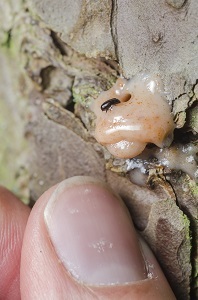
SPB is not yet known to be established in the Hudson Valley, and you can help us keep it that way by finding any possible infestations early. If you've seen signs of SPB in these two regions of New York, please submit a report to iMapInvasives on their free and easy to use app or via their online system. You can find more info on SPB, including more photos, on DEC's website. Thanks for helping us protect the pines, we couldn't do it without you! Photo: A pine infested with southern pine beetles will have pitch tubes, or clumps of resin, on the bark visible all the way up the tree. This one contains a single southern pine beetle. Urban and Community Forestry NewsConference Update In light of the ongoing COVID-19 pandemic, the ReLeaf Conference originally scheduled for July, 2020 has been postponed. We will remain in Buffalo for next year's conference from July 22-24, 2021 - so mark your calendars now! Community Highlight
In 2017, the Southampton Parks Department was awarded $28,000 to remove SPB-impacted trees at Foster Avenue and Good Ground Parks, both of which contain playgrounds and walking trails. This grant allowed the town to remove approximately 75 SPB-impacted trees from approximately 45 acres of parkland. In May 2020, the town's Environmental Division, in partnership with the Parks Department, planted 55 pitch pine seedlings (provided by DEC's Tree Nursery) at Red Creek and Good Ground Parks in order to mitigate the impacts of the previous tree removal. Photo: Seedlings planted at Red Creek Park in May of this year What We're Watching
What We're Reading
|
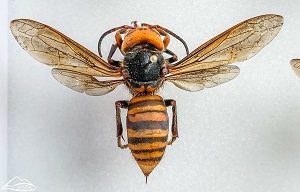 In North America, the Asian giant hornet (AGH) has only been found in a small area in Washington state and British Columbia. No AGH have been found anywhere else on our continent, including the east coast.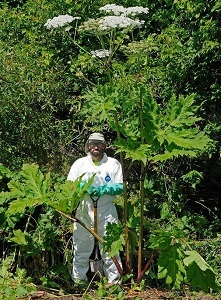
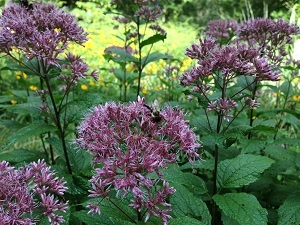 Have you ever wondered who Joe Pye was? According to legend, Joe Pye was a Native American herbalist who used a local plant to cure a variety of illnesses including typhoid fever. For years, it was unknown if Joe Pye was a real person or a botanical myth until research confirmed the plant's name originated from the nickname of Joseph Shauquethqueat, a Mohican chief who lived in Massachusetts and New York in the 18th and early 19th centuries (
 DEC's Forest Health team has
 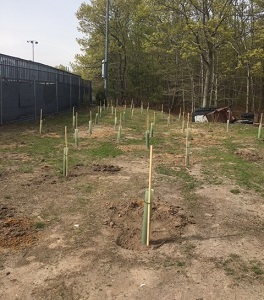 This month we highlight work done on Long Island where trees have been damaged and killed by southern pine beetle (SPB), an insect that attacks pine trees. SPB has killed thousands of pine trees on Long Island since it was first discovered there in 2014. Managing SPB has brought municipalities together with DEC, Suffolk County parks, and the Central Pine Barrens Joint Planning and Policy Commission to protect Long Island forests.
|
The New York State Department of Environmental Conservation respects your right to privacy and welcomes your feedback | Update preferences or unsubscribe | Learn more about DEC Delivers. |
|
Connect with DEC:     2020 Census: New York counts on you |
|
| Basil Seggos, Commissioner | |