- Public & Stakeholder Participation Information
- Annual Spring Burn Ban Starts March 16
- Air and Weather Working Together
- Join the Team
- Helpful Links
- Dates to Remember
- AQI Alerts for Respiratory Health
Public & Stakeholder Participation Information:
-
Adopted Part 222, Distributed Generation Sources and Part 200, General Provisions.
-
Proposed Policy DAR-10: NYSDEC Guidelines on Dispersion Modeling Procedures for Air Quality Impact Analysis - DEC will accept comments through 3/13/2020.
-
Proposed Subpart 225-1, Fuel Composition and Use - Sulfur Limitations - A hearing on this regulation is scheduled for 4/10/2020 in Albany, NY. DEC will accept comments through 4/15/2020.
-
Proposed Part 248, Use of Ultra Low Sulfur Diesel Fuel and Best Available Retrofit Technology for Heavy Duty Vehicles - A hearing on this regulation is scheduled for 4/10/2020 in Albany, NY. DEC will accept comments through 4/15/2020.
-
Proposed Part 230, Gasoline Dispensing Sites and Transport Vehicles - Hearings on this regulation are scheduled for 4/14/2020 in Albany, 4/15/2020 in Long Island City, and 4/16/2020 in Avon, NY. DEC will accept comments through 4/21/2020.
-
Proposed Part 231, New Source Review for New and Modified Facilities - Hearings on this regulation are scheduled for 4/14/2020 in Albany, 4/15/2020 in Long Island City, and 4/16/2020 in Avon, NY. DEC will accept comments through 4/21/2020.
-
Proposed Part 235, Consumer Products - Hearings on this regulation are scheduled for 4/14/2020 in Albany, 4/15/2020 in Long Island City, and 4/16/2020 in Avon, NY. DEC will accept comments through 4/21/2020.
- Various projects in the Environmental Notice Bulletin (ENB).
Additional information and access to past announcements are on our Public & Stakeholder Participation Information page.
Air Mail! is the publication to announce public and stakeholder information about air quality topics. All NYS residents are environmental stakeholders – we welcome anyone to join the information sessions and other opportunities posted here.
Annual Spring Burn Ban Starts March 16
March 16 marks the first day of the annual spring burn ban, which continues through May 14 statewide. This statewide ban temporarily outlaws burning residential brush and yard debris. Warm spring temperatures and lack of snow cover create drier conditions and increased fire risk. The ban does not prohibit small campfires fueled by charcoal or untreated wood.
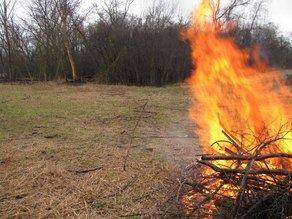 Remember, never leave a campfire unattended and completely extinguish it when done. Also, remember that burning trash and leaves is never allowed in NYS at any time of the year. Remember, never leave a campfire unattended and completely extinguish it when done. Also, remember that burning trash and leaves is never allowed in NYS at any time of the year.
Since the start of the annual spring burn ban in 2009, spring wildfires have decreased by more than 40 percent. Be sure to check the Fire Danger Map, which is posted on the DEC website and on the free New York Fishing, Hunting & Wildlife App, to know the fire risk in your area.
Air and Weather Working Together
Most people don't realize that DEC employs several meteorologists in the Division of Air Resources. From predicting and tracking severe weather events to compiling the daily Air Quality Index (AQI) forecast, DEC's weather specialists play an essential role in keeping New Yorkers safe and healthy.
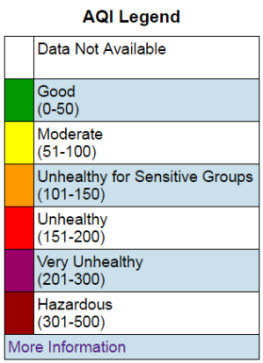 One of the many vital tasks our meteorologists perform is monitoring and forecasting the daily AQI. They examine hourly ozone and particulate data from air monitoring stations across the state to see if our air is healthy to breathe. Elevated levels of particulate matter (PM) and ozone can cause severe health effects and will trigger an air quality health advisory for the portions of the state that are affected. One of the many vital tasks our meteorologists perform is monitoring and forecasting the daily AQI. They examine hourly ozone and particulate data from air monitoring stations across the state to see if our air is healthy to breathe. Elevated levels of particulate matter (PM) and ozone can cause severe health effects and will trigger an air quality health advisory for the portions of the state that are affected.
Forecasting the next day’s AQI lets people with lung and heart conditions, and those who work or exercise outdoors, plan their daily activities. Also, if bad air quality spikes unexpectedly, our meteorologists will issue immediate alerts to notify the affected portions of the state. Past examples of unexpected AQI spikes are events like large forest fires or large-scale fires at landfills or storage facilities that produce potentially noxious plumes of smoke. Meteorologists have the tools to monitor the air quality in the affected area and forecast the impacts on residents and businesses, issuing warnings or alerts when necessary.
Another essential task that our meteorologists complete is air quality dispersion modeling for facilities throughout the state. When DEC reviews a new permit application or a major modification for a large facility, our meteorologists use computer models to predict the impacts resulting from the facility's emissions. This modeling is performed in advance of a facility receiving a permit to ensure emissions are below health-based standards and guideline concentrations to safeguard nearby homes, businesses and protected habitats.
With the first day of spring right around the corner, it's important to keep an eye on the AQI when outside working, hiking, or taking the dog for a walk. DEC has got your back and will let you know if air quality levels are forecast to be bad in your area. There is more information on the AQI forecast and several ways to access it and receive alert notifications below in "Stay Informed about Your Air Quality."
Join the Team
Do you have a bachelor's degree or higher in engineering or engineering technology? New York State employs more than 2,000 engineers in various agencies across the state, including DEC. Learn more about career opportunities in engineering with NYS on the Civil Service website.
As a permanent, full-time employee of DEC, you would enjoy many benefits, including: generous leave time; excellent health, dental and vision insurance plans; pension plan; deferred compensation program; and, flex spending account. You may also qualify for: military leave; paid jury duty leave; child rearing leave, and part-time or reduced work schedule.
Helpful Links:
-
DECinfo Locator – An interactive map that lets you access DEC documents and public data about the environmental quality of specific sites in New York State, as well as outdoor recreation information.
-
DEC Delivers – Stay in-the-know by subscribing to the environmental topics that interest you. DEC Delivers will send you information, updates, and e-newsletters on the topics of your choosing. As an Air Mail! subscriber, you may be interested in subscribing to the Air Quality Alert topic so you know when air quality levels are a concern in your area.
-
AQI Forecasts – Check the daily ozone and particulate matter pollution forecast for your area of NYS.
-
NYSDEC YouTube – Keep up with what’s going on with staff at DEC by subscribing to our YouTube channel. Watch video clips of the latest DEC campground improvements, learn about the Hudson River, or watch the latest episode of “On the Front Lines,” DEC’s monthly video series.
-
DEC Career Opportunities – DEC offers numerous opportunities for qualified individuals looking to work in environmental fields and support the protection of the environment. Join our team by taking advantage of available career opportunities in natural resource management and environmental protection.
Dates to Remember:
-
March: Women’s History Month: Many women have played key roles in environmental advocacy, research and policymaking over the years. Visit DEC's website for a special Women’s History Month tribute celebrating environmental leaders.
-
Now through May 15: DEC's annual Saratoga Tree Nursery native tree and shrub seedling sale – Dozens of native tree and shrub species will be available for purchase at low cost. Browse this year's selection on our website. Place your order by phone for the most up-to-date species availability information.
-
March 16 to May 14: Annual spring burn ban – Temporarily outlaws residential brush and yard debris burning statewide.
-
March 21: World Forestry Day – Trees help remove air pollution, so it is important to maintain forests.
-
March 22: World Water Day – Air pollution can significantly harm water resources.
-
April 1: April Fool’s Day – Air pollution is no joke. Do your part to keep our air clean. Remember to contact your local, state and federal representatives so that they know our air quality and environmental health is important to you and your family.
-
Second Tuesday of the Month: Sustainability Lunchtime Learning Webinars – A monthly series covering numerous topics of interest like choosing green cleaners, climate-friendly air conditioning, and water conservation. Preregistration is required.
-
April 21: John Muir’s Birthday – Known as “The Father of our National Parks,” he inspired people to respect natural resources and explore America’s wilderness.
-
April 22: Earth Day – Remember that Earth Day is every day. Include activities that reduce air pollution such as using less energy at home, walking or biking instead of using a car, and ditching gas-powered lawn mowers.
-
April 26: National Arbor Day – Trees clean the air by absorbing odors and pollutants and trapping them in their leaves and bark. They also make the all-important oxygen that we all breathe.
-
May 4 to 8: Air Quality Awareness Week – This year's theme is Better Air, Better Health. The goal of Air Quality Awareness Week is to increase awareness of how important air is and to inspire people to take steps to reduce their contribution to air pollution. Let’s take action together to keep our air clean.
-
May 15: Green Your Commute Day (GYCD) – Save the date and get ready to Go Green! On this day, we encourage commuters to walk, ride a bike, or take a bus or train to get to work. Join us on GYCD to protect our environment.
Stay Informed about Your Air Quality
New York State's ozone season runs from April through September. DEC publishes ground-level ozone forecasts during ozone season and particulate matter pollution forecasts year-round using a scale called the Air Quality Index (AQI). DEC sends out an air quality alert when there is a high AQI value, which indicates polluted air. Individuals with pre-existing respiratory or cardiovascular conditions and people who exercise outdoors should take caution during an air quality alert. Find out if an Air Quality Alert is in effect by calling the toll-free Ozone Hotline: 1-800-535-1345.
The AQI can be accessed in three ways:
We would like to know what you think. Please send your Air Mail! questions or comments to us at DAR.web@dec.ny.gov.
|