|
This bulletin provides only the most recent notices. Check the Adirondacks Backcountry Information web pages for more detailed information on access, outdoor recreation infrastructure, and conditions for those planning to recreate in the Adirondacks.
Emergency Situations: If you get lost or injured; keep calm and stay put. If you have cell service, call 911 or the DEC Forest Ranger Emergency Dispatch, 518-891-0235.
Check mountain weather conditions before heading out this weekend.
Hike Smart by packing the proper gear. See our recommended packing list and safety tips.
Avalanche Risk: More than a foot of snowfall and extreme winds are forecast to occur during the current winter storm in higher elevations. Fresh snow and winds increase risk of avalanche events in the High Peaks region and other high elevation mountains. Know how to determine avalanche danger, avoid avalanches, and self-rescue if caught in an avalanche.
General Conditions
Learn the conditions you will encounter from the Adirondack Backcountry Information web pages.
-
Travel: Check NY511 for road closures and conditions.
-
BLIZZARD WARNING: The National Weather service has issued a blizzard warning for the western and central Adirondacks through 4 p.m. Friday.
- Total snow accumulations of 8 to 18 inches for areas along and north of Route 28, including Old Forge and Indian Lake across the western Adirondacks.
- Wind gusts at or above 50 mph will produce blowing and drifting snow along with visibility to near zero at times.
-
LAKE EFFECT SNOW WARNING: The National Weather service has issued a lake effect snow warning for the northwestern Adirondacks through 4 p.m. Friday.
- Total snow accumulations of 9 to 16 inches
- Winds gusting as high as 45 mph
-
Winter Weather Advisory: The National Weather service has issued a Winter Weather Advisory for the remainder of the Adirondacks through 4 p.m. today.
- Total snow accumulations of 3 to 6 inches, with locally up to 12 inches above 2000 feet.
- Winds gusting as high as 45 mph
-
Weather: Check the National Weather Service or NY Mesonow for updated hazardous weather notices, current conditions and forecasts for the location where you plan to recreate.
-
Snow Depth: The National Weather Service NERFC Snow Page provides maps depicting current snow depths and forecasts.
- Snow depths range from 1 to 2 feet across most of Adirondacks.
- Snow depths range from 6-12 inches in the southeastern, northeastern, and very eastern Adirondacks.
- Snow depths are 5-7 feet deep above 3,000 feet.
- Significant additional snow is forecast for much of the Adirondacks during the next few days.
- Up to 2 feet in the western Adirondacks and above 3,000 feet in the High Peaks Region
- 10 to 18 inches in the north western and central Adirondacks and above 2,000 feet
- 6 to 12 inches in the northern and southern Adirondacks
- Less than 6 inches in the northeastern, eastern, and southeastern Adirondacks
-
Ice on Waterbodies: Ice has formed on most waterways.
-
General Information: Ice Fishing
-
Safety: Be safe on the ice
- A couple inches of layers of water, slush, and thin ice are present above the ice and below the snow on most water bodies.
- Always check the thickness of ice before traveling across it, and avoid ice over running water, inlets and outlets.
-
Drones: Drones are motorized equipment, and operating drones on lands classified as wilderness, primitive, or canoe is prohibited.
Hikers, Skiers & Snowshoers
-
General Information:
-
Avalanche Risk: More than a foot of snowfall and extreme winds are forecast to occur during the current winter storm in higher elevations. Fresh snow and winds increase risk of avalanche events in the High Peaks region and other high elevation mountains. Know how to determine avalanche danger, avoid avalanches, and self-rescue if caught in an avalanche.
- Trail Conditions
- Trails throughout most of the Adirondacks will be covered in fresh snow.
- Trail conditions are very good to excellent for cross-country skiing and snowshoeing in all but the northeastern, eastern, and southeastern Adirondacks where conditions should be good.
- It takes more time and energy to break trail through deep fresh snow – plan accordingly.
-
Be Prepared:
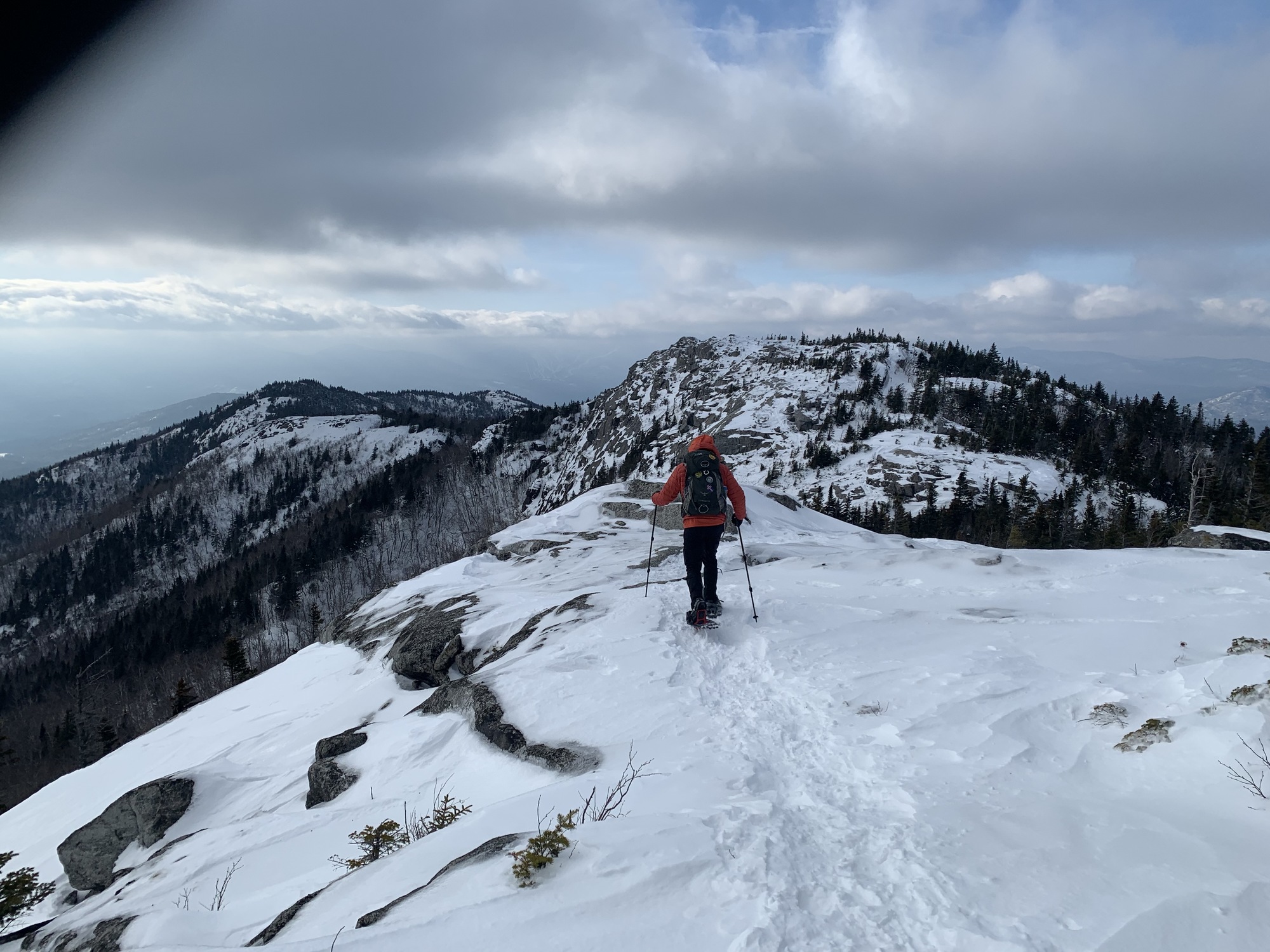
- The use of skis or snowshoes is required in the Eastern High Peaks Wilderness and recommended on all trails throughout the Adirondacks at this time.
- Trail crampons (foot traction devices) should be carried on all hikes and used when warranted.
- Review safety and preparedness information at Hike Smart NY.
- View a video with winter hiking safety tips.
-
Mountain Summits: Check the National Weather Service Mountain Point Forecasts.
- Temperatures and wind chills are below freezing – cover all exposed skin.
- Winds will be stronger on exposed outlooks and summits.
- Summit conditions are icy and warrant the use of trail crampons.
- Snow depths below tree line and in other protected areas will be much deeper than snow depths at the trailhead.
- Weather is unpredictable on mountain summits. Be prepared to turn around.
-
Water Crossings: Use caution at crossings and on trails along fast flowing brooks and rivers.
- Rocks and other surfaces may be covered with ice from splashing water.
- Wear crampons and use steel or carbide pointed hiking sticks.
-
Hiking or Skiing along Designated Snowmobile Trails: Watch and listen for snowmobiles when traveling on designated snowmobile trails. Move to the side of the trail and allow snowmobiles to safely pass.
Snowmobilers
-
General Information: Snowmobiling
-
Trails: View the New York State Snowmobile Association Interactive Trail Map or check with local snowmobile clubs and tourism offices to determine status, condition, and specific warnings. Download the new Adirondacks, USA Snowmobile App.
- Trail conditions are good to excellent throughout most of the Adirondacks - check local trail conditions status and conditions before going.
- Trail conditions will improve with the additional snows forecasted, except in the northeastern, eastern, and southeastern Adirondacks.
-
Safety:
- Watch for skiers and snowshoers using snowmobile trails - slow down to safely pass.
- Always yield to snowmobile trail groomers.
- View a video on snowmobile safety.
Recent Notices
Notices below reflect recent changes in conditions and recreation infrastructure work completed by DEC and its partners. Check the Adirondack Backcountry Information web pages for ongoing issues and more detailed information.
-
High Peaks Wilderness
-
Trail Crew and Other Positions for Hire: If you are interested in any of the positions listed here, contact Info.R5@dec.ny.gov. Indicate the position you are interested in, and DEC will send more information to you.
- High Peaks Trail Crew (10 positions)
- Ray Brook Trail Crew (one position)
- Marcy Dam Interior Caretaker (one position)
Highlighted Spot: Flume Trails, Wilmington, NY
Wilmington Flume Trail Network located in the Wilmington Wild Forest provides 11.5 miles of trails for snowshoeing and hiking. Those accessing these hiking trails from the Flume Trailhead West will pass a wildlife viewing area overlooking a beaver dam and pond and enjoy scenic views of the West Branch Ausable River.
Flume Knob can be reached on trails traversing at least 2.5 miles, depending on the route taken, and ascending 1,300 feet from the Flume West Trailhead. The peak can also be reached from the Bear Den Trailhead, from which the trail traverses a total of 1.5 miles and ascends approximately 1,025 feet.
Bear Den Mountain can be reached on trails traversing 2.8 miles, depending on the route taken, and ascending 1,600 feet from the Flume West Trailhead. The summit provides views of the West Branch Ausable River Valley, the Sentinel Range and the Stephenson Range. Be sure to research this trail ahead of time and bring a map. Navigating this trail system takes extra attention. The ascent can be steep at times. Hikers should be prepared with snowshoes and crampons.
Wilmington Flume Falls, a narrow gap and waterfalls in the West Branch Ausable River can be accessed from the Flume East Trailhead on a short trail, less than 0.1 mile in length, that descends approximately 75 feet from the trailhead to the shore of the West Branch Ausable River.
Trail head Locations:
Wilmington Flume Trailhead West Parking Area is located along Route 86 immediately north/east of the bridge over the West Branch Ausable. (N 44.3661°; W 73.8414°).
Wilmington Flume Trailhead East Parking Area is located on the opposite side of Route 86 and a short distance north/east of the West Parking Area. (N 44.3671°; W 73.8403°).
Practice Leave No Trace and Tread Lightly
Follow the Seven Principles of Leave No Trace to maintain minimal impact on the environment and the natural resources of the Adirondacks. Use proper trail etiquette to ensure an enjoyable experience for yourself and others, and tread lightly!
-
Plan Ahead and Prepare - Practice Safety First!
- Know your own and your group’s limits, and minimize risks. Always default to the least skilled member’s ability for maximum safety. We encourage groups of three or more, but do not exceed group size limits for the area. Don’t push yourself or others to take risks. Stay within your fitness and skill level. Stay together and use the buddy system. Check your watch and map regularly to keep track of your progress and location.
Application Period Now Open for DEC's 17th Annual Environmental Excellence Awards, Apply by April 17
Is your organization taking innovative approache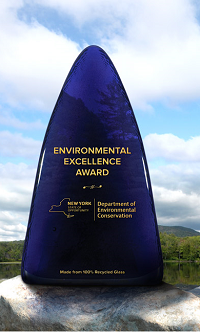 s to advance sustainable environmental practices? Are you aware of a program or colleague whose project generates economic growth or harnesses the power of creative partnerships? You could be one of New York’s next Environmental Excellence Award winners! s to advance sustainable environmental practices? Are you aware of a program or colleague whose project generates economic growth or harnesses the power of creative partnerships? You could be one of New York’s next Environmental Excellence Award winners!
This award program recognizes projects that demonstrate significant and measurable environmental, economic and social benefits. Businesses, not-for-profits, schools, and state and local agencies are eligible to apply. Projects should be up and running for at least one year. To name a few, a program can impact greenhouse gas emissions, food waste reduction, energy efficiency programs, education and training programs, manufacturing process improvements, water conservation, urban forestry, and agricultural practices.
To learn more about the Environmental Excellence Awards and how to apply, visit our website.
Be recognized as an environmental champion, and submit applications no later than Friday, April 17, 2020.

|