A Project of the Hudson River Estuary Program
Compiled by Tom Lake, Consulting Naturalist
Overview
In a week of Highlights, the first glass eels, in from the sea, certainly deserved mention as an early indication of spring. Other early returners included red-winged blackbirds and American woodcock. Among our stubborn wintering visitors, the summer tanager and harbor seal showed no inclination to leave.
Highlight of the Week
 2/14 – Yonkers, HRM 18: We pulled out the Groundwork Hudson Valley eel mop at the mouth of the Sawmill River today and found four “glass eels.” This was their earliest arrival since we began monitoring them. The water temperature was 44 degrees Fahrenheit (F). Last year, the first glass eels arrived on February 26 with a water temperature of 41 degrees F. (Photo of glass eel courtesy of Tom McDowell) 2/14 – Yonkers, HRM 18: We pulled out the Groundwork Hudson Valley eel mop at the mouth of the Sawmill River today and found four “glass eels.” This was their earliest arrival since we began monitoring them. The water temperature was 44 degrees Fahrenheit (F). Last year, the first glass eels arrived on February 26 with a water temperature of 41 degrees F. (Photo of glass eel courtesy of Tom McDowell)
- Bob Walters, Kenny Ortega
[The story of glass eels begins with the American eel, a fish whose life history is shrouded in mystery. Their ancestors have survived global cataclysms for hundreds of millions of years, but now, some populations of freshwater eels appear to be diminishing worldwide, and scientists are not quite certain why. While American eels are considered a freshwater fish, they are born at sea before migrating inland where they spend much of their lives in the fresh and brackish waters of the upland watershed. “Glass eels” are one of the juvenile life stages of the American eel. They arrive in the estuary by the millions each spring following a six-month to year-long journey from the greater Sargasso Sea area of the North Atlantic where they were born. Glass eel is a colloquial name owing to their lack of pigment and near transparency. This is a particularly vulnerable time for them, and little is known about this period in their life cycle. In anywhere from 10-30 years, depending upon their sex, they will leave the Hudson River watershed for the sea where they will spawn once and then die, or so we think. Tom Lake]
Natural History Entries
2/8 – Ulster County, HRM 86: It is a long look across the river from the Norrie Point Environmental Education Center to bald eagle nest NY142 (Mount Saint Alphonsus) and, even with a strong spotting scope, it is never an up-close view. For a straight hour today, we watched the two adults sitting in the nest, oddly facing each other, a lengthy pose that we do not often see. When incubating, one adult will be there all the time, and both may pass for changeover duties. However, it seemed to us, admittedly at a distance, that they were waiting for something.
- Chris Bowser, Tom Lake, T.R. Jackson
*** Fish of the Week ***
 2/8 – Hudson River Watershed: Fish-of-the-Week for Week 58 is the green sunfish (Lepomis cyanellus), number 151 (of 230) on our watershed list of fishes. If you would like a copy of our list, e-mail - trlake7@aol.com. 2/8 – Hudson River Watershed: Fish-of-the-Week for Week 58 is the green sunfish (Lepomis cyanellus), number 151 (of 230) on our watershed list of fishes. If you would like a copy of our list, e-mail - trlake7@aol.com.
The green sunfish is an introduced species, one of thirteen sunfishes (Centrarchidae) in the watershed. They are native to the Great Lakes region and the upper Mississippi and have been introduced into several Atlantic coastal systems including the Hudson River. In his Biological Survey of the Lower Hudson Watershed (1937), J.R. Greeley refers to green sunfish as rare. They are occasionally caught at Norrie Point Environmental Education Center, most often as green sunfish x redbreast sunfish hybrids. Bob Schmidt notes that there is a robust population of green sunfish in the Wallkill River, a Hudson River tributary, and some of its tributaries. In fact, it may be the most common fish in the Dwaarkill, a Wallkill tributary in Orange County. (Photo of green sunfish courtesy of Tom Lake)
- Tom Lake
2/9 – Warren County, HRM 245: A good measure of winter can be found at the Ice Meadows, a ten-mile-long reach of the Hudson River just south of The Glen. Fourteen-inches of fresh snow had brought down power lines overnight and had closed schools as well as some roads. The river was flowing ice-free except for a heavy load of floating frazil ice. If a couple of near-zero nights were to follow, the river would freeze over with huge ice blocks that define the Ice Meadows in most winters.
- Tom Lake, T.R. Jackson
[Frazil ice first forms as tiny round crystals throughout the river in cold weather. Turbulent, super-cooled, slightly below 32 degrees F, water tumbles the crystals around making them grow until they float at the surface in loose agglomerations that looks like floating snow. There have been some remarkable winter days where we could walk across (on) the river above twelve-feet of ice, like traversing a glacier. On the ice in mid-river, it can feel like being on a Hudson Valley glacier 18,000 years ago. In some places you could hear the river rushing seaward below the ice. In the very early years of the Hudson River Almanac, naturalist Jim Briggs told me that one spring, the very last piece of winter ice at the Ice Meadows, snuggled in the deep shade under the river bank, had melted on Memorial Day. Tom Lake]
 2/10 – Saratoga County, HRM 165: The river was running free just above Lock One of the Hudson-Champlain Canal. The current was such that more than 200 Canada geese had moved into sheltered shallows to keep their place. Exactly in the middle of the huge expanse of waterfowl was a single snow goose. We see this from time to time in winter, and it always makes us wonder of the story the snow goose might tell of how it found itself in the company of geese of different species. (Photo of snow goose courtesy of Deborah Tracy Kral) 2/10 – Saratoga County, HRM 165: The river was running free just above Lock One of the Hudson-Champlain Canal. The current was such that more than 200 Canada geese had moved into sheltered shallows to keep their place. Exactly in the middle of the huge expanse of waterfowl was a single snow goose. We see this from time to time in winter, and it always makes us wonder of the story the snow goose might tell of how it found itself in the company of geese of different species. (Photo of snow goose courtesy of Deborah Tracy Kral)
- Tom Lake, T.R. Jackson
 2/10 – Saratoga County, HRM 164: We made our annual pilgrimage to Lock One where, in December 2015, we assisted Rob DiGiovanni and Kim Durham of the Riverhead Foundation, a crew from the New York State Canal Corporation, and our eyes-on-the-scene naturalist, Shannon Fitzgerald, rescue a stranded gray seal. 2/10 – Saratoga County, HRM 164: We made our annual pilgrimage to Lock One where, in December 2015, we assisted Rob DiGiovanni and Kim Durham of the Riverhead Foundation, a crew from the New York State Canal Corporation, and our eyes-on-the-scene naturalist, Shannon Fitzgerald, rescue a stranded gray seal.
The yearling male gray seal had found himself marooned for 133 days,175 miles from the sea. He had likely fallen in with a bad crowd – harbor seals – and followed them up the river. He then found the lock at Troy easier to ascend than to descend. With only weeks away from the river freezing over, which may have been fatal if he could not haul out, the seal needed rescuing. He was taken to Riverhead, Long Island, where he was rehabilitated and fitted with a satellite tag. It was estimated that the gray seal was probably born in January 2014, at Sable Island, Nova Scotia, 800 miles north of Long island. When released on December 10, at Ponquogue Bridge, Hampton Bays, he weighed 75.5 pounds and was 3-feet, 6-inches-long. The satellite tag returned much information of the seal’s travels after release, including trips to Narragansett Bay (where there was a confirmed sighting by Almanac reader Luke Dihopolsky), Cape Cod Bay (through the Cape Cod Canal), and then around Nantucket Island (Massachusetts). The satellite lost power on Day 49 when the seal was at Little Gull Island off the north fork of Long Island, a known hangout for wintering gray seals. (Photo of gray seal courtesy of Tom Lake)
- Tom Lake, T.R. Jackson
2/11 – Saugerties, HRM 102: Esopus Creek, above the falls, in the village of Saugerties has been a destination for ice angers for many years. Some winters you could drive a pickup truck out onto the ice; other years there has been open water. The cause and thus effect of ice/no ice can be found upstream to the west in the Catskill Mountains. Cold winters with a deep mountain snow-pack shields the downstream ice from melting. However, mid-winter thaws with little snow to cover and shield the ice from the sun’s rays, can lead to unsafe ice, even open water. There may also be an element of Climate Change in play.
Checking our ice-anglers’ notes, there has not been “safe” mid-winter ice on Esopus Creek for the last five years. The three years prior (2015 -2013), with serendipitous assistance from the weather, found 10-20 inches of hard ice. The two years before that (2011-2012) the creek was open. There have been anomalous years, such as 2010 when we had to cut through 25-inches of hard ice. But the trend seems to be moving toward less ice.
- Tom Lake
[The term “safe ice” should be considered a relative term. While ice thickness is often seen as the best indicator, it is ice integrity, the strength of the ice, that is most critical, and that can be difficult to measure. Every “six-inches of ice” is not equal. We have to know if the ice is new, strong, black ice, or old ice that has frozen, thawed, been rained on, honeycombed, and then re-frozen with debris, air bubbles, and inherent weaknesses. Tom Lake]
For more information on ice safety and ice fishing, visit the DEC website at: https://www.dec.ny.gov/outdoor/7733.html
 2/12 –Fort Edward, HRM 202: We birded the Fort Edward grasslands this afternoon and came upon a slew of raptors, including two rough-legged hawks, and one each American kestrel, northern harrier, and red-tailed hawk. Among the owls were five short-eared owls and a great horned owl. Field birds included 150 snow buntings with a few horned larks mixed in. (Photo of snow buntings courtesy of Deborah Tracy Kral) 2/12 –Fort Edward, HRM 202: We birded the Fort Edward grasslands this afternoon and came upon a slew of raptors, including two rough-legged hawks, and one each American kestrel, northern harrier, and red-tailed hawk. Among the owls were five short-eared owls and a great horned owl. Field birds included 150 snow buntings with a few horned larks mixed in. (Photo of snow buntings courtesy of Deborah Tracy Kral)
- Scott Stoner, Denise Stoner
 2/12 – Manhattan, HRM 1: We bundled up and went forth to check The River Project's research, sampling and collection gear on the lighthouse tender Lilac moored at Pier 25 in Hudson River Park. No fish today, but we caught a fascinating array of “grass shrimp” (Palaemonetes pugio), displaying non-standard colorations of reds, oranges, blacks, and blues. (Photo of shore shrimp courtesy of Al Denelsbeck) 2/12 – Manhattan, HRM 1: We bundled up and went forth to check The River Project's research, sampling and collection gear on the lighthouse tender Lilac moored at Pier 25 in Hudson River Park. No fish today, but we caught a fascinating array of “grass shrimp” (Palaemonetes pugio), displaying non-standard colorations of reds, oranges, blacks, and blues. (Photo of shore shrimp courtesy of Al Denelsbeck)
-Siddhartha Hayes, Toland Kister
[Depending upon which field guide you use, Palaemonetes pugio will be known by the common names grass shrimp or shore shrimp. Both are valid common names, but neither is as precise as the species name. There are two members of the genus Palaemonetes in the estuary, P. pugio and P. vulgaris. While both answer to the same common name, to be specific as to which one you are referring to, you need the scientific name. Tom Lake]
 2/13 – Saugerties, HRM 102: Our “resident” harbor seal, originally spotted at the mouth of Esopus Creek by Saugerties Lighthouse keeper Patrick Landewe on August 5, 2019, was seen again in late afternoon next to the lighthouse. The river was at high tide, and the water level was near the top of our dock. Patrick got a glimpse of its white rear-flipper tag as it plunged underwater with number 2-4-9. As the seal left, it went upstream along Esopus Creek. The longevity of its visit had now reached 195 days. (Photo of harbor seal courtesy of Patrick Landewe) 2/13 – Saugerties, HRM 102: Our “resident” harbor seal, originally spotted at the mouth of Esopus Creek by Saugerties Lighthouse keeper Patrick Landewe on August 5, 2019, was seen again in late afternoon next to the lighthouse. The river was at high tide, and the water level was near the top of our dock. Patrick got a glimpse of its white rear-flipper tag as it plunged underwater with number 2-4-9. As the seal left, it went upstream along Esopus Creek. The longevity of its visit had now reached 195 days. (Photo of harbor seal courtesy of Patrick Landewe)
- Tom Lake
2/13 – Ulster County, HRM 86: It had been eight days (February 5) since one of the adult bald eagles at nest NY142 sat quietly for the second day in a row. The long-term sitting was noted by Norrie Point Environmental Education Center staff as well. "Sitting" does not prove there are eggs present but is a suggestion as eagles rarely sit in their nest except when incubating. So perhaps we can begin the 32-35-day countdown from February 5 and look for a hatching around March 7-10.
- Dave Lindemann
2/13 – Verplanck, HRM 40.5: A beautiful adult bald eagle landed in a tree near our house today looking completely disheveled. Its head, face, and underbelly were wet and dirty, probably from fishing that made its piercing eyes even more pronounced. I watched the eagle preen with its razor-sharp beak and vocalize every now and then. The eagle was here for an hour, listening intently to the sounds of cars going past. At one point, the eagle stretched out one foot and extended its talons. We haven’t had many eagles this winter due to the warmer temperatures and subsequent lack of upriver ice.
- Dianne Picciano
 2/13 – Croton-on-Hudson, HRM 35: Following a spectacular sunset over the river, we were walking past the marsh that is part of Croton Landing's landscape when a small, round-bodied, long-billed bird flew by. It was an American woodcock – not so much a sign of spring's arrival but of winter's eventual ebb. These early migrants have been moving through the region during the past week, and soon enough, the males' nasal, post-dusk "peent" display call will be heard, a definite sign that spring is on the way. (Photo of American woodcock courtesy of Mark Olivier) 2/13 – Croton-on-Hudson, HRM 35: Following a spectacular sunset over the river, we were walking past the marsh that is part of Croton Landing's landscape when a small, round-bodied, long-billed bird flew by. It was an American woodcock – not so much a sign of spring's arrival but of winter's eventual ebb. These early migrants have been moving through the region during the past week, and soon enough, the males' nasal, post-dusk "peent" display call will be heard, a definite sign that spring is on the way. (Photo of American woodcock courtesy of Mark Olivier)
- Sharon AvRutick, Joe Wallace
2/13 – Sleepy Hollow, HRM 28: I was watching some weirdly, early red-winged blackbirds and chipmunks on the banks of the Pocantico River this foggy morning when the distinctive “cacking” call of a peregrine falcon caught my ear. It was a tiercel [male] by its small appearance perched high above the water. The falcon was loud and upset about something that I could not see in the nearby trees. My first thought was another falcon (there were no eagles on the river this day). I knew if I waited long enough the falcon would show me what it was. Sure enough, he took wing toward the trees and swooped several times over a shabby weeping willow. I walked upstream a short distance until I finally sighted the dark brown figure blending in perfectly with the wet bark of the willow. It was the peregrine’s arch nemesis, and the most feared predator of its young, the great horned owl.
- David North
2/14 – New Paltz, HRM 76: We were counting the white-throated sparrows in our backyard just above the Wallkill River flood-plain for the Great Backyard Bird Count, when an uncountable mixed flock of blackbirds dropped onto the yard and edge trees. Male red-winged blackbirds were by far the most numerous with quite a few brown-headed cowbirds, a few common grackles, enough European starlings to be noticeable, and a small percentage of female red-winged blackbirds. The flock was jumpy: landing, rising, landing, flowing across the grass like a storm surge, rising into the trees and then descending to the ground again. After a few minutes, something set them off and the whole flock exploded up and away. The male redwings simultaneously flashed their dazzling red epaulets as they turned. Then they were gone, but what a gift on Valentine's Day!
- Lynn Bowdery, Allan Bowdery
2/14 – Town of Wappinger, HRM 68: A female summer tanager (Piranga rubra), first spotted at our seed feeders on January 15, was still there this morning on Day 31. For Dutchess County, there are only three previous records of a summer tanager, and none in winter.
- Melissa Fischer, Stephen Fischer (Ralph T. Waterman Bird Club)
2/14 – Newburgh, HRM 61: There was some promising news from bald eagle nest NY488. The adult pair had spent a lot of time in and near the nest over the past five days and, as a result, our driveway is “white-washed.” Our neighbors saw them mating two days ago. Then today, Valentine's Day, there was another mating session. (Last year the pair mated on February 9.) Given the 32-35 days average incubation period, if eggs are close, we will be looking for a hatch March 16-19.
- Nancy Thomas
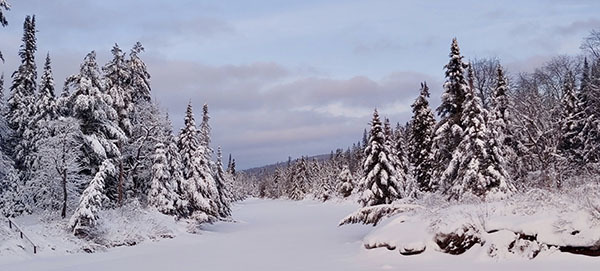
Winter 2019-2020 Natural History Programs
Wednesday, March 11, 2020 9:00 am - 4:00 pm (Snow Date Friday, April 10, 2020)
Studying Ecosystems of the Tidal Hudson
Norrie Point Environmental Center, Staatsburg, NY
The Hudson River National Estuarine Research Reserve invites you to attend Research in the Reserve 2020: Participate in an all-day forum on collaborative ecosystem research conducted with the Reserve or at its four tidal wetland sites along 100 miles of the Hudson Estuary.
https://www.hrnerr.org/hrnerr-research
March: Help Count Eels in Hudson River Tributaries
Are you looking for an outdoor volunteer opportunity? The DEC Hudson River Eel Project is seeking community members to help study eels in streams of the Hudson River estuary. The American eel (Anguilla rostrata), a migratory fish, is hatched in the Atlantic Ocean and enters North American estuaries, including the Hudson River, as tiny, see-through "glass eels" each spring.
As a volunteer, you will work in a team with scientists to collect these eels from specialized nets, count the fish one-by-one, weigh them in groups, and release them to habitat upstream. You will also help collect and record water temperature and water-quality data. Eels are counted in 15 streams from Staten Island to Troy. The field work takes place from March through May, and schedules are flexible. Training and all gear are provided. For more information, visit DEC's website or e-mail: eelproject@dec.ny.gov.
April: Trees for Tribs "Buffer in a Bag"
The New York State Department of Environmental Conservation’s statewide Trees for Tribs "Buffer in a Bag" application period is now open. The Buffer in a Bag initiative is designed to increase riparian buffers statewide by engaging landowners in small-scale plantings. Qualifying private and public landowners may apply for a free bag of 25 tree and shrub seedlings for planting near streams, rivers, or lakes to help stabilize banks, protect water quality, and improve wildlife habitat.
Anyone who owns or manages at least 50 feet of land along a stream or waterbody in New York State is eligible to receive a free bag of seedlings. Applicants are limited to one bag per property. All participants must provide photos and information indicating where the trees will be planted. There is a limited supply and recipients are selected first-come, first-served. Not sure if your site fits these criteria? Contact the Trees for Tribs program by calling (518) 402-9405 or emailing treesfortribs@dec.ny.gov.
Hudson River Miles
The Hudson is measured north from Hudson River Mile 0 at the Battery at the southern tip of Manhattan. The George Washington Bridge is at HRM 12, the Tappan Zee 28, Bear Mountain 47, Beacon-Newburgh 62, Mid-Hudson 75, Kingston-Rhinecliff 95, Rip Van Winkle 114, and the Federal Dam at Troy, the head of tidewater, at 153. The tidal section of the Hudson constitutes a bit less than half the total distance – 315 miles – from Lake Tear of the Clouds to the Battery. Entries from points east and west in the watershed reference the corresponding river mile on the mainstem.
To Contribute Your Observations or to Subscribe
The Hudson River Almanac is compiled and edited by Tom Lake and emailed weekly by DEC's Hudson River Estuary Program. Share your observations by e-mailing them to trlake7@aol.com.
To subscribe to the Almanac (or to unsubscribe), use the links on DEC's Hudson River Almanac or DEC Delivers web pages.
Discover New York State Conservationist - the award-winning, advertisement-free magazine focusing on New York State's great outdoors and natural resources. Conservationist features stunning photography, informative articles and around-the-state coverage. Visit the Conservationist webpage for more information.
Useful Links
National Oceanic and Atmospheric Administration online tide and tidal current predictions are invaluable when planning Hudson River field trips.
For real-time information on Hudson River tides, weather and water conditions from sixteen monitoring stations, visit the Hudson River Environmental Conditions Observing System website.
DEC's Smartphone app for iPhone and Android is now available at: New York Fishing, Hunting & Wildlife App.
Adventure NY
Under Governor Cuomo's Adventure NY initiative, DEC is making strategic investments to expand access to healthy, active outdoor recreation, connect more New Yorkers and visitors to nature and the outdoors, protect natural resources, and boost local economies. This initiative will support the completion of more than 75 projects over the next three years, ranging from improvements to youth camps and environmental education centers to new boat launches, duck blinds, and hiking trails. Read more about the Adventure NY initiative. For more information on planning an outdoor adventure in New York State, visit DEC's website at http://www.dec.ny.gov/outdoor.
Information about the Hudson River Estuary Program is available on DEC's website at http://www.dec.ny.gov/lands/4920.html.
|