Hunting & Trapping Newsletter
The New York State Department of Environmental Conservation sent this bulletin on 01/24/2020 12:09 PM EST |
| DEC Delivers - Information to keep you connected and informed from the NYS Department of Environmental Conservation |
| Share or view as a web page || Update preferences or unsubscribe |
Hunting & Trapping Newsletter |
Put a Ring on It: Tracking Waterfowl Populations
DEC and cooperators set out each year with the goal of banding approximately one percent of the breeding population of the four main waterfowl species found in New York State (Canada geese, mallards, wood ducks, and black ducks). In 2019, staff and cooperators were able to reach the statewide banding goals for all species except black ducks. With the help of the public who report these bands when they are seen from afar, found dead, or harvested by hunters, biologists can learn about migration routes, harvest In addition to the standard annual banding efforts for the species listed above, DEC staff and cooperators also participated in several special projects marking Atlantic Brant, American woodcock, and common gallinules. For more information, visit the DEC Migratory Game Bird Banding and Management page and the 2019 Migratory game Bird Banding Program Update. DEC and Waterfowl Hunter Task Force Seeking Input on 2020-2021 Canada Goose Season Dates
Anticipated 2020-2021 Duck Season DatesDEC, with the assistance of Cornell University and the Waterfowl Hunter Task Forces, implemented a new process for selecting duck season dates in the four main zones of the state. The process directly incorporated input from a greater number of duck hunters and recent duck migration and abundance trends to maximize opportunity in each zone. With no changes anticipated in the federal frameworks (i.e. season length) for 2020-2021, DEC intends to select the following dates for duck seasons in each zone:
For more information on how we determined these dates for each zone, please visit DEC's website. |
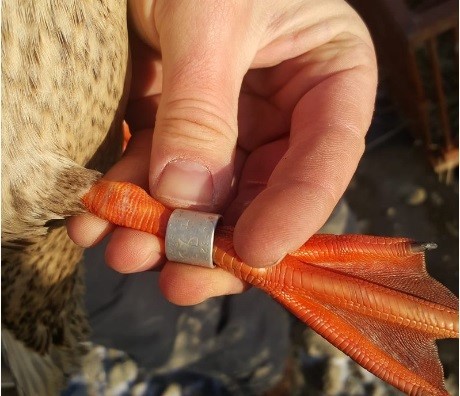 Each year, DEC staff, the United States Fish and Wildlife Service, SUNY Cobleskill, SUNY Environmental Science and Forestry, the University of Missouri, and many volunteers from around the state, set out each summer and winter to band thousands of ducks, geese, brant, and other migratory game birds. Throughout the Atlantic Flyway (Northern Canada through Florida), cooperators band approximately 25,000 ducks and 32,000 Canada geese from July through September each year. New York and state cooperators provide a huge contribution to the international banding effort, marking approximately 2,500 ducks and 3,500 Canada geese; both of which are more than any other state in the Atlantic Flyway.
 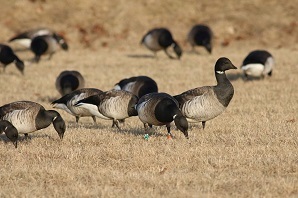 derivation and distribution (i.e. where birds harvested in a state come from and where birds banded in an area go to), harvest rates, and annual survival. All of this information is used annually by biologists to ensure populations of harvested species remain abundant over the long-term.
 Due to declines in the
 |
The New York State Department of Environmental Conservation respects your right to privacy and welcomes your feedback | Update preferences or unsubscribe | Learn more about DEC Delivers. | |
Connect with DEC:    
|
|
| Basil Seggos, Commissioner | |