|
Have a safe and enjoyable outdoor recreation experience on the lands and waters of the Adirondacks. Properly plan and prepare for your outdoor adventure. Minimize impacts on the mountains and forests, rivers and brooks, ponds and lakes, and the wildlife of the Adirondacks.
Check the Adirondacks Backcountry Information web pages for more detailed information on access, outdoor recreation infrastructure, and conditions for those planning to recreate in the Adirondacks. This bulletin provides only the most recent notices.
Emergency Situations: If you get lost or injured; keep calm and stay put. If you have cell service, call 911 or the DEC Forest Ranger Emergency Dispatch, 518-891-0235.
Check mountain weather conditions before heading out this weekend.
Packing the proper gear for a hike is very important, and you should be prepared to encounter all conditions. See our recommended packing list and safety tips and watch DEC’s HikeSmartNY video for more information.
Plan Ahead and Prepare
Check weather, trail conditions, regulations, and advisories before you travel. Have an alternate plan ready to ensure you can make the most of your time in the Adirondacks. Properly prepare to better ensure a safe and enjoyable outdoor recreation experience. Weather forecasts and conditions can and do change quickly. Check the current National Weather Service Forecast.
-
Review a trail map prior to your trip: Become familiar with specific junctions, markers, or trail changes along your route. It is easy to miss a sign or junction and get off trail in
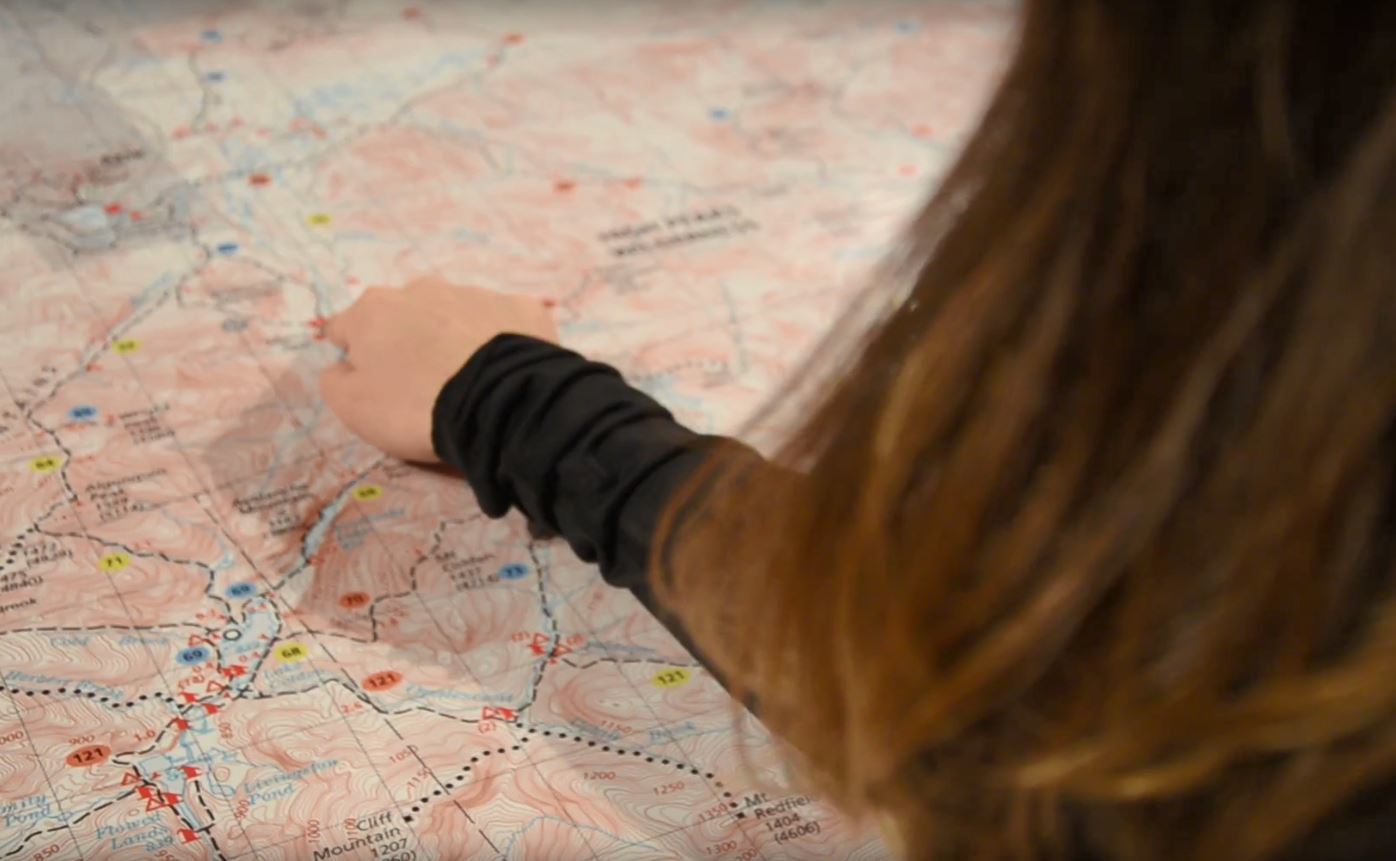 the winter, so familiarizing yourself ahead of time will allow you to remain aware and on the lookout. Bring the map with you. the winter, so familiarizing yourself ahead of time will allow you to remain aware and on the lookout. Bring the map with you.
-
Stream crossings will be icy and can be snow covered. Use caution when nearing a stream and use bridges to cross. If a bridge has been washed out, attempting to cross a cold, fast flowing stream can be dangerous. Prepare to turn around.
-
Snowshoes are recommended in high elevations: Snow depths are greater in higher elevations and warrant the use of snowshoes. Snowshoes help to avoid postholing which can make trails more difficult and hazardous for other hikers and skiers.
-
Carry traction devices on all hikes: Rain and warmer temperatures this weekend may bring ice to low elevation trails. Carry traction devices on all hikes.
Practice Leave No Trace
 Follow the Seven Principles of Leave No Trace and proper trail etiquette to maintain minimal impact on the environment and the natural resources of the Adirondacks while also ensuring an enjoyable outdoor experience for all visitors. Follow the Seven Principles of Leave No Trace and proper trail etiquette to maintain minimal impact on the environment and the natural resources of the Adirondacks while also ensuring an enjoyable outdoor experience for all visitors.
Winter Trail Etiquette:
- Avoid postholing. Wear skis or snowshoes on winter trails. Bare boots leave dangerous holes in the snow.
- Share the prails. Ski on one side, snowshoe on the other. Avoid crossing tracks.
- Travel single file, and always give downhill skiers the right of way.
General Conditions/Notices
Learn the conditions you will encounter from the Adirondack Backcountry Information web pages.
All
- Travel: Check NY511 for road closures and conditions.
- Weather:
- Showers and freezing rain are forecast Friday night.
- Above freezing temperatures and rain are forecast for Saturday.
- Temperatures will drop below freezing Saturday night.
- High temperatures Sunday will hover around the freezing mark and snow showers are forecast.
- Check the National Weather Service or NY Mesonow for updated hazardous weather notices and current conditions and forecasts for the location where you plan to recreate.
- Winter Conditions in the Adirondacks
- Sunset is approximately 4:20 p.m.
- Snow and ice are present throughout the Adirondacks
- Snow depths range from:
- Little to no snow across the northern Adirondacks,
- 1 to 4 inches across the central Adirondacks, and
- 2 to 8 inches across the southern Adirondacks
- Snow depths are deeper in higher elevations.
- Snow depths will decrease with warm weather and rain forecast for Saturday.
- The National Weather Service NERFC Snow Page provides maps depicting current snow depths and forecasts.
- Ice has begun to form on most water bodies.
- No ice is currently safe to travel on.
- Avoid ice over water which is covered by snow.
- Be Prepared:
- Wear:
- Insulated, water resistant/water proof winter hiking boots
- Waterproof outer shell
- Layers of non-cotton, wicking fabric, and pack extra clothing
- Hat and mittens (or gloves)
- Water
- Working headlamp or flashlight and extra batteries
- Extra layers of clothes
- Bring:
- Map of the area
- Food or snack
- Trail crampons (foot traction devices) and wear when conditions warrant.
- Snowshoes for high elevation hikes, and wear when conditions warrant.
- Watch a video about winter hiking safety tips.
- Seasonal Access Roads:
- All seasonal access roads are closed to motor vehicle traffic next week. The roads will reopen after the spring mud season upon completion of all maintenance and repair work.
-
Drones: Drones are motorized equipment, and operating drones on lands classified as wilderness, primitive, or canoe is prohibited.
Hikers & Campers
-
General Information:
- Trail Conditions:
- Expect and prepare for treacherous conditions. Trailheads, trails, footbridges and
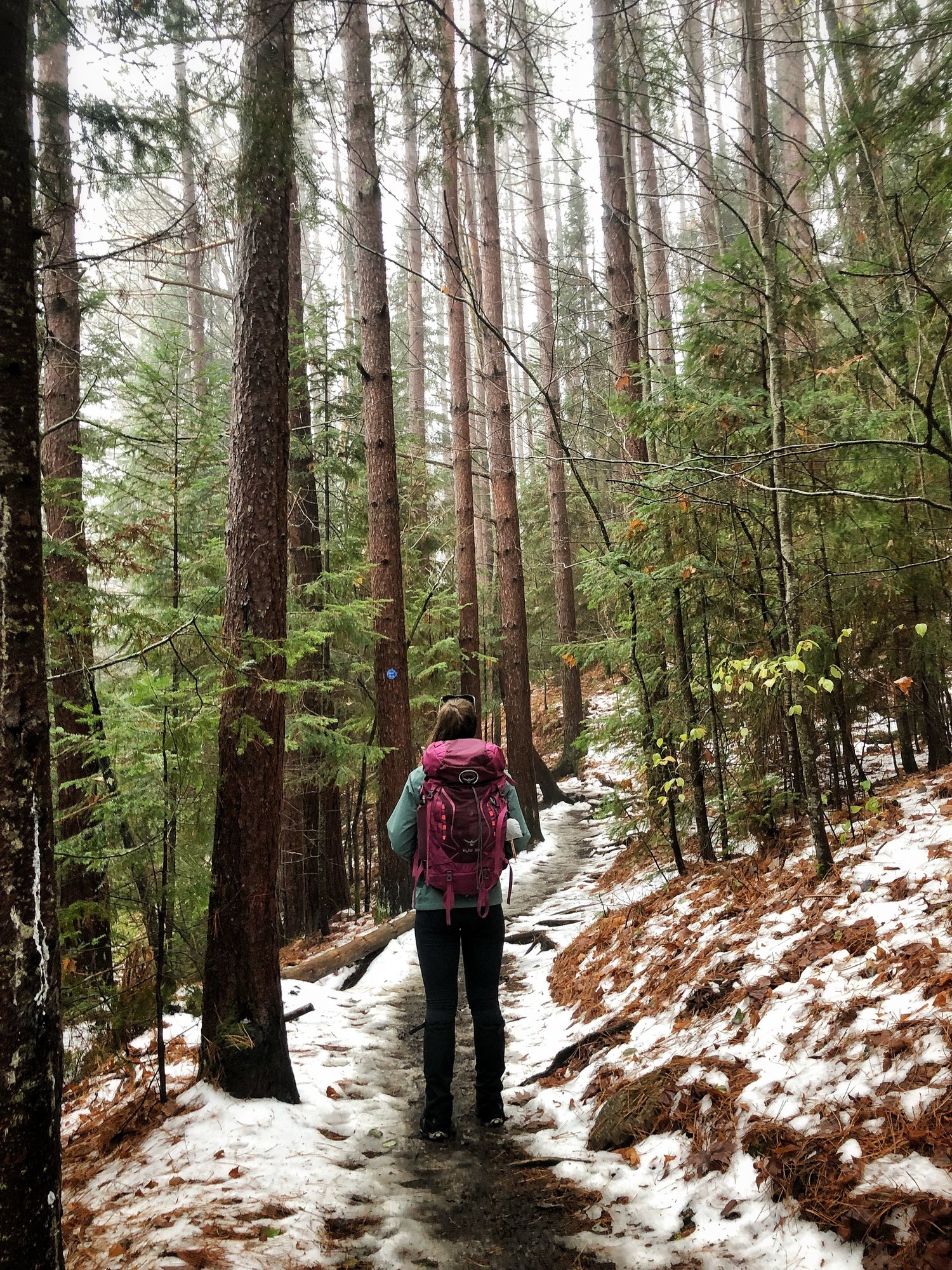 other infrastructure will be wet and icy this weekend. other infrastructure will be wet and icy this weekend.
- Trails will be a mix of ice, water, and slush on Saturday.
- On Sunday, trails will be icy with some snow.
- Many bridges were washed out or damaged in the Oct. 31 storm leaving some streams impassable. Use caution and be prepared to turn around.
- DEC continues to assess back country infrastructure. Hikers should be aware that not all areas have been assessed – more remote areas and less traveled trails are likely to have unreported damage.
- Be cautious of hanging branches and unstable fallen trees.
- Blow down may take considerably more time to hike around.
- Wear Proper Footwear:
- Wear waterproof boots with warm, wool socks to keep feet dry.
- Trail crampons (foot traction devices) should be carried on all hikes and used when warranted.
- Snowshoes are recommended for all hikes above 3,000 feet.
-
Water Crossings:
- Use caution at crossings and on trails along fast flowing brooks and rivers.
- Rocks and other surfaces may be covered with ice from splashing water.
- Wear crampons and use steel or carbide pointed hiking sticks.
- Some crossings may be difficult or impossible due to high water levels.
-
Mountain Summits:
Recent Notices
Notices below reflect recent changes in conditions and recreation infrastructure work completed by DEC and its partners. Check the Adirondack Backcountry Information web pages for ongoing issues and more detailed information.
-
High Peaks Wilderness:
- Corey’s Road will be open for winter access to the Seward Trailhead
- Only Four-wheel drive vehicles should use the road.
- Do not block the road when parking.
- Bring a shovel, and be prepared to shovel out off-road parking spots and your vehicle when you return from your hike or ski.
- Lake Colden Caretaker Report
- 4 inches (10 cm) of snow is present at the stake at the cabin.
- Up to a foot of snow is present in the highest elevations.
- Recent warm weather and rain have resulted in a considerable loss of snow.
- Skiing conditions are poor.
- Meadow Lane, Marcy Truck Trail, and the Loj to Marcy Dam Trail have little to no snow.
- Middle elevation trails have bare spots and exposed rocks and roots.
-
Wilcox Lake Wild Forest: The Spruce Mountain Trail is open for public use.
-
Perkins Clearing/Speculator Tree Farm Conservation Easement Lands:
- All seasonal access roads are closed to motor vehicles until after the spring mud season.
- All designated snowmobile trails are open for use except for the north end of Perkins Clearing Road which will be used as a haul road for timber operations this winter.
- The Brister Brook Parking Area is closed this winter due to damage from the Halloween Storm. The Town of Lake Pleasant has created a larger parking area off NYS Rt 30 near the turn for Jessup River Road.
-
Blue Mountain Lake Wild Forest/Township 19: Logging operations will continue this winter.
- Snowmobilers will be sharing the road with logging trucks and other equipment.
- Be alert and proceed with caution.
-
Ha-De-Ron-Dah Wilderness:
- The Middle Branch Lake Trail flooded due to beaver activity between the Cedar Pond Trail and Middle Branch Lake.
- DEC has removed the culvert on the Big Otter Lake East Trail and constructed a foot bridge over Indian Brook.
- On the Big Otter Lake East Trail, beaver activity has ceased at South Inlet Flow and the trail is no longer flooded.
-
Essex Chain Lakes: All seasonal access roads are closed to motor vehicles until after the spring mud season.
Highlighted Hike: Sleeping Beauty Mountain, Lake George, NY

Sleeping Beauty Mountain, part of the Lake George Wild Forest, is located on the east side of Lake George and is a moderate hike with a few steeper switchbacks. The trail ascends 1,038 feet and 2.1 miles from the Dacy Clearing Parking Area to the summit at 2,347 feet. From the parking area, follow the trail about half a mile to the first intersection, then turn right and continue the rest of the way to the summit. Hikers will encounter the false summit first which provides stunning views of the lake and surrounding mountains. The wooded summit is approximately a half mile further from the false summit.
Hikers should be prepared for cold, wet weather by wearing waterproof boots and warm layers. Pack extra warm layers, a hat, and gloves for the summit. Bring traction devices as trails are likely to be icy.
Dacy Clearing Parking Area is located on Dacy Clearing Road off Shelving Rock Road and provides access to the campsites in the Shelving Rock day use area and numerous trails, including the Longway Trail and Sleeping Beauty Mountain Trail. (43.549448°N, 73.555871°W)
|