|
Have a safe and enjoyable outdoor recreational experience on the lands and waters of the Adirondacks. Properly plan and prepare for your outdoor adventure. Minimize the impact on the mountains and forests, rivers and brooks, ponds and lakes, and the wildlife of the Adirondacks.
Check the Backcountry Information for the Adirondacks web pages for more detailed information on access, outdoor recreation infrastructure, and conditions for those planning to recreate in the Adirondacks. This bulletin provides only the most recent notices.
Emergency Situations: If you get lost or injured; keep calm and stay put. If you have cell service, call 911 or the DEC Forest Ranger Emergency Dispatch, 518-891-0235.
Check mountain weather conditions before heading out this weekend.
Packing the proper gear for a hike is very important, and you should be prepared to encounter all conditions. See our recommended packing list and safety tips.
Bear Advisory: While preparing for your camping or hiking trip, check area notices for active bear advisories. If there are active bears present where you are planning to go, either choose an alternative trip or thoroughly educate yourself on how to reduce your chance of a bear encounter with proper food storage, disposal of food waste, and what to do if you happen to encounter a bear. Learn more about avoiding nuisance bears.
Parking restrictions along Route 73: Parking is prohibited on the shoulders of State Route 73 between Chapel Pond and Rooster Comb Trailhead. Violators will be ticketed. Park in designated pull offs and trailhead parking areas only.
Leave No Trace Hot Spot Events - August 7th-14th: The Leave No Trace Center for Outdoor Ethics and its Subaru Traveling Trainer team are partnering with ADK (Adirondack Mountain Club), DEC, and other regional organizations to host a series of events over the course of the week focusing on the heavily-visited Eastern High Peaks Wilderness. The Hot Spot seeks to address the challenges associated with high concentrations of visitors to the region, including damage to alpine plants, trail erosion, human waste, and negative human/wildlife interactions. Find all the ways you can get involved. All events are free and open to the public.
Plan Ahead
Check weather and trail conditions, regulations, and advisories before you travel. Have an alternative plan ready to ensure you can make the most of your time in the Adirondacks.
-
Lake Placid Ironman: The Lake Placid Ironman will be held on Sunday, June 28. Road closures and road restrictions will cause traffic delays on the roads in the Lake Placid, Keene, and Wilmington area.
-
Campers: Plan to buy your firewood locally, within 50 miles of your camping destination. By transporting firewood from outside of this radius, you could be spreading diseases and invasive insects that can quickly kill large numbers of trees.
-
Stop the spread of Aquatic Invasive Species: Spend time cleaning your boat before transporting it to another body of water. Boats, trailers, waders and other fishing equipment can spread invasive species from water body to water body unless properly cleaned after use. Regulations prohibit boats from launching from or leaving DEC launch sites without first draining the boat and cleaning the boat, trailer and equipment of visible plant and animal material.
Prepare
Properly prepare to better ensure a safe and enjoyable outdoor recreation experience. Weather forecasts and conditions can and do change quickly. Check the current National Weather Service Forecast, and be prepared for the forecasted conditions or change your plans.
-
Summer weather is upon us! Follow these summer preparedness tips before hitting the trail:
- Rest and hydrate often to help combat the humidity and heat exhaustion.
- Apply sunscreen and Chapstick with SPF liberally and often.
- Bring plenty of food to keep up with the calories you'll burn.
- Keep an eye and ear on the weather. Summer heat can bring unexpected thunderstorms in the mountains.
- Always bring a headlamp, first aid kit, and map of your planned route.
- Plan to start your hike early in the morning when the temperatures are cool.
-
Know the signs of heat exhaustion. If you experience any of these symptoms below, take a rest by finding a shady area, drink plenty of water and take measures to cool yourself down. If there is a nearby stream, splash your face, neck, and wrists with the cool water. Do not try to hike further until your symptoms have completely faded. If you try to exert yourself too soon, the symptoms will only increase your chance of a heat stroke.
- Cool, moist skin with goose bumps when in the heat
- Heavy sweating
- Faintness
- Dizziness
- Fatigue
- Weak, rapid pulse
- Low blood pressure upon standing
- Muscle cramps
- Tips to stay hydrated
- Drink more than necessary the week leading up to your hiking trip.
- Drink 1-2 cups of water or a sport drink before beginning your hike.
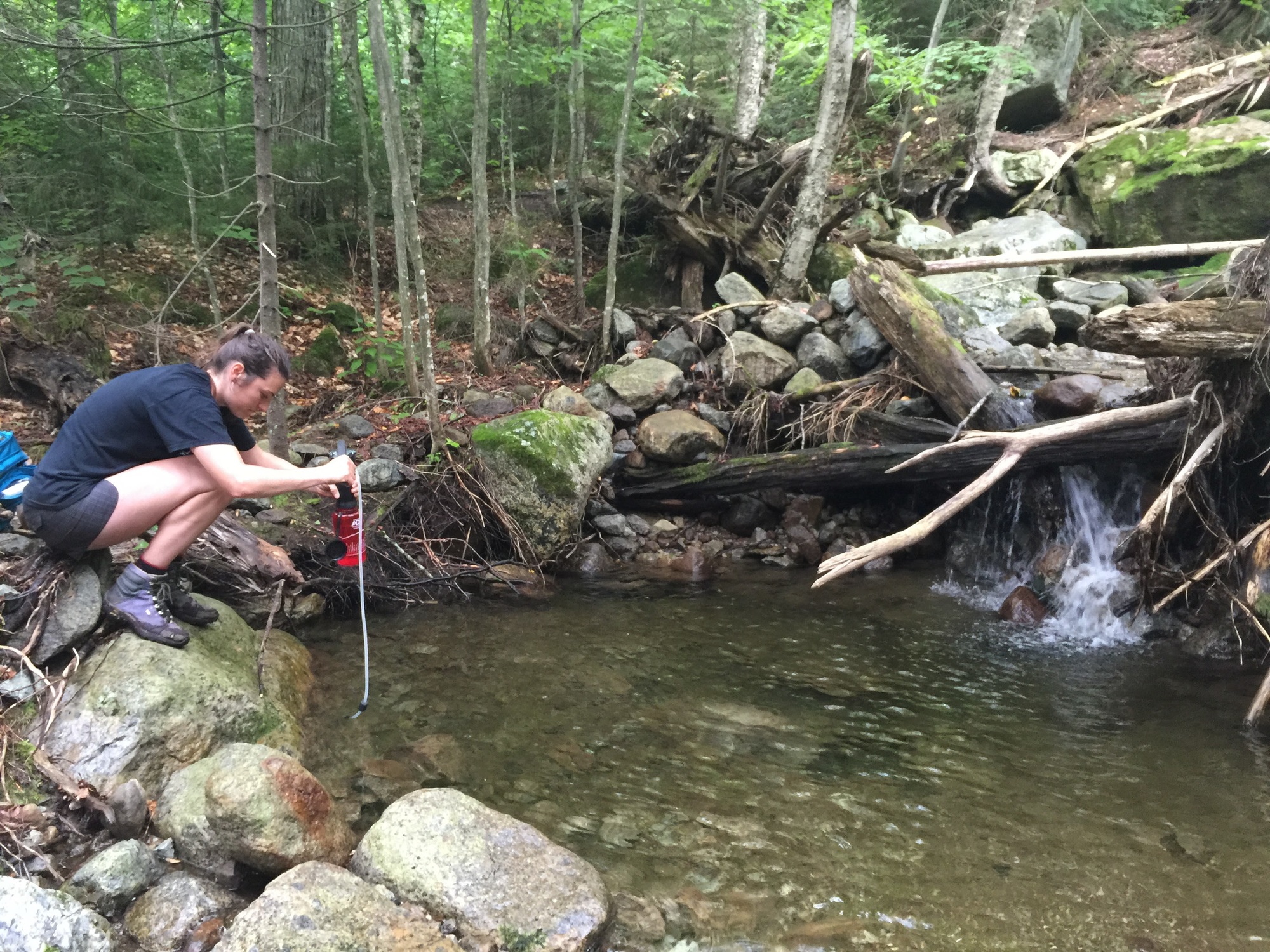
- Limit the amount of caffeine drinks. Caffeine increases fluid loss and can dehydrate you faster.
- During the hike, drink at least 1qt. of water per hour.
- Alternate between water and electrolyte or sport beverage. Sports drinks or electrolyte tabs help retain fluids and maintain energy.
- Drink more than you think is necessary.
- Assess your hydration along your hike by looking for signs of: low volumes of dark urine, rapid heart rate, weakness, excessive fatigue, or dizziness.
- Continuing to hike in a dehydrated state can lead to serious consequences, including heat stroke, muscle breakdown, and kidney failure.
- Rehydration is essential when you’ve completed your hike - rehydration is enhanced when fluids or foods contain sodium and potassium like bananas, citrus fruits, lemonade, and orange juice.
Practice Leave No Trace
 Follow proper trail etiquette to maintain minimal impact on the environment and the natural resources of the Adirondacks, as well as ensure an enjoyable outdoor experience for all visitors by following the Seven Principles of Leave No Trace. Follow proper trail etiquette to maintain minimal impact on the environment and the natural resources of the Adirondacks, as well as ensure an enjoyable outdoor experience for all visitors by following the Seven Principles of Leave No Trace.
Minimize Campfire Impacts:
-
Where fires are permitted, use established fire rings, fire pans, or mound fires.
-
Keep fires small. Only use sticks from the ground that can be broken by hand.
-
Never leave a campfire unattended. Even a small breeze could cause the fire to spread quickly.
-
Burn all wood and coals to ash, put out campfires completely, then scatter cool ashes.
-
Drown the fire with water. Stir the remains, add more water, and stir again. If you do not have water use dirt. Do not bury your coals as they can smolder and break out.
-
Consider using a small stove for cooking in remote areas vs. making a campfire.
-
Burn only local firewood to prevent the spread of invasive species.
-
Never burn trash which includes: plastic, metal (such as cans) and glass.
- Never use fire accelerants such as kerosene, gasoline or lighter fluid.
General Conditions/Notices
Learn the conditions you will encounter from Adirondack Backcountry Information.
All
-
Travel: Check NY511 for road closures and conditions.
- Summer Weather:
- Mostly sunny with daytime highs in the low 80s.
- Check the National Weather Service or NY Mesonow for updated hazardous weather notices and for current conditions and forecasts for the location where you plan to recreate.
-
Avoid Heat Exhaustion and Heat Stroke:
- Wear sunscreen and a hat.
- Slow your pace.
- Drink water and rest more often.
- Seek shade and avoid long periods in direct sunlight.
- Dogs are much more susceptible to overheating.
- Be sure to bring plenty of water for them.
- Make sure they rest often in the shade.
- Consider leaving them home.
-
Thunderstorm Safety: Thunderstorms can pop up even if they are not forecast.
- Avoid summits, water surfaces and other open areas during thunderstorms.
- As soon as you are first aware of an approaching thunderstorm, move to lower elevations, head to shore, and seek shelter.
- If caught outside in a thunderstorm, find a low spot away from tall trees, seek an area of shorter trees and crouch down away from tree trunks.
-
Biting Insects: It is bug season in the Adirondacks. Expect to encounter deer flies, mosquitoes, no-see-ums (biting gnats), and ticks. Follow these steps to minimize the nuisance of biting insects:
- Wear light-colored, long sleeve shirts and long pants.
- Tuck shirts into pants, button or rubber band sleeves at the wrist, and tuck the bottom of pant legs into your socks.
- Pack a head net to wear when insects are thick.
- Use an insect repellent and follow label directions.
- View these additional tips for tick prevention.
-
Fire Danger: Low, throughout the Adirondacks. Check the Fire Danger Rating Map.
-
Seasonal Access Roads: All but a very few seasonal access roads are open to public motor vehicle traffic. Check the Specific Notices below for roads that remain closed.
- Seasonal access roads are dirt and gravel which can be rough.
- Four-wheel drive SUVs, pick-up trucks, and other high clearance vehicles are recommended for driving on these roads.
- Roads may be narrow – use caution, drive slowly, and watch for oncoming vehicles.
Hikers & Campers
-
General Information:
-
Trail Conditions:
- Wear footwear suitable for hiking through wet and muddy areas.
- Please protect trails and trailside vegetation – stay in the center of the trail and walk through mud and water, not around it.
- Trails continue to dry but expect to encounter wet and muddy conditions in low areas, along waterbodies, and after rain events.
- Be aware that water levels will increase during and immediately after significant rain events - low water crossings may be difficult to cross.
-
Bear Resistant Canisters:
- The use of bear-resistant canisters ensures campers don’t lose food, prevents creating nuisance bears, and is required for overnight users in the Eastern High Peaks Wilderness between April 1 and November 30.
- All food, toiletries, and garbage must be stored in bear-resistant canisters.
- DEC encourages the use of bear-resistant canisters and other practices to avoid negative encounters with bears throughout the Adirondacks.
-
Mountain Summits:
Bikers
-
General Information: Biking
- Trail Conditions:
- Trails continue to dry and are in good condition.
- Trails or sections of trails may be muddy after rain.
- Please don’t ride on muddy trails, they are easily rutted and damaged through use - if you are leaving tracks, turn back.
- The Barkeaters Trail Alliance provides information on the status of mountain bike trails in the Tri-lakes region of the Adirondacks.
-
E-bikes: Electric powered bikes are prohibited on all bike trails on the Forest Preserve.
Boaters, Paddlers, and Anglers
-
General Information
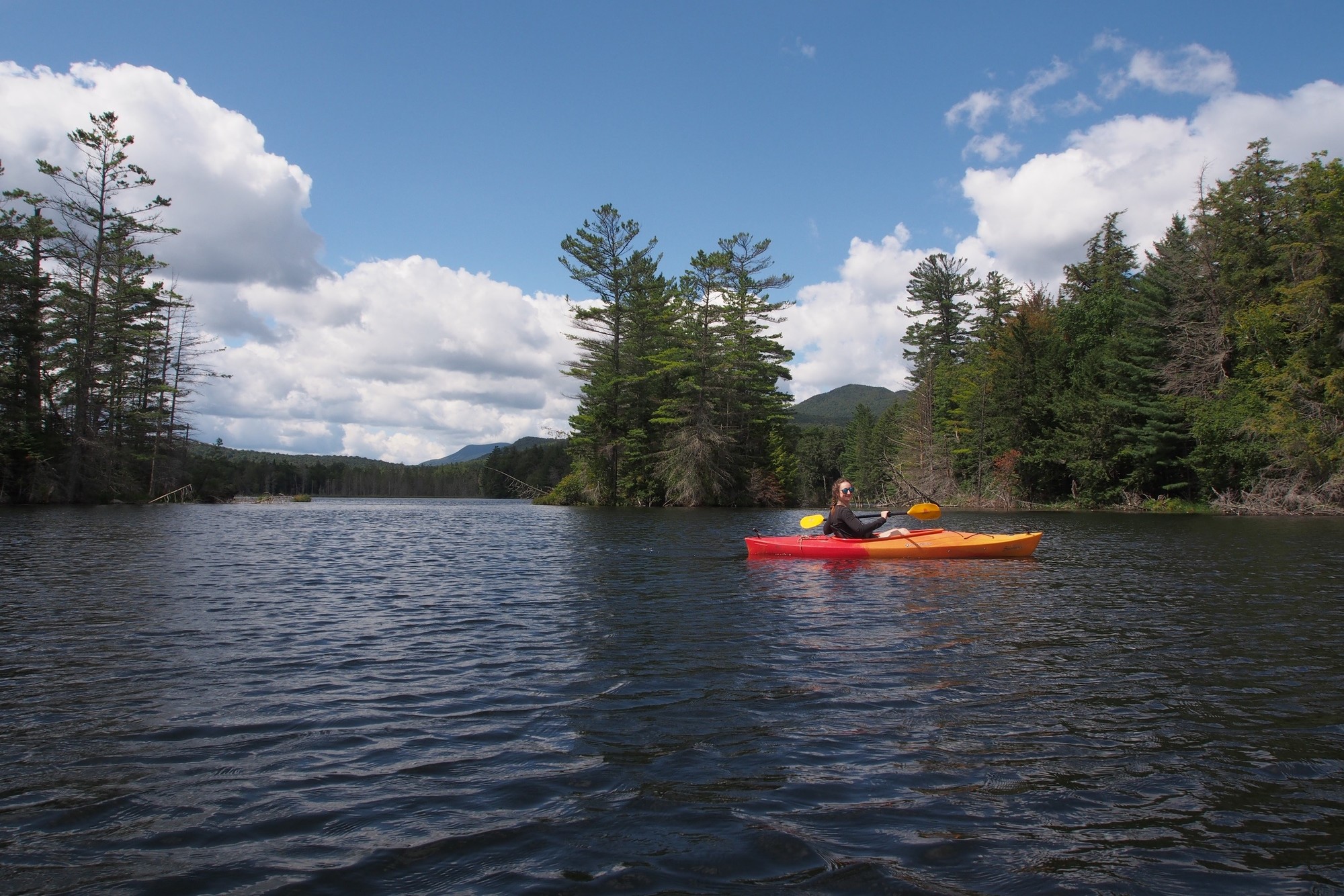
- Condition
- Water levels are in the average range, but due to saturated soils, they can rise quickly in smaller rivers and streams after significant rain events.
- Personal Flotation Devices (PFDs aka lifejackets) are strongly recommended to be worn by all anglers, boaters, and paddlers.
- Check the USGS Current Water Data for New York for stream flow of selected waters.
-
DEC Boat Launches: Docks have been installed at all boat launches.
Climbers
-
Rock Climbing Route Closures: Many Adirondack rock climbing routes have been opened but some remain closed (Updated 7/25) to protect Peregrine falcon nest sites.
Recent Notices
Notices below reflect recent changes in conditions and recreation infrastructure work completed by DEC and its partners. Check the Adirondack Backcountry Information web pages for ongoing issues and more detailed information.
-
High Peaks Wilderness/McKenzie Mountain Wilderness/ Sentinel Range Wilderness/Saranac Lake Wild Forest/Wilmington Wild Forest: The Lake Placid Ironman will be held on Sunday, June 28. Road closures and road restrictions will cause traffic delays on the roads in the Lake Placid, Keene, and Wilmington area.
-
Moose River Plains: Rock Dam Road is open for public motor vehicle use.
- The shoulders of the road remain soft.
- Please use caution when using the road.
- Four-wheel drive vehicles are recommended.
-
Wilcox Lake Wild Forest: Pumpkin Hollow Road is open for public motor vehicle use.
-
Blue Mountain Wild Forest/Township 19: The O’Neill Flow and Barker Pond Roads remain closed due to extremely muddy conditions.
-
Ausable Mountain Reserve Conservation Easement Tract/High Peaks & Giant Mountain Wildernesses:
-
Be safe, enjoy your hike, and avoid a parking ticket.
-
Do not park on the shoulders of State Route 73 in the four-mile section 73 between Chapel Pond and the Rooster Comb Trailhead.
- Parking is allowed at trailheads and other designated pull-offs.
- Hikers planning to use the AMR parking lots and hike any of the nearby trails should identify alternate hikes before arriving as the lots will fill quickly.
- DEC encourages hikers to discover and visit the other numerous hiking opportunities in the area, or visit on weekdays when there is less demand.
-
Hikes Outside the Adirondack High Peaks lists a dozen nearby alternate hikes.
-
Boreas Ponds Tract: Work on Gulf Brook Road continues.
- The road is closed to motor vehicles Monday through Thursday.
- Hikers, bikers, and horseback riders may use the road but must use caution in active work areas and follow the instructions of staff.
- The road is open to the Fly Pond Gate Friday through Sunday.
-
High Peaks Wilderness:
- There has been increased bear activity at Marcy Dam and Feldspar. Avoid problems with bears:
- Cook early.
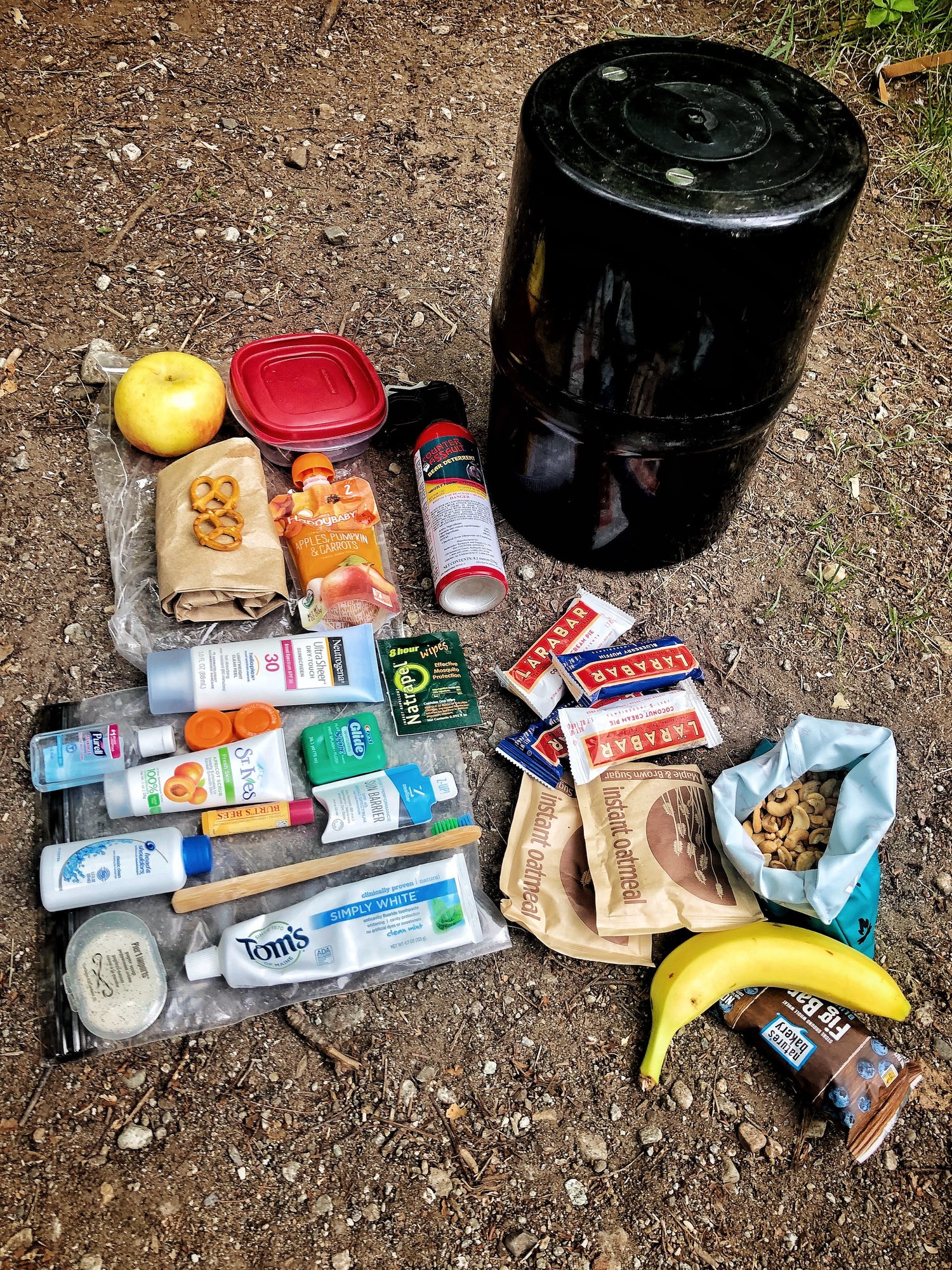
- Secure canister immediately after taking food out.
- Consider bear spray for unexpected close encounters.
- Due to unforeseen circumstances, the replacement of Johns Brook Road Bridge will not be completed until early September.
- Hikers will only be able to access The Garden Trailhead using the shuttle from Marcy Field until then.
- Check the Town of Keene’s website for shuttle information.
- Hikers seeking to use the Mt. Van Hoevenberg East Trail, which opened last fall, will be re-routed around the construction underway to make significant improvements to Olympic Sports Complex facilities.
- Hikers can park at the Biathlon Facility parking area in the Complex and use a marked 1.0-mile detour bypassing the construction zone using roads, ski trails, and a temporary trail to reach the Mt. Van Hoevenberg East Trail.
- It is a 3.8-mile round-trip hike from the parking area to the summit and back.
- Expect to encounter trail workers along the trail to the summit of the mountain as they complete the final touches on the sustainably designed and recently opened trail.
- Hikers may also reach the summit using the traditional 2.2-mile (4.4-mile roundtrip) Mt. Van Hoevenberg West Trail which begins at the trailhead on Meadows Lane.
-
Closed Seasonal Access Roads:
-
Terry Mountain State Forest: The Terry Mountain State Forest remains closed for mud season.
-
Lake George Wild Forest: Gay Pond Road remains closed due to the large amount of blowdown on the road.
Highlighted Trip - Camp Sagamore Trail System, Raquette Lake, NY
Camp Sagamore is one of several historic Great Camps located in the Adirondack Mountains. Part of the Historic Great Camps Special Management Area, it includes nearly seven miles of scenic trails along the shores of Sagamore Lake and the South Inlet of Raquette Lake in the 47,177-acre Blue Ridge Wilderness. Visitors are encouraged to practice Leave No Trace when recreating in the Adirondacks to enjoy the outdoors responsibly and minimize impacts on the natural resources in the area.
Trails:
- 3.8-mile Sagamore Lake Trail is a loop trail around the shores of Sagamore Lake.
- 1.5-mile Cascades Trail follows the western bank of the South Inlet of Raquette Lake.
- 1.6-mile Powerhouse Trail follows the eastern bank of the South Inlet of Raquette Lake.
DEC recently announced the completion of the 135ft Big Slope Bridge and other improvements to the Big Slope Trail and Powerhouse trail. The new bridge offers visitors scenic wetland views and dry footing during hikes.
Camp Sagamore Parking Area is a large parking area on Sagamore Road. It provides parking for those accessing the Sagamore Trail System and guests of Camp Sagamore. (43.7635°N, 74.6311°W).
View Map
|