Wildlife, Fish & Marine Life Newsletter
The New York State Department of Environmental Conservation sent this bulletin on 06/17/2019 03:36 PM EDT |
| DEC Delivers - Information to keep you connected and informed from the NYS Department of Environmental Conservation |
| Share or view as a web page || Update preferences or unsubscribe |
Wildlife, Fish, and Marine Life Newsletter |
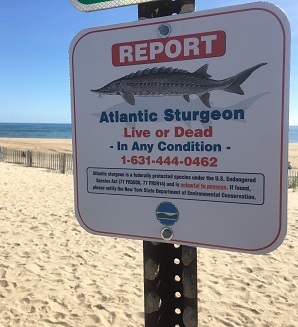
Please Report All Sightings of Atlantic Sturgeon
Atlantic sturgeon are anadromous fish, which means they’re born in freshwater but spend most their lives in saltwater, returning to freshwater only to spawn. Sturgeon are one of the largest and longest-lived anadromous fish in North America. They are commonly seen off the coast of Long Island and in the Hudson River during the spring and fall. Historically, they supported a major commercial fishery in New York, but due to overfishing they’re now listed as an endangered species. Help Protect Young Wildlife When Managing Habitat
You can help by conducting a walkthrough before mowing, but a fawn’s camouflage and sit-and-stay behavior make it difficult to spot. It’s best to wait until later in the summer to conduct your first mowing to make sure that fawns, rabbits, and birds have matured and can escape from mowers and tractors. Visit the DEC website to find more information about what to do when encountering fawns and other young wildlife. Photo by Art Jacobson. Have You Seen Moose in New York?
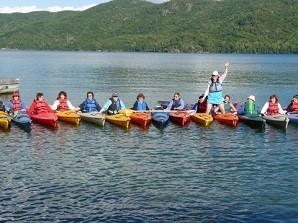
DEC reminds the public to respect wildlife by viewing from a distance, at least 50 feet away. Keep quiet, move slowly, and do not approach moose. Drive cautiously at dusk and at night in the Adirondacks. Due to their height and dark color, moose are hard to see on the road until they are close. There have been three moose-motor vehicle collisions recently. Registration Now Open for the 2019 Fall BOW Workshop!Join us for DEC's 26th Annual Becoming an Outdoors-Woman (BOW) Workshop in scenic Silver Bay on Lake George in the Adirondacks! BOW workshops provide hands-on instruction and experiential learning in a fun and supportive environment.
New This Year at BOW: K-9 first aid, basic self-defense in the outdoors, hawk watching, become a hobby farmer, exploring nature with kids.
Hunter education, trapper education, kayaking, stand up paddleboard, wilderness survival, map & compass, rifle, shotgun, archery, crossbow, food preservation, Adirondack ecology, taxidermy, wild fish & game cooking, fly fishing, snorkeling, and much more! How to Register:
Last day to register is July 1st. Registration admission will be determined via lottery. To receive information on Becoming an Outdoors-Woman activities and events directly from the program, sign up now! DEC Announces Falconry, Wildlife Rehabilitator and Leashed Tracking Dog ExamsExaminations for New Yorkers seeking a license to practice the sport of falconry, become a volunteer wildlife rehabilitator, or use leashed tracking dogs to find wounded or injured big game animals are scheduled for Friday, Aug. 9, 2019. The deadline to register is July 19. Visit DEC's website for details. |
 During the summer months, human and
 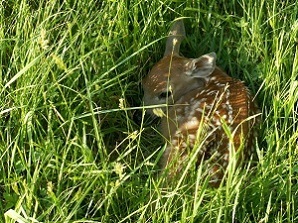 In warm weather, fields and yards quickly become a jungle of wild flowers, grasses, and other greenery. While those fields of green may be a chore to landowners, it provides habitat for many animals. Ground nesting birds use these areas to construct their nests and raise their young. Rabbits and white-tailed deer will also give birth in these dense grasses. In the first few weeks following birth, female deer will leave their fawns in secure places while they look for food. This can leave fawns susceptible to unexpected threats like lawn mowers and tractors.
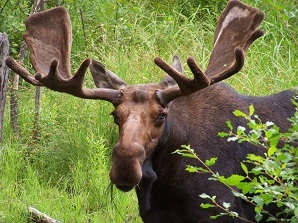 Moose are New York’s largest land mammal, but they can be hard to find. Seeing one is a special experience, and DEC would like to hear your story and see your pictures. DEC uses reports of moose sightings submitted by the public to track changes in moose distribution over time. You can see maps of past moose sightings, learn about our research, and help us monitor moose by
  Returning Courses:
|
The New York State Department of Environmental Conservation respects your right to privacy and welcomes your feedback | Update preferences or unsubscribe | Learn more about DEC Delivers. |
|
Connect with DEC:    
|
|
| Basil Seggos, Commissioner | |