Water Week 2019: Restoring and Protecting NY’s Waters with State Funding
Celebrate Water Week by learning more about DEC’s water-related grants available to help protect and restore water for the future! MakingWaves subscribers will receive a special Water Week edition each day this week highlighting types of water improvement projects and funding available for planning and implementation.
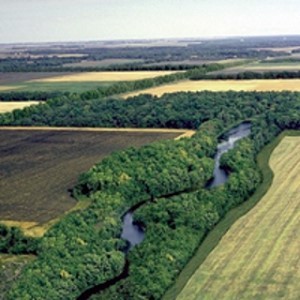 Today’s topic: Nonpoint Source Pollution Today’s topic: Nonpoint Source Pollution
Did you know?
- Best management practices (BMPs) are the actions on the ground that help improve and restore water quality. Which BMP to use depends on the pollutant of concern (e.g., phosphorus, nitrogen), land use (e.g., urban, suburban, agriculture) and the goal (e.g., meeting a particular pollutant reduction goal).
- DEC's Division of Water has two grant programs available through the Consolidated Funding Application (CFA) that can help pay for nonpoint source best management practices:
-
Non-agricultural Nonpoint Source Planning Grant (NPG) - New for 2019, the NPG provides up to $30,000 (with 10 percent local match) to conduct planning for nonpoint source projects. Eligible applicants are municipalities and soil and water conservation districts.
-
Water Quality Improvement Projects (WQIP) - Eligible nonpoint source projects include: green infrastructure practices/stormwater retrofits, streambank stabilization and riparian buffers, beach restoration, and culvert repair and replacement. Maximum grant amounts available vary depending on the project type, but all nonpoint source projects require a 25 percent local match. WQIP has provided grants for nonpoint source projects for over 20 years.
Test your water knowledge
What are “green infrastructure” practices and why are they an important?
Learn more
Answer: Green infrastructure (GI) is a category of BMPs to manage stormwater, a leading nonpoint pollution source impacting New York’s waters. On a larger scale, green infrastructure includes preserving and restoring natural landscape features (such as forests, floodplains and wetlands), and reducing the amount of land covered by impervious (watertight) surfaces. On a smaller scale, GI practices include green roofs, pervious pavement, rain gardens, vegetated swales, planters and riparian buffers.
|