Wildlife, Fish & Marine Life Newsletter
The New York State Department of Environmental Conservation sent this bulletin on 05/08/2019 02:59 PM EDT |
| DEC Delivers - Information to keep you connected and informed from the NYS Department of Environmental Conservation |
| Share or view as a web page || Update preferences or unsubscribe |
Wildlife, Fish, and Marine Life Newsletter |
State Lands to Visit: Youngs Island Wildlife Management Area
Youngs Island WMA is part of an Audubon Important Bird Area (Nissequogue River Watershed and Smithtown Bay) and is a great location to spot long-legged waders, shorebirds, and most gull species. Seals have also been known to forage in the waters just off the shore. Read more about Youngs Island WMA in the April issue of the Conservationist (PDF). An Odd (and Stinky) Situation - Ulster County
Deer Management in Urban & Suburban New York
Urban/suburban deer overabundance is challenging community residents, local municipal officials, and state agencies across the country. In some respects, New York is at the forefront of management approaches to this problem, but state laws prevent the use of several of the most effective techniques. Removing those legal obstacles would make it easier and more affordable for communities to address their deer-related problems. No matter what methods are used, urban/suburban deer management is a complicated process requiring a long-term commitment. Communities and individuals interested in developing a deer management program can visit DEC’s Community Deer Management webpage for a deer management guide, other resources, and contact information. DEC Announces Nuisance Wildlife Control Operator ExamExams to be Held June 21, Registration Deadline is June 14 DEC announced the Nuisance Wildlife Control Operator exam scheduled for Friday, June 21, 2019. The exam will take place from 10 a.m. to 12 p.m. at the DEC Region 2 office located at 47-40 21st Street, Long Island City, NY 11101. The examination is for individuals seeking a general (commercial) license to provide wildlife removal services. For more information on the Nuisance Wildlife Control Operator License and links to obtain study materials please visit DEC's website. Individuals can register for the exam by contacting the DEC Region 2 wildlife office at (718) 482-4922 or e-mail R2.NaturalResources@dec.ny.gov and provide your name, mailing address, phone number and an e-mail address. There is no fee to take the exam. DEC to Hold Angler Outreach Meeting on May 22DEC invites the public to learn more about the status of Lake Erie and Upper Niagara River fisheries at a public meeting on Wednesday, May 22, from 6:30 p.m. to 9:30 p.m. at The Lodge at Woodlawn Beach State Park, 3580 Lake Shore Rd, Blasdell, NY 14219. |
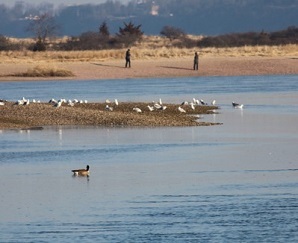 Youngs Island Wildlife Management Area (WMA) is located in the middle of Porpoise Channel near the village of Stony Brook, on Long Island. Visitors will find an escape from the bustle of a busy downtown; a place where people can enjoy wildlife-related activities such as fishing and waterfowl hunting. Access to the island is by boat only (typically kayaks) and should be limited to the fall and winter seasons when local birds are not breeding on the island. Though relatively small, this WMA expands to nearly 100 acres when its mudflats are exposed at high tide.
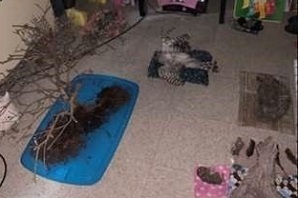 On April 10, Environmental Conservation Officer Jeannette Bastedo investigated a complaint regarding a woman in the city of Kingston in possession of several wildlife carcasses. The woman was collecting dead wildlife and keeping the carcasses in her living room, including a Cooper's Hawk, an opossum, a gray squirrel, several snakes, small birds, mice, and what appeared to be a decomposed small rabbit. Most protected wildlife can only be possessed if legally taken during their respective open seasons. You need a federal permit to possess any live or dead migratory birds such as the Cooper's Hawk. Deceased wildlife, regardless of the cause of death, should be left to return to the ecosystem from which it came. The woman was issued a ticket returnable to the City of Kingston court for illegal possession of wildlife, and the carcasses were removed from the residence.
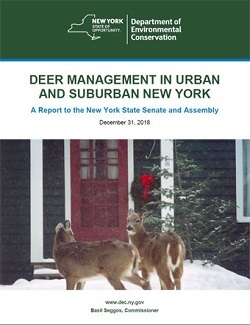 White-tailed deer are an important part of New York’s natural heritage. However, they increased in abundance throughout the last century and have now reached problematic levels in many parts of the state, especially where local and state laws and landowner opinions have constrained regulated hunting. DEC created
|
The New York State Department of Environmental Conservation respects your right to privacy and welcomes your feedback | Update preferences or unsubscribe | Learn more about DEC Delivers. | |
Connect with DEC:    
|
|
| Basil Seggos, Commissioner | |