|
Have a safe and enjoyable outdoor recreational experience on the lands and waters of the Adirondacks. Properly plan and prepare for your outdoor adventure. Minimize the impact on the mountains and forests, rivers and brooks, ponds and lakes, and the wildlife of the Adirondacks.
Check the Backcountry Information for the Adirondacks web pages for more detailed information on access, outdoor recreation infrastructure, and conditions for those planning to recreate in the Adirondacks. This bulletin provides only the most recent notices.
Emergency Situations: If you get lost or injured, keep calm and stay put. If you have cell service, call the DEC Forest Ranger Emergency Dispatch, 518-891-0235.
Check mountain weather conditions before heading out this weekend.
Packing the proper gear for a hike is very important, and you should be prepared to encounter all conditions. See our recommended packing list and safety tips.
Plan Ahead and Prepare
Weather forecasts and conditions can and do change quickly. Check the current National Weather Service Forecast, and be prepared for the forecasted conditions, or change your plans.
-
Ice and snow still present above 3,000 feet: Ice and snow are still present on trails in high elevations. Crampons and snowshoes should still be carried on all hikes above 3,000 feet. Hikers should be prepared for deep, soft, rotten snow and icy conditions on most mountains. Snowshoes prevent post-holing. Post-holing through soft, rotten snow can cause extreme exhaustion.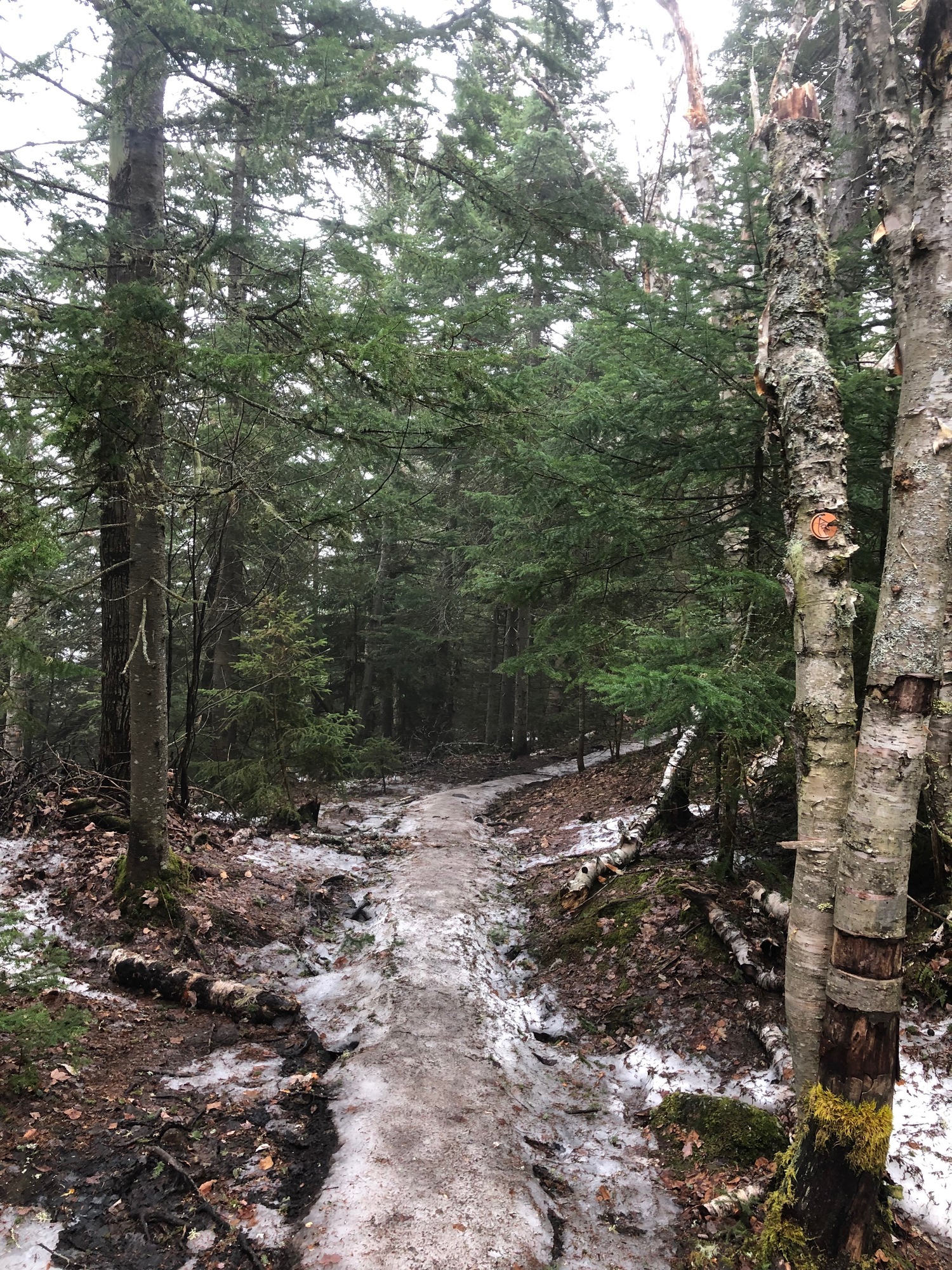
-
Monorails: As snow next to the trails melts, compacted ice in the center creates “monorails.” Monorails can be tough to traverse. Take your time, use crampons and other traction devices for walking directly on the monorail. This avoids post-holing in trailside snow and trampling fragile vegetation and wildlife habitats.
-
Paddlers: Always wear a personal flotation device (PFD - they are required before May 1st). Water temperatures are cold. A person in the water can quickly lose the ability to keep their head above water. Use caution entering and exiting your canoe or kayak. Expect high water levels and swift currents. Research your trip ahead of time and heed any high-water warnings or advisories for select paddling routes. Watch closely for trees, branches, rocks and debris both above the surface and underwater.
-
Layering for spring-like temperatures: Temperatures at the trail head will vary from temperatures at your destination. Higher elevations and exposed summits can have significantly colder temperatures than the base of the mountain. Pack extra non-cotton, wind protectant layers, and be sure to use them once exposed or feeling colder to help prevent hypothermia.
Practice Leave No Trace
Follow proper trail etiquette to maintain minimal impact on the  environment and the natural resources of the Adirondacks, as well as ensure an enjoyable outdoor experience for all visitors by following the Seven Principles of Leave No Trace. environment and the natural resources of the Adirondacks, as well as ensure an enjoyable outdoor experience for all visitors by following the Seven Principles of Leave No Trace.
General Conditions/Notices
Learn the conditions you will encounter from Adirondack Backcountry Information.
All
-
Travel: Check NY511 for road closures and conditions.
-
Fire Danger: Moderate
-
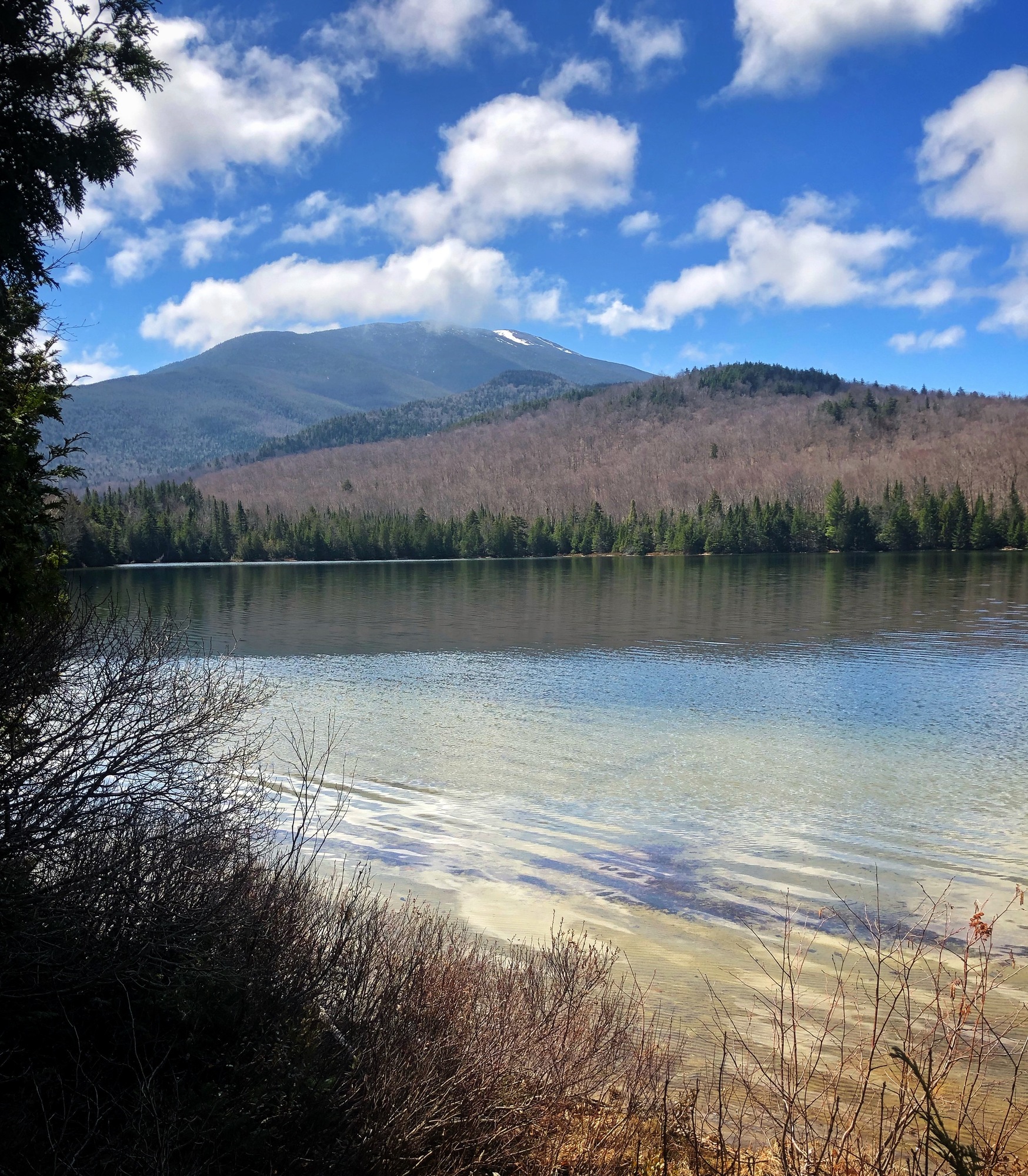
Spring in the Adirondacks:
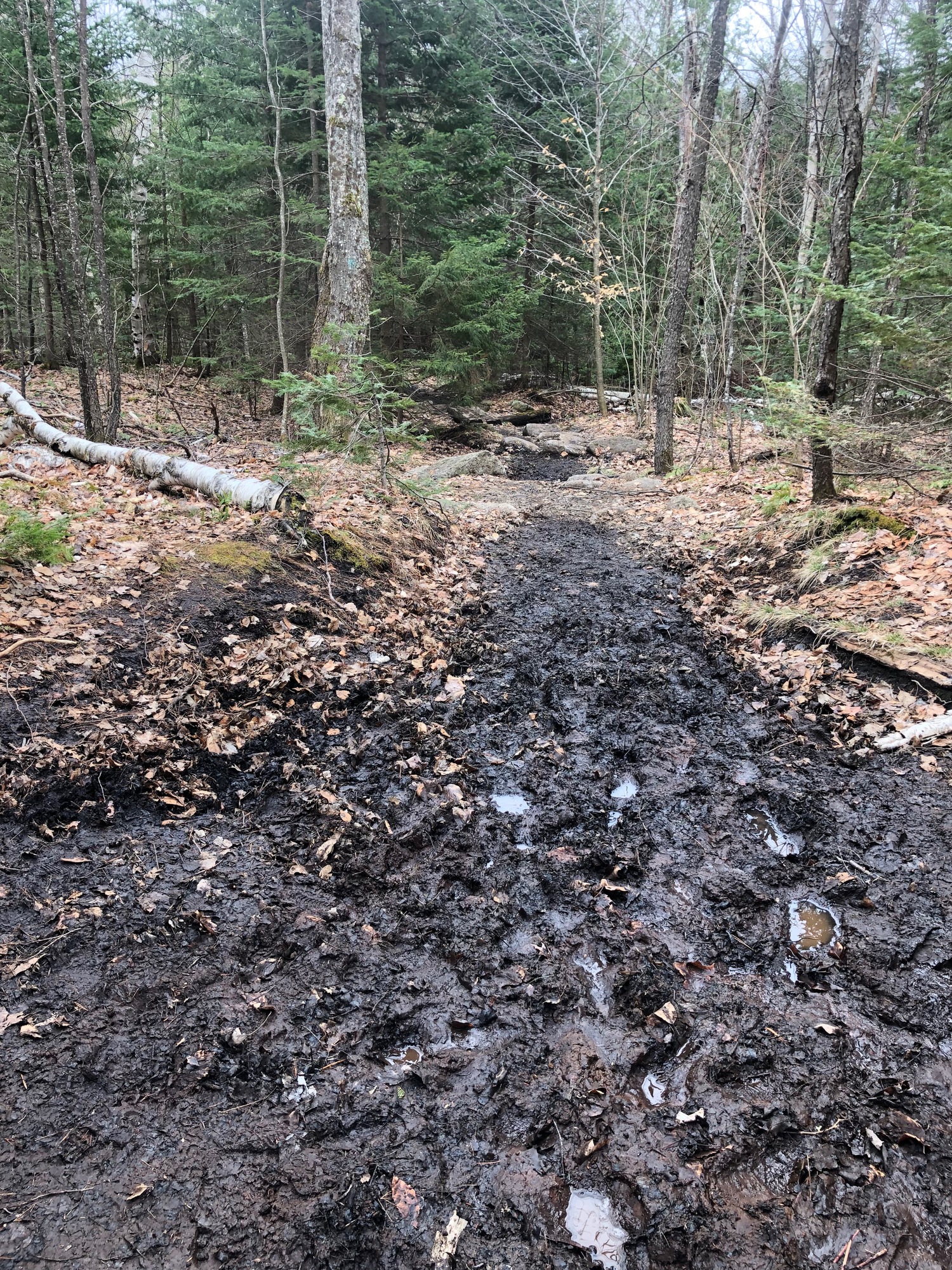
- Mud and water down low
- Water levels are high and water temperatures are very cold
- Low water crossings may be problematic or impossible to cross.
- Paddlers and boaters are required to wear personal flotation devices until May 1.
- Ice is off almost all waters
- Some high elevation ponds may still have some ice.
- No ice is safe at this time
- Snow and ice up high
- Deep snow is still present in the higher elevations with 3-4 feet (or more) of snow present above 3,000 feet.
- Snow may also be found in ravines and other locations that receive little sunlight.
- Varying weather conditions
- Cool temperatures with rain and snow showers through the weekend across the Adirondacks.
- Check the National Weather Service for current forecasts for the location where you plan to recreate.
-
Water Levels: Rain and melting snow have raised water levels, and rivers and streams are flowing high and fast.
-
Water Temperatures: Water temperatures are very cold.
- PFDs (aka lifejackets) are required to be worn by all anglers, boaters, and paddlers until May 1.
- People immersed in cold waters can lose the ability to think clearly and move quickly after only a short time in the water.
- Anglers fishing from shore or wading should wear a personal flotation device.
-
Seasonal Access Roads: All seasonal access roads are closed for mud season. The roads will be reopened after the frost has thawed, the roads are dry, and any necessary repairs and maintenance are completed.
Hikers
-
General Information
- Trail Conditions:
- Snowshoes should be carried on all hikes above 3,000 feet and used wherever snow
 depths exceed 8 inches. depths exceed 8 inches.
- Post-holing can occur even on heavily compacted snow as the snow warms, softens and melts.
- Monorails of ice and compacted snow have begun to form as snow melts on trails – use crampons and walk on the monorails not on trailside vegetation.
-
Carry trail crampons, and steel-tipped hiking poles on all hikes and use when conditions warrant.
- Water levels are high - low water crossings may be problematic or impossible to cross.
-
Mountain Summits: Temperatures will be much colder, winds will be stronger, ice will be present, and snow will be deeper. Check the National Weather Service Mountain Point Forecasts for selected summits.
Bikers
-
General Information
-
Trail Conditions
-
E-bikes: Electric powered bikes are prohibited on all bike trails on the Forest Preserve.
Boaters and Paddlers
-
General Information
-
Conditions
- Water levels are high and water temperatures are cold
- PFDs (aka lifejackets) are required to be worn by all anglers, boaters, and paddlers until May 1.
- People immersed in cold waters can lose the ability to think clearly and move quickly after only a short time in the water.
- Due to high waters DEC has been unable to install docks at many DEC Boat Launches.
Anglers
-
General Information: Fishing
- Wear proper footwear and use a hiking stick with a carbide tip to access the water.
- Water temperatures are extremely cold.
- Anglers should wear a PFD as a precaution.
- A person falling into the water could quickly lose the ability to keep their head above water.
- Be aware that on Saturday water levels are expected to rise through the day. Monitor water levels to ensure your safety.
- Anglers new to brook trout fishing should look to the Guide to Brook Trout Fishing in Adirondack Ponds for assistance.
Climbers
Recent Notices
Notices below reflect recent changes in conditions and recreation infrastructure work that DEC and its partners completed. Check the Backcountry Information for the Adirondacks for ongoing issues and more detailed information.
-
Saranac Lake Wild Forest: The DEC Lake Placid Boat Launch is closed while the bulkhead is being repaired. It is expected to reopen before the Memorial Day holiday weekend.
-
High Peaks Wilderness:
- Spring conditions exist from trailheads to 2,500 feet (760 m) elevation - hike through mud not around it.
- Above 2,500 feet (760 m) elevation, ice and snow ridges (monorails) are present on trails – use crampons and walk on the monorails, not on trailside vegetation.
- 1 - 2 feet (30 to 60 cm) of snow is present above 3,000 feet (915 m) elevation.
- South Meadow Lane remains closed for mud season.
- Corey’s Road is closed for mud season.
- Elk Lake Road is closed for mud season beyond Clear Pond Gate.
-
Garden Trailhead Parking Lot Closed Spring and Summer 2019
- The Garden Trailhead Parking lot is open this weekend but will close Monday, April 29.
- The parking lot is closed due to the replacement of the bridge on John’s Brook Lane and will remain closed until construction is completed later this summer.
- Hikers can access the Garden Trailhead using the Town of Keene’s Shuttle from Marcy Field.
- Currently the shuttle will only operate on Friday, Saturday, and Sunday.
- The shuttle schedule and additional information is provided by the Town of Keene.
- The shuttle will utilize an alternate route across private property.
- The public is prohibited from walking, biking, or driving on the alternate route.
- When the shuttle is not operating, hikers are encouraged to hike other trails in the area.
- See the complete press release for more information.
- The roadway on the Bradley Pond Trail has been washed out by the Harkness Lake Outlet approximately a half mile from the parking lot. Until water levels drop hikers will be unable to cross the outlet.
-
Debar Mountain Wild Forest: The following roads are closed for mud season;
- Debar Meadows Road
- Debar Pond Road
- Debar Trailhead access (from Meacham Lake Campground)
-
Santa Clara Conservation Easement Tract: The following roads are closed for mud season;
- Madawaska Pond Road
- Vanderwalker Road
- Pinnacle Road
- 4-Mile Road
-
Titusville Mountain State Forest: Elephant Head Road is closed for mud season.
-
Terry Mountain State Forest: The Terry Mountain Road is closed for mud season.
-
Essex Chain Lakes Complex: The following roads are closed for mud season;
- Cornell Road
- Deer Pond Road
- Chain Lakes Road North
- Drakes Mill Road
- Chain Lake Road South
-
Moose River Plains Complex: The Limekiln Lake-Cedar River Road (aka the Moose River Plains Road) is closed for mud season.
-
Vanderwhacker Mountain Wild Forest: Gulf Brook Road, which provides access to the Boreas Ponds, is closed for mud season.
Highlighted Hike: Blueberry Cobbles, New Russia, NY
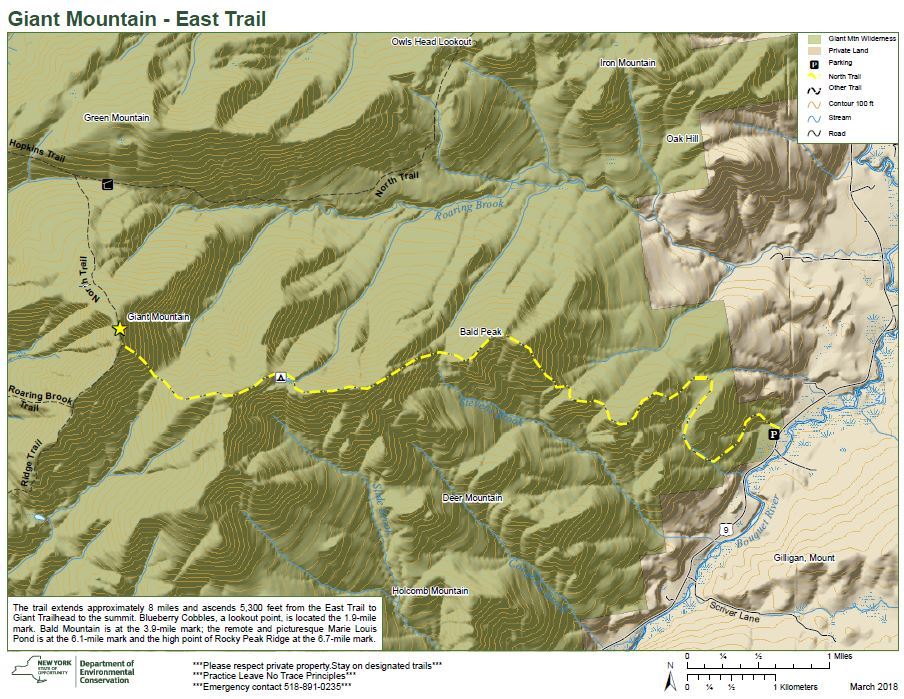
Blueberry Cobbles (2,053 feet), part of the Giant Mountain Wilderness, is a lookout point 2.2 miles on the East Trail to Giant Mountain. From the trailhead, you won’t be on the level for very long before the trail starts a serious ascent to high country. The trail sweeps around a couple unnamed little knobs before making a final push to the first viewing point at 1.6 miles. Just past here, there is another view to the right at 1.8 miles and then an intersection with the Blueberry Cobbles Cut-off Trail on the right. Bear left and continue slightly uphill to blueberry heaven and some additional nice views.
East Trail to Giant Trailhead Parking Area is on Route 9, 6.8 miles north of Exit 30 on the left. (44.1499° N, 73.6268° W).
View Map.
|