$1.45 Million in ADK & Catskill Park Grants
The New York State Department of Environmental Conservation sent this bulletin on 04/17/2019 03:27 PM EDT |
| DEC Delivers - Information to keep you connected and informed from the NYS Department of Environmental Conservation |
| Share or view as a web page || Update preferences or unsubscribe |
Forests, Plants, and Land Conservation News |
Grants Available for Communities and Not-for-Profits in Adirondack or Catskill Parks
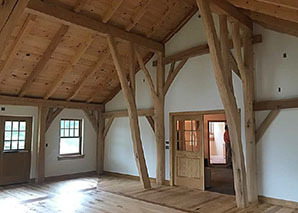
Funding for this round of Community Smart Growth Grants is provided by the Environmental Protection Fund and includes $1,050,000 for Adirondack Park projects and $400,000 for projects in the Catskill Park. The Request for Applications is available through the NYS Grants Gateway and the deadline to apply is 3 p.m. June 7, 2019. For more information on the grant, visit DEC's website. Photo: Past DEC Smart Growth funds helped Mountain Top Arboretum in the Catskills complete a new education center in order to accommodate larger groups and expand educational programming. Sixth Annual Invasive Species Awareness Week Set for July 7-13
The “Early Detection” theme is meant to shine a spotlight on the importance of detecting infestations of invasive species early, which increases the success of response efforts. Spotted lanternfly, oak wilt and hydrilla are just a few of the emerging invasives that could or are beginning to have significant impacts in New York. The theme will also help highlight the soon to be released iMapInvasives 3.0, a revamped version of the New York invasive species database that will have a more user-friendly, mobile-responsive map display. Organizations interested in hosting an event should visit the New York Invasive Species Awareness Week website for more information. All types of programming and events are encouraged, including removal projects, science trainings, film screenings, and more. Some examples of past events include:
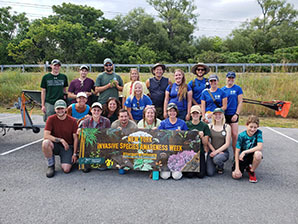
Any interested partners should provide their local PRISM coordinator with information about their events by Monday, June 24 to ensure they can be added to the statewide list. To learn more about ISAW, visit the New York Invasive Species Awareness Week website. To learn more about iMapInvasives and to sign up for a training near you, visit the New York iMapInvasives website. Photo caption: Volunteers with the St. Lawrence Eastern Lake Ontario (SLELO) PRISM pulled invasive water chestnut at an ISAW event last year. (Photo provided by Megan Pistolese). |
 New York State’s sixth annual Invasive Species Awareness Week (ISAW) will be held July 7-13. Initiated in 2014, ISAW is an educational campaign featuring statewide events that encourage New Yorkers to help protect the state’s resources from the negative impacts of invasive species. Planning is already underway, and this year’s theme is “Early Detection: Explore, Observe, Report.”
|
The New York State Department of Environmental Conservation respects your right to privacy and welcomes your feedback | Update preferences or unsubscribe | Learn more about DEC Delivers. |
|
Connect with DEC:    
|
|
| Basil Seggos, Commissioner | |