|
This is a monthly newsletter providing information about a variety of outdoor recreational opportunities in the Catskills, including events, trail updates and advisories. Enjoy!
Have a safe and enjoyable outdoor recreational experience on the lands and waters of the Catskills. Do your part to properly plan and prepare for your outdoor adventure. Minimize the impact on the mountains and forests, rivers and streams, ponds and lakes, and the wildlife of the Catskills. Together we can preserve these lands for future generations to come.
Emergency Situations: If you get lost or injured; keep calm and stay put. If you have cell service, call the DEC Forest Ranger Emergency Dispatch; (518)-408-5850. Check the Backcountry Information for the Catskill web pages for more detailed information on access, outdoor recreation infrastructure, and conditions for those planning to recreate in the Catskills. Check snow amounts and mountain weather conditions before heading out this weekend.
This bulletin provides only the most recent notices. More information on hiking safety and what to pack.
Weather forecasts and conditions can and do change quickly. Check the current National Weather Service Forecast, and be prepared for the forecasted conditions, or change your plans. Watch this video about winter hiking safety tips.
Do you want to share your Catskill mountain photographs? We want to hear from you! Submit your Catskill winter photos for a chance to be featured in our Catskill Bulletin! Send submissions to: stephanie.mossey@dec.ny.gov.
Catskill Interpretive Center
Visit The Catskill Interpretive Center on State Route 28 in the Town of Shandaken, Ulster County. This Catskill Mountain visitors center is operated by the Catskill Center for Conservation and Development, an Arkville, NY-based nonprofit, in partnership with the New York State Department of Environmental Conservation. Whether you're just passing through or here to stay for the summer, make us your first stop when you arrive in the Catskills - our friendly staff is here every day with all the information, maps and advice you need to plan your best Catskill adventure! From exhibits to nature trails and community events - there's something for everyone at the Catskill Interpretive Center, and visitors and residents alike will find new ways to connect with the nature, history and culture that makes this region so unique.
Events:
What: Discovery Walks - Map Reading and Compass Basics
When: Sunday March 2, 2019 12 p.m.- 1 p.m.
Where: Catskill Interpretive Center
Geared toward adults and open to all ages, this week for Discovery Walks we're talking about Map Reading and Compasses. If you like to hike or just have an interest in navigation, this will be an opportunity to go over the basics and to practice compass skills.
Highlighted Hike-Windham High Peak
Windham High Peak (3,524') is accessed from the Peck Road Parking Area. The Elm Ridge Trail extends 0.9 miles from the parking area to the Escarpment Trail. The Escarpment Trail ascends 1,494 feet and 2.4 miles east to the summit of Windham High Peak. There is a lean-to near the intersection of the Elm Ridge Trail and the Escarpment Trail. Peck Road Parking Area is located at the end of Peck Road, 0.8 miles northwest of its intersection with Big Hollow Road. (42.296526°N, 74.169377°W) Google Maps
General Conditions/Notices
-
Road Conditions and Closures: Check before you travel at NY511
-
Winter Weather: Snow, ice and below freezing temperatures
- Bringing appropriate gear will be important to stay warm and dry. With frosts overnight there will also be ice, so it’s a good idea to keep microspikes or crampons in your pack.
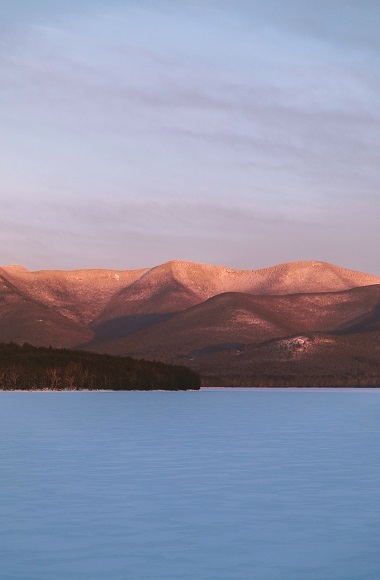
Snow is deeper in the higher elevations and on mountain peaks.
- The National Weather Service provides maps depicting current snow depths and forecasts.
-
Water Sources: Plan to pack water with you as normal reliable water sources shown on trail maps may be iced over.
-
Ice on Waterbodies: Ice has formed on most waters.
- This weekend, ice will likely have a layer of water on top that will be refreezing.
- Always check the thickness of ice before traveling across it.
- Avoid ice over running water, near inlets & outlets and near boathouses & docks - especially those with "bubblers" or other ice prevention devices.
- Remember, ice that holds snow may not hold the weight of a person.
Be safe on the ice, especially when ice fishing.
Hikers/Skiers/Snowshoers
Hiking
Skiing and Snowshoeing
-
Trail Conditions: Trail conditions are good for snowshoeing and skiing.
Trail conditions will vary depending on location, elevation, and time of day.
- Trails may be icy or hard in the morning and throughout the day in the higher elevations.
- Trails will soften as temperatures rise through the day, especially in the lower elevations.
- You may encounter wet and icy conditions in low spots, seeps, drainages, and along water ways.
- Ice may be present below the snow, or on the trail surface on summits and other windswept locations.
- Unbroken trails will have a layer of crust and ice on the surface of the snow.
- Snowshoes, skis, or trail crampons and steel-tipped hiking poles should be used on all trails depending on conditions.
- Traveling through snow takes more time and energy than hiking on bare ground – especially if you are breaking trail through recently fallen snow.
-
Mountain Summits: Temperatures will be much colder, winds will be stronger, ice will be present, and snow will be deeper. Check the National Weather Service Mountain Point Forecasts for selected summits.
-
Designated Snowmobile Trails:
- Snowmobile trails are open and have been groomed, but conditions are questionable with the fluctuations on weather.
- Watch and listen for snowmobiles when skiing or snowshoeing on designated snowmobile trails.
- Move off the trail to allow snowmobiles to safely pass.
- Check with local snowmobile clubs to determine status and condition of trails.
Practice Leave No Trace
 Follow proper trail etiquette to maintain minimal impact on the environment and the natural resources of the Catskills, as well as ensure an enjoyable outdoor experience for all visitors by following the Seven Principles of Leave No Trace. Follow proper trail etiquette to maintain minimal impact on the environment and the natural resources of the Catskills, as well as ensure an enjoyable outdoor experience for all visitors by following the Seven Principles of Leave No Trace.
Plan Ahead and Prepare (Principle #1):
- Park in designated parking areas at trail heads. Do your best to avoid blocking gates, entrances, exits and other vehicles. Winter conditions can be tough but when parking your vehicle, please be considerate and do not take up more spaces than necessary. Trailheads and parking areas fill up fast.
-
Sun Protection: Don’t underestimate the power of the sunshine. Be sure to pack along sunscreen as the reflection of the sun off the snow can be stronger than you expect.
-
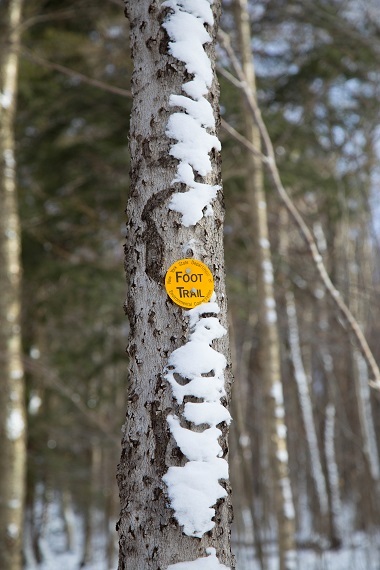
Breaking Trail: Breaking trail exhausts more energy so plan extra time for your trip. Know your route well as trail signs and junctions may be difficult to find under snow cover. Bring a map with you. Gaiters can protect your lower legs from the wet, cold elements of deep snow.
-
Frigid Temperatures: To layer properly for these conditions, start off with enough layers that you still feel cool while standing. Be sure to have a non-cotton base layer to help wick moisture as you start to sweat. This can help keep you dry and keep your temperature better regulated. You will warm up once you start moving. Add and remove layers to keep yourself dry and your body temperature consistent so that you are not shivering or overheating. Wear a winter hat and gloves to keep heat in. Pack a wind resistant jacket and full-face mask for open ledges and summits to prevent frostbite. Pack extra wool socks to keep your feet dry and warm.
Respect Wildlife (Principle #6):
Winter is a vulnerable time for wildlife. It is crucial to keep a safe distance away and to respect the space of wild animals. Bears, and other mammals are for the most part hibernating through the winter months. With that said, you may still see many signs of life in the backcountry. Plan to store your food properly and always be sure to carry out all trash and food waste, including scraps. Keep pets on leashes to avoid negative wildlife encounters.
Recent Notices
Notices below reflect recent changes in conditions and recreation infrastructure work completed by DEC and its partners. Check the Backcountry Information for the Catskills web pages for ongoing issues and more detailed information.
-
Bluestone Wild Forest: The gate at Onteora Lake that provides access to the lower parking area is closed due snow. The upper parking area is still available for use.
-
Balsam Lake Mountain Wild Forest: The gate at Alder Lake that provides access to the upper lot has been closed due to snow. Parking is limited due to snow conditions.
- Willowemoc Wild Forest and Sundown Wild Forest: Snowmobile trails in the Sundown Wild Forest and Willowemoc Wild Forest are open for use once trails are covered in ice and snow. Seasonal gates allowing access to snowmobile trails will be opened once the trails are sufficiently covered in ice and snow.
- Platte Close Road is closed through April 15th
-
The following roads are seasonal and are not maintained during winter months.
-
Turnwood Road-Balsam Lake Mountain Wild Forest (Town of Hardenburgh)
-
Platte Clove Road- Indian Head Wilderness (Town of Hunter)
-
Roaring Kill Road- Indian Head Wilderness (Town of Hunter)
-
Russel Brook Road- Delaware Wild Forest (Town of Colchester)
-
Mary Smith Road- Delaware Wild Forest (Town of Colchester)
-
Ploutz Road- Dry Brook Wild Forest (Town of Middletown)
-
Delaware Wild Forest: Snowmobile trails in Delaware Wild Forest will be open for use once trails are covered in ice and snow.
- Seasonal gates allowing access to snowmobile trails will be opened once the trails are sufficiently covered in ice and snow.
-
Kaaterskill Falls
- Kaaterskill will only get icier as the winter progresses. Hikers should use caution on icy stone staircases and other rock surfaces.
- Avoid hiking near cliff edges.
And be sure to submit your photos to stephanie.mossey@dec.ny.gov for a chance to be featured!
|