|
This is a monthly newsletter providing information about a variety of outdoor recreational opportunities in the Catskills, including events, trail updates and advisories. Enjoy!
Upcoming Events
Catskill Mountain Kids is a year-round weekly daytime program series that celebrates the nature, history and culture of the Catskills. Each session will include some focused learning time, hands-on activities, and outdoor exploration. The program is geared for ages 4-7, but all are welcome. Please dress for the outdoor weather and the possibility of getting messy. The fall session runs through November 15.
- Homesteading Thursday, November 8, 11 a.m.-12 p.m.
- Hibernation Thursday, November 15, 11 a.m.-12 p.m. - Turkeys
Recent Notices
Notices below reflect recent changes in conditions and recreation infrastructure work DEC and its partners completed. Check the Catskill Backcountry Information for ongoing issues and more detailed information.
- Willow Trailhead Parking located in the Town of Woodstock on Jessop Road is now open.
- The trailhead improves access to Mount Tremper, Mount Tremper Fire Tower, the Warner Creek Trail and the Devil’s Path.
- Platte Close Road is closed November 1st - April 15th.
- The following roads are seasonal and are not maintained during winter months. Please be aware of snowy conditions:
- Turnwood Road-Balsam Lake Mountain Wild Forest (Town of Hardenburgh)
- Platte Clove Road- Indian Head Wilderness (Town of Hunter)
- Roaring Kill Road- Indian Head Wilderness (Town of Hunter)
- Russel Brook Road- Delaware Wild Forest (Town of Colchester)
- Mary Smith Road- Delaware Wild Forest (Town of Colchester)
- Ploutz Road- Dry Brook Wild Forest (Town of Middletown)
- Northern Catskill Riparian Area
- Kaaterskill Falls
- Once temperatures begin to drop, Kaaterskill will be very ice. Hikers should be careful of ice on the stone staircase and rock surfaces. Hikers should be cautious and stay back from cliff edges.
- Hunter Mountain
- DEC has completed construction at the Hunter Mountain Observer Cabin.
Catskill Interpretive Center
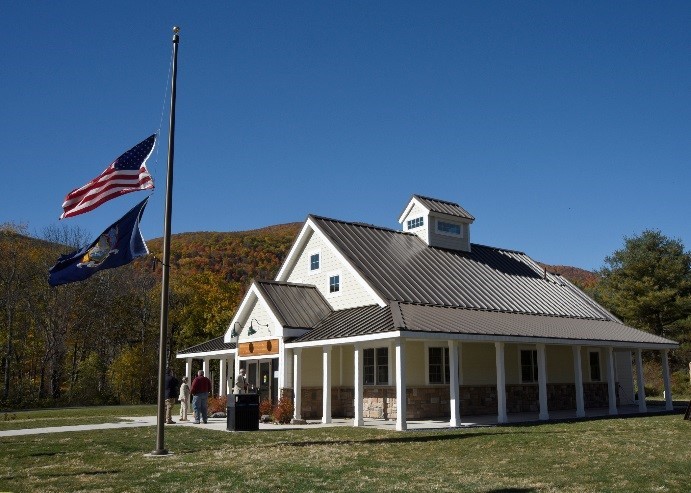 The Catskill Interpretive Center on State Route 28 in the Town of Shandaken, Ulster County is a visitors center operated by the Catskill Center for Conservation and Development, an Arkville, NY-based nonprofit, in partnership with the New York State Department of Environmental Conservation. Whether you're just passing through or here to stay for the summer, make us your first stop when you arrive in the Catskills. Our friendly staff is here every day with all the information, maps & advice you need to plan your best Catskill adventure! From exhibits to nature trails and community events - there's something for everyone at the Catskill Interpretive Center, and visitors and residents alike will find new ways to connect with the nature, history and culture that makes this region so unique! The Catskill Interpretive Center on State Route 28 in the Town of Shandaken, Ulster County is a visitors center operated by the Catskill Center for Conservation and Development, an Arkville, NY-based nonprofit, in partnership with the New York State Department of Environmental Conservation. Whether you're just passing through or here to stay for the summer, make us your first stop when you arrive in the Catskills. Our friendly staff is here every day with all the information, maps & advice you need to plan your best Catskill adventure! From exhibits to nature trails and community events - there's something for everyone at the Catskill Interpretive Center, and visitors and residents alike will find new ways to connect with the nature, history and culture that makes this region so unique!
Do you want to share your Catskill Mountain story? We want to hear from you! Submit your short story about why you love the Catskills for a chance to be featured in our December Catskill Bulletin!
Submissions should be no more than 500 words, and you can e-mail them to: stephanie.mossey@dec.ny.gov.
Highlighted Hike - North Point of North South Lake
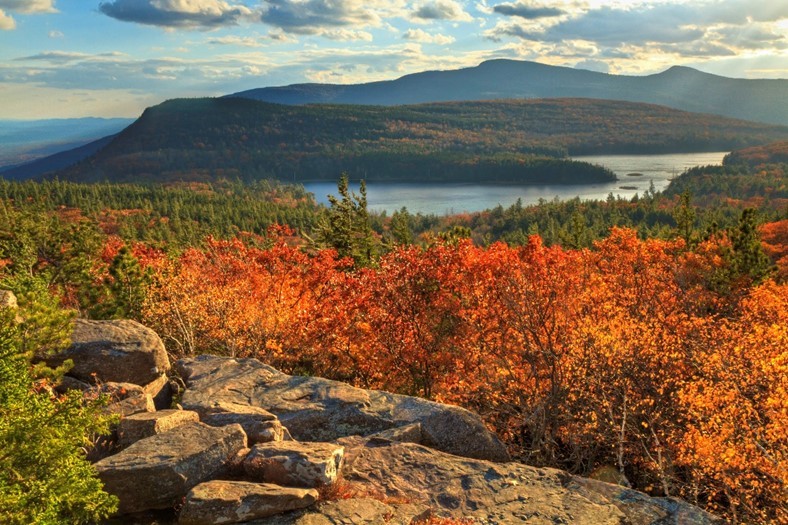 The best way to access North Point is via the Rock Shelter Trail from the Scutt Road Parking Area outside of North South Lake Campground on North Lake Road. The best way to access North Point is via the Rock Shelter Trail from the Scutt Road Parking Area outside of North South Lake Campground on North Lake Road.
Directions: From South: NYS Thruway (I-87) Exit 20 at Saugerties. Follow Rte. 32 north for approximately six miles to Rte. 32A to Rte. 23A west. Stay on Rte. 23A to the village of Haines Falls. Make first right turn in Haines Falls onto County Rte.18. Scutt Road Trailhead parking is about two miles down the road. If you reach the campground, you’ve gone too far.
From North: NYS Thruway (I-87) Exit 21 at Catskill. Left on Rte. 23 east to Rte. 9W south. Follow Rte. 9W through Catskill to Rte. 23A. Follow 23A west to Haines Falls. Make first right turn in Haines Falls onto County Rte. 18. Scutt Road Trailhead parking is about two miles down the road. If you reach the campground, you’ve gone too far.
General Guidelines
Below are general guidelines for you to follow for a safe and enjoyable outdoor recreational experience on the lands and waters of the Catskills. Properly plan and prepare for your outdoor adventure. Minimize the impact on the mountains and forests, rivers and streams, ponds and lakes, and the wildlife of the Catskills.
Plan & Prepare
Emergency Situations: If you get lost or injured; keep calm and stay put. If you have cell service, call the DEC Forest Ranger Emergency Dispatch; (518)-408-5850.
Check the Catskill Backcountry Information for more detailed information on access, outdoor recreation infrastructure, and conditions for those planning to recreate in the Catskills. This bulletin provides only the most recent notices. More information on hiking safety and what to pack.
Weather forecasts and conditions can and do change quickly. Check the current National Weather Service Forecast, and be prepared for the forecasted conditions, or change your plans.
- Late fall/ early winter gear list:
- Head lamp: having a headlamp will ensure your safety if you find yourself on the trail after dark.
- Traction devices: Higher elevations and mountain summits may be covered in snow and ice.
- Waterproof hiking boots: trails can be a mix of mud, ice, and snow. Protect your feet from the elements with proper hiking boots. This will help you to stay comfortable and help to prevent hypothermia.
- Traction less footwear such as running shoes can be slippery and unsafe on wet trails.
- Hat, gloves, wool socks, protective layers: summits and exposed areas will be cold and windy. Pack extra layers to prevent hypothermia.
- Water: Colder temperatures tend to make people feel less thirsty. Stay hydrated no matter the weather.
- Food: In the colder weather, we tend to use more energy to stay warm. Bring enough food to keep energy levels up.
- Map
- Emergency essentials: a pocket knife, duct tape to patch ripped jackets or broken poles, a headlamp for unexpected trips out in the dark or overnight stays, space blanket, emergency whistle, first aid kit, fire making tools, extra layers and socks, and extra snacks.
Prevent food and water from freezing during colder months:
- Water - Store water upside down in your pack. Wrap bottles in wool socks, clothing or use insulated carriers. Bladders will not usually freeze deep in your pack, however, the tubing will. Blow water back into the bladder after every drink. Use a hydration bladder tube insulator to keep from freezing.
- Food - Store small snacks close to your body. Choose food that is less likely to freeze like nuts, granola, etc. and break it into smaller pieces. You can also wrap your food in newspaper or extra clothing to help insulate it within your pack.
- It is beneficial on very cold hikes to pack extra weight in calories. Bring a thermos of soup, coffee, hot chocolate, etc. for a quick warm up. A cookstove, cookware and non-perishable food like soup, oatmeal or freeze-dried meals will help pack more calories and offer a warm meal on long hikes.
- Stick to trails and camp overnight right - While the mud puddles are lingering, consider wearing tall boots and gaiters. As always, the best option when encountering a muddy section of trail is to hike straight through it, ultimately reducing the effect of trail widening.
- Keep wildlife wild - Fall is a sensitive time of year for all wildlife here in the Catskills. Keep a safe distance from wildlife, and store food properly both at home and in the backcountry. Animals across the park are preparing for winter and may be more active than usual. Keep a particularly close eye on your food and food scraps.
Practice Leave No Trace
 Leave No Trace is a set of outdoor ethics that shows us how to protect natural spaces when exploring the outdoors. Follow proper trail etiquette and the Leave No Trace Seven Principles to maintain minimal impact on the environment and the natural resources of the Catskills and to ensure an enjoyable outdoor experience for all visitors. Leave No Trace is a set of outdoor ethics that shows us how to protect natural spaces when exploring the outdoors. Follow proper trail etiquette and the Leave No Trace Seven Principles to maintain minimal impact on the environment and the natural resources of the Catskills and to ensure an enjoyable outdoor experience for all visitors.
General Conditions/Notices
Learn the conditions you will encounter from the Catskill Backcountry Information.
Weather
- Late fall/early winter: The days are getting shorter and the temperatures are near freezing.
- The sun rises later and sets earlier. Remember to pack along your headlamp.
- Don't underestimate the cold weather. Dress in layers and avoid cotton, wicking fabric is best for the trail. Always pack extra clothing to stay safe, warm and comfortable.
- Those hiking to the higher summits should always pack a winter hat, gloves and microspikes.
- Thunderstorms: For your safety check weather forecasts before and during all outdoor recreational activities.
Hunting
- Hunting Season:
- Southern Zone Big Game
- Early bow hunting through November 16
- Crossbow November 3-16 with muzzleloader privilege
- Regular season opens November 16
- Be aware of regional hunting seasons (PDF)
- During any hunting season, hikers should: wear blaze orange; use extra caution early in the morning or late in the afternoon when visibility may be reduced; use extra caution when near roads or valley bottoms; and be heard by hunters whistling or talking with your hiking group.
- Firearm Safety
- Watch the muzzle! Keep it pointed in a safe direction at al times.
- Treat every firearm with the respect due a loaded gun. It might be, even if you think it isn’t.
- Keep your finger outside the trigger guard until ready to shoot. This is the best way to prevent an accidental discharge.
- Unload firearms when not in use. Leave actions open and carry firearms in cases and unloaded to and from shooting areas.
- Point a firearm only at something you intend to shoot. Avoid all horseplay with a gun.
Bears and the Backcountry
The Catskill Region has the highest number of black bears per square mile in the state and encountering them is not uncommon. Follow these recommendations to know how to prevent a conflict and how to react should you encounter a bear.
- Use bear-resistant canisters or hang all food, scented items including toiletries, and garbage.
- Avoid sleeping in clothes that you cook in and don’t dump waste water near your site. Clean up and put food away right after cooking and eating.
- Don’t leave food unattended.
- If possible, travel in groups of two or more
- If you encounter a bear, make yourself look big and speak loudly and firmly. If it does not leave, slowly back away.
- Do not run or approach bears.
- If you encounter a cub, watch for the mother, who is probably nearby. Slowly back away and leave the area.
- Keep dogs leashed to avoid wildlife encounters.
- You can carry an air horn or bear (pepper) spray for extra security. Learn how to use the pepper spray before you go out.
- Bears are wild animals, let’s keep it that way.
Late Autumn Considerations: Fall weather can sometimes be confusing. Be sure to be properly prepared.
- Be prepared for changes in temperatures especially on mountain summits and in the evenings.
- Pack extra layers in case your hike takes longer than expected and temperature begins to drop.
- Expect shorter daylight hours, pack your headlamp.
- Pack plenty of water. Even though the air feels cooler and you may not sweat as much, it is still crucial to stay hydrated.
- Be aware of hunting seasons.
Hikers and Campers
- Trail Conditions: Plan for mild muddy conditions and significantly dropping temperatures. The cold nights are bringing light snow and frosts to the Catskill region.
- Be sure to follow good trail etiquette when hiking through these areas.
- Wear water-resistant hiking boots and let them get muddy.
- Gaiters and hiking boots make for a great combination in wet conditions.
- Stay in the center of the trail and walk through mud and water.
- Avoid damaging hiking trails, trail side vegetation and habitats.
-
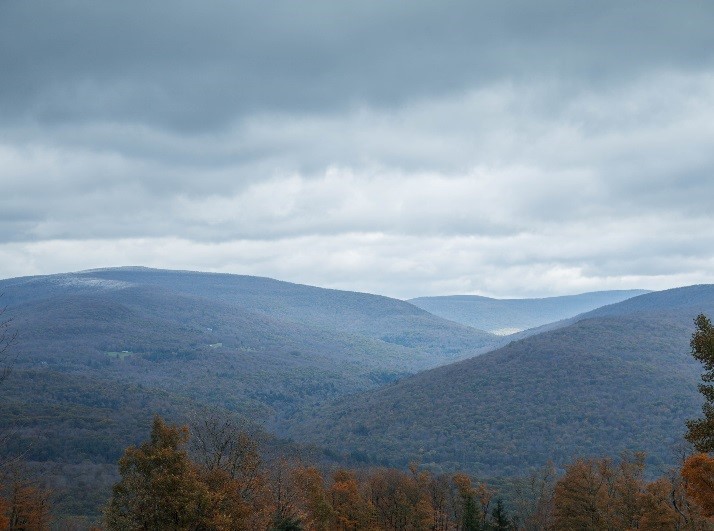 Mountain Summits: Be prepared for cooler temperatures at night and on the summits. Check the National Weather Service Mountain Point Forecasts for selected summits. Mountain Summits: Be prepared for cooler temperatures at night and on the summits. Check the National Weather Service Mountain Point Forecasts for selected summits.
- Water Levels: Areas in the Catskills are getting plenty of rain. See the USGS Current Water Data for New York for stream flow of selected waters.
- Rains this month may bring levels up in some streams and rivers depending on the location, duration and density of rainfall in thunderstorms.
- When it rains, water levels can quickly rise in the Catskills. A stream crossing that may have been okay when first began your hike, may be difficult or even impossible to cross on the way back. If this is the case, do not attempt to cross. Instead have a backup route ready or wait for the water levels to subside.
- Use caution around steep, shallow, rocky streams and rivers. These are considered “flashy”, meaning water levels can rise quickly after heavy rainfall. Water levels will also drop quickly after the rains have stopped.
- Boaters and paddlers should be alert for objects on or below the surface that are typically covered by deeper water.
- Springs: most seasonal springs are running. However, no water source is guaranteed to be safe, so treat before drinking or use a filter.
Mountain Bikers
- Practice proper trail etiquette
- Ride Open Trails: Respect trail and road closures - ask a land manager for clarification if you are uncertain about the status of a trail.
- Do not trespass on private land.
- Obtain permits or other authorization as required.
- Be aware that bicycles are not permitted in areas protected as state or federal wilderness.
- Leave no trace
- Wet and muddy trails are more vulnerable to damage than dry ones.
- Stay on existing trails and do not create new ones.
- Avoid cutting switchbacks.
-
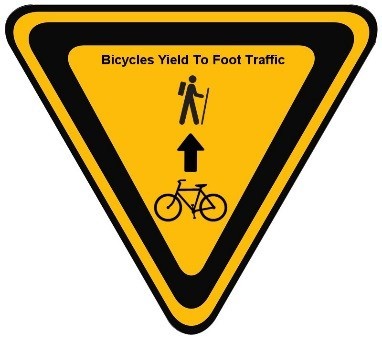 Yield Appropriately Yield Appropriately
- Do your utmost to let your fellow trail users know you're coming - a friendly greeting or bell ring are good methods.
- Try to anticipate other trail users as you ride around corners.
- Bicyclists should yield to other non-motorized trail users
- Bicyclists traveling downhill should yield to ones headed uphill, unless the trail is clearly signed for one-way or downhill-only traffic.
- In general, strive to respect everyone you meet on the trail.
|