|
Happy 4th of July and Canada Day week! Let’s see your Adirondack adventure photos! #nysdecadk
Have a safe and enjoyable outdoor recreational experience on the lands and waters of the Adirondacks. Properly plan and prepare for your outdoor adventure. Minimize the impact on the mountains and forests, rivers and brooks, ponds and lakes and the wildlife of the Adirondacks.
Check the Adirondack Backcountry Information web pages for more detailed information on access, outdoor recreation infrastructure, and conditions for those planning to recreate in the Adirondacks. This bulletin provides only the most recent notices.
Emergency Situations: If you get lost or injured, keep calm and stay put. If you have cell service, call the DEC Forest Ranger Emergency Dispatch (518-891-0235).
More information on hiking safety and what to pack.
Watch for cyclists: Adirondack roadways are shared by all. Cyclists training for the annual Lake Placid Ironman in late July are utilizing Route 86 between Jay and Lake Placid, Route 73 between Lake Placid and Keene, and Route 9N between Keene and Jay as part of the training course. Please use caution and drive slowly, especially through the Cascade Lakes area and the Wilmington Notch where the road becomes very narrow and there is little to no shoulder. Vehicles should always be aware and keep an eye out for cyclists on all roads in the Adirondacks. Parking along the side of the road removes access to safe shoulders for cyclists who are sharing the roadways. Please park ONLY in designated parking areas along roadsides and at trail heads.
Would you like your photo shared in our weekly bulletin? Send in your photos with your name and photo location/brief description to Info.R5@dec.ny.gov or tag #nysdecadk on Instagram.
Plan
Weather forecasts and conditions can and do change quickly. Check the current National Weather Service Forecast. Be prepared for the forecasted conditions, or change your plans.
-
Heat Wave: This weekend leading into the 4th of July holiday is forecasted to bring
 temperatures in the high 80’s/mid 90’s. Bring at least two liters of water on every trip and prepare to bring more water depending on the length. Plan out water sources along your trip where you can refill your containers using a water filter. Hydrating properly will allow for a more enjoyable experience and will help you avoid overheating or heat sickness on your adventure. Plan to start your hikes in the early morning to help beat the heat of the late afternoon. Wear UV protectant clothing, sunglasses, and Chapstick, as well as plenty of sunscreen. temperatures in the high 80’s/mid 90’s. Bring at least two liters of water on every trip and prepare to bring more water depending on the length. Plan out water sources along your trip where you can refill your containers using a water filter. Hydrating properly will allow for a more enjoyable experience and will help you avoid overheating or heat sickness on your adventure. Plan to start your hikes in the early morning to help beat the heat of the late afternoon. Wear UV protectant clothing, sunglasses, and Chapstick, as well as plenty of sunscreen.
-
Know the signs of heat exhaustion. If you experience any of these symptoms, take a rest by finding a shady area, drink plenty of water and take measures to cool yourself down. If there is a nearby stream, splash your face, neck and wrists with the cool water. Do not try to hike further until your symptoms have completely faded. If you try to exert yourself too soon, the symptoms will only increase your chance of a heat stroke.
- Cool, moist skin with goose bumps when in the heat
- Heavy sweating
- Faintness
- Dizziness
- Fatigue
- Weak, rapid pulse
- Low blood pressure upon standing
- Muscle cramps
-
Unexpected Weather: Temperatures in the high 80s/low 90’s can bring unexpected severe thunder and lightning storms in high elevation mountains during the afternoon hours. Keep an eye on the sky and listen for signs of thunder, especially in the later afternoon times.
-
If you find yourself on a summit with a storm approaching, quickly get yourself back below tree line to an area where the forest trees are evenly spread. If in a group, spread out while descending. Do not sit under an isolated tree or near tree bases, overhanging rocks or near streams of water. Continue to the lowest ground possible or if in a safer place, sit on your backpack with your feet together to minimize your contact with the ground.
- Plan to start your hike early in the morning.
-
Group Size Limits: The High Peaks Wilderness regulations limit day use group size to 15 people and overnight use group size to eight people. Group size limits exist to better protect trails from impact and maintain a certain level of wilderness experience for all users.
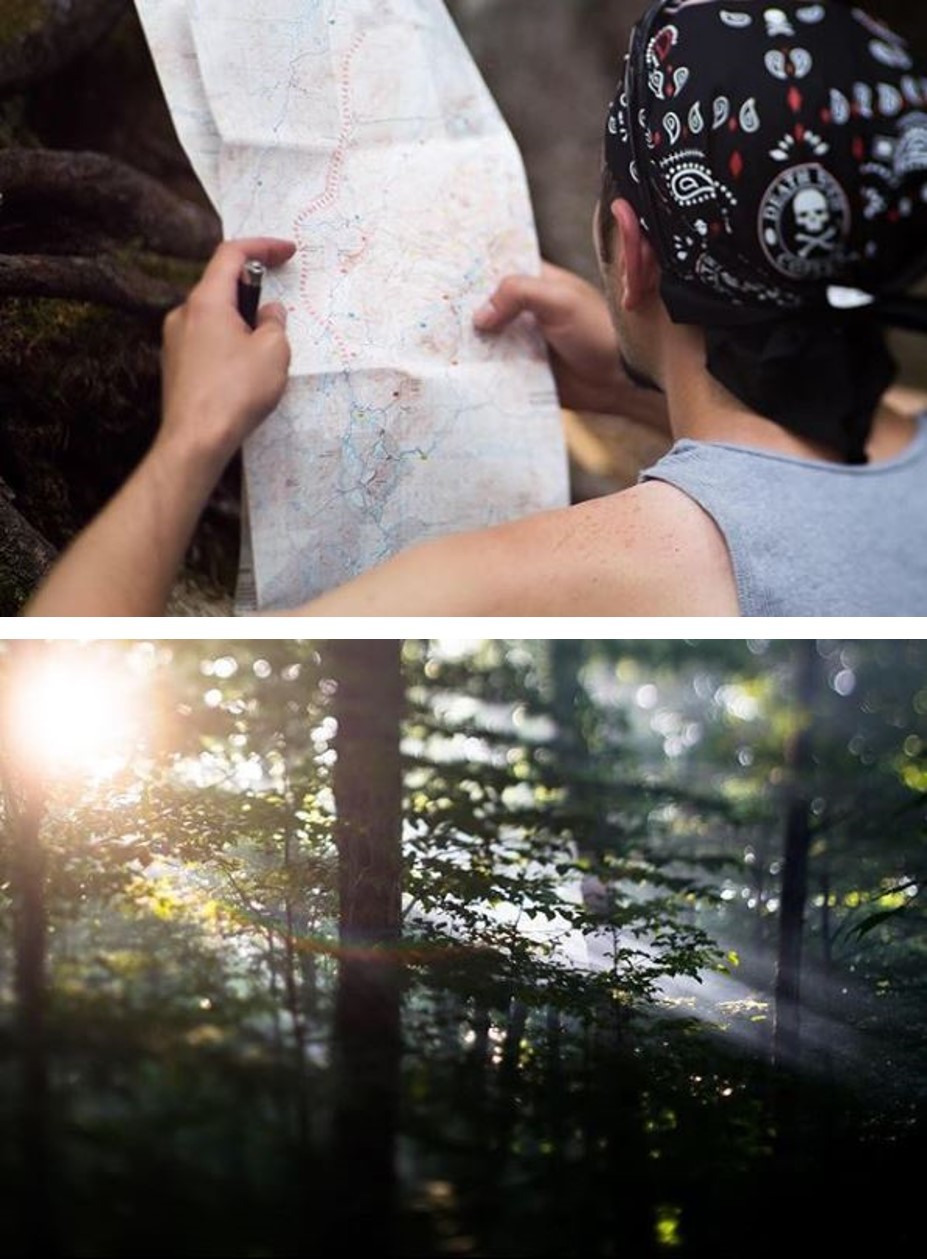
Photo Credit: Instagram User @_amanda_ciarlei_ | Location: Essex Chain Lakes
Prepare
Properly prepare to better ensure a safe and enjoyable recreation experience.
-
Holiday Week and Trailside Etiquette: Prepare for very busy trailheads and parking areas. Expect to encounter many people out on the trails during the holiday week.
- Park only in designated spots, close to other cars to maximize parking space. Do not park along roadsides and adhere to no parking signs.
- Be cautious of pedestrians crossing to trailheads from parking areas. If parking areas are full, prepare to go somewhere else, there are plenty of amazing trails in the Adirondacks to explore.
- Please use parking area privies or outhouses along trails. If you find you need to go along the trail, find a spot away from trails and water sources, dig a cathole at least 6-8 inches deep and bury all waste.
- Be mindful of other user’s physical abilities and pass respectfully. Keep noise levels to a minimum so all users can enjoy the wilderness.
-
Prepare your pack with extra baggies to ensure you are able to carry out all trash including food scraps. Banana peels, orange peels and apple cores that are tossed in to the woods are often found by wildlife and can adversely affect wildlife eating and survival patterns. Tossing your scraps also attracts larger wildlife like black bears to more populated trail areas which greatly amplifies the potential for human-bear conflict. Litter and food scraps can also negatively impact the wilderness aesthetic along a beautifully forested trail. Keep our trails beautiful and wild, protect wildlife, and reduce wildlife conflict by always carrying out what you carry in.
-
Bear Activity: A nuisance bear with an ear tag has been active in Eastern High Peaks recently. The bear is approaching hikers and campers in an attempt to obtain food. Bear canisters are currently required in the High Peaks Wilderness and strongly recommended throughout the rest of the park. Be sure all of your food and waste will fit securely within the bear canister.
-
Plan to cook your meals earlier in the evening before dusk and cook away from your tent site or lean-to by at least 100ft. Never leave your food unattended. Even spitting out toothpaste near your site can lead to unwanted bear attention.
-
Distance yourself from your bear canister overnight by at least 100ft. Store the canister on level ground in an area where it will not be obviously visible to a passing bear. Hanging canisters is not recommended.
- See the below Leave no Trace section on how to properly dispose of your cooking water and all grey water in the backcountry to help reduce wildlife encounters and negative impacts
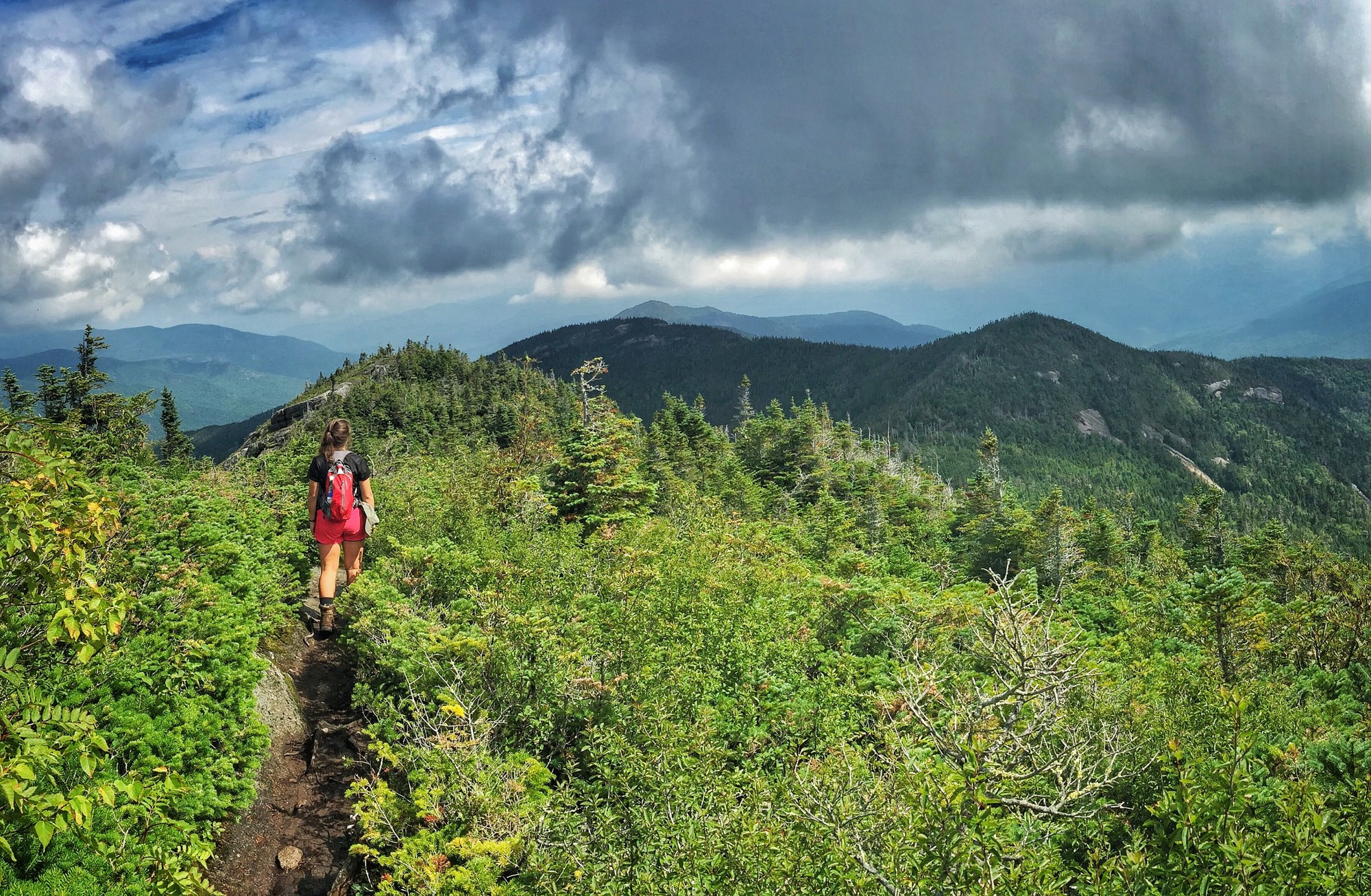
Photo Credit: DEC | Location: Lower Great Range Trail, High Peaks Wilderness
Practice Leave No Trace
Follow proper trail etiquette to maintain minimal im pact on the environment and the natural resources of the Adirondacks, as well as ensure an enjoyable outdoor experience for all visitors by following the Seven Principles of Leave No Trace. pact on the environment and the natural resources of the Adirondacks, as well as ensure an enjoyable outdoor experience for all visitors by following the Seven Principles of Leave No Trace.
-
Plan Ahead and Prepare (Principle #1)
- Schedule your trip to avoid times of high use. Visit in small groups when possible. Consider splitting larger groups into smaller groups. Smaller groups have less impact on trails and provide a certain level of wilderness experience for all users. When traveling in groups, try to keep your noise level to a minimum so to not take away from other’s trail experience as well as reduce disturbance of wildlife. Hike in a single file line to keep impact focused to the center, most hardened section of trail.
-
Dispose of Waste Properly (Principle #3)
- When backcountry camping, we produce wastewater, better known as “grey water”, whenever we wash ourselves, our clothing, cook, clean our dishes, and even brush our teeth. Improper disposal of grey water can pollute streams, harm wildlife and also attract unwanted wildlife.
- Collect your grey water from washing your hands, brushing your teeth, etc. in a separate water jug or collapsible bowl. Carry water at least 200ft from your campsite and scatter it by throwing it in the air in a circle to try to separate as much of the water as possible over a wide area of land.
- When cooking, use a mesh strainer to collect any leftover food particles from the water before scattering your water. Carry leftover food particles out in a garbage bag kept in your bear canister.
-
Leave What You Find (Principle #4)
- Preserve the past: examine, but do not touch cultural or historic structures and artifacts. Leave rocks, plants and other natural objects as you find them. Graffiti on rocks and carvings on trees negatively impacts the experience of others seeking to enjoy the natural beauty of the outdoors and can severely damage the natural resources. Defacing rocks and trees on State land is prohibited to protect the integrity of our natural resources.
General Conditions/Notices
Learn the conditions you will encounter from Adirondack Backcountry Information.
All
-
Canada Day and July 4th Holidays: Expect to encounter many people on the trails and waters this weekend and throughout the week. Trailhead parking lots and interior campsites in popular areas will fill early. Plan accordingly and seek backcountry
 recreation opportunities in other areas of the Adirondack Forest Preserve. recreation opportunities in other areas of the Adirondack Forest Preserve.
-
Extreme Heat: Temperatures are expected to be in the high 80s and low 90s throughout the Adirondacks. Avoid heat exhaustion:
- Slow your pace, rest often, and stay in the shade as much as possible.
- Carry plenty of water and drink often – even if you don’t feel thirsty
-
Thunderstorms: There is a chance of thunderstorms on Monday and Tuesday.
- Avoid summits, water surfaces and other open areas during thunderstorms.
- As soon as you are first aware of an approaching thunderstorm, move to lower elevations, head to shore or otherwise seek shelter.
- If caught outside in a thunderstorm, find a low spot away from tall trees, seek an area of shorter trees and crouch down away from tree trunks
-
Fire Danger Rating: Low. Check the current fire danger map. Be safe with campfires.
-
Biting Insects: Bug season in the Adirondacks is in full swing. Expect to encounter black flies, mosquitoes and no-see-ums (biting midges) when outdoors. Follow these steps to minimize the nuisance of biting insects:
- Wear-light colored clothing.
- Wear long sleeve shirts; tuck shirts into pants and button or rubber band sleeves at the wrist.
- Wear long pants and tuck the bottom of pant legs into your socks.
- Pack a headnet to wear when insects are thick.
- Use an insect repellant with DEET. Follow label directions.
Hikers and Campers
- Trail Conditions:
- Trails in high elevations and areas of trails in low spots, along water bodies, and in drainages can still have mud and water.
-
Avoid damaging hiking trails and sensitive trail side vegetation and habitats:
- Wear water-resistant hiking boots and let them get dirty.
- Stay in the center of trail and walk through mud and water.
-
Mountain Summits: Temperatures will be cooler and winds will be stronger. Check the National Weather Service Mountain Point Forecasts for selected summits.
-
Bear Resistant Canisters: The use of bear-resistant canisters is required for overnight users in the Eastern High Peaks Wilderness between April 1 and November 30. All food, toiletries and garbage must be stored in bear-resistant canisters. DEC encourages the use of bear-resistant canisters and other practices to avoid negative encounters with bears throughout the Adirondacks.
Boaters, Paddlers and Anglers
-
Water Levels: The recent rains have raised water levels up to the average range for this time of year on most waters. See the USGS Current Water Data for New York for stream flow of selected waters.
Rock Climbers
-
Rock Climbing Route Closures: A number of rock climbing cliffs and routes in the eastern Adirondacks remain closed to climbing to allow peregrine falcons to nest and raise their young. Others have been reopened.
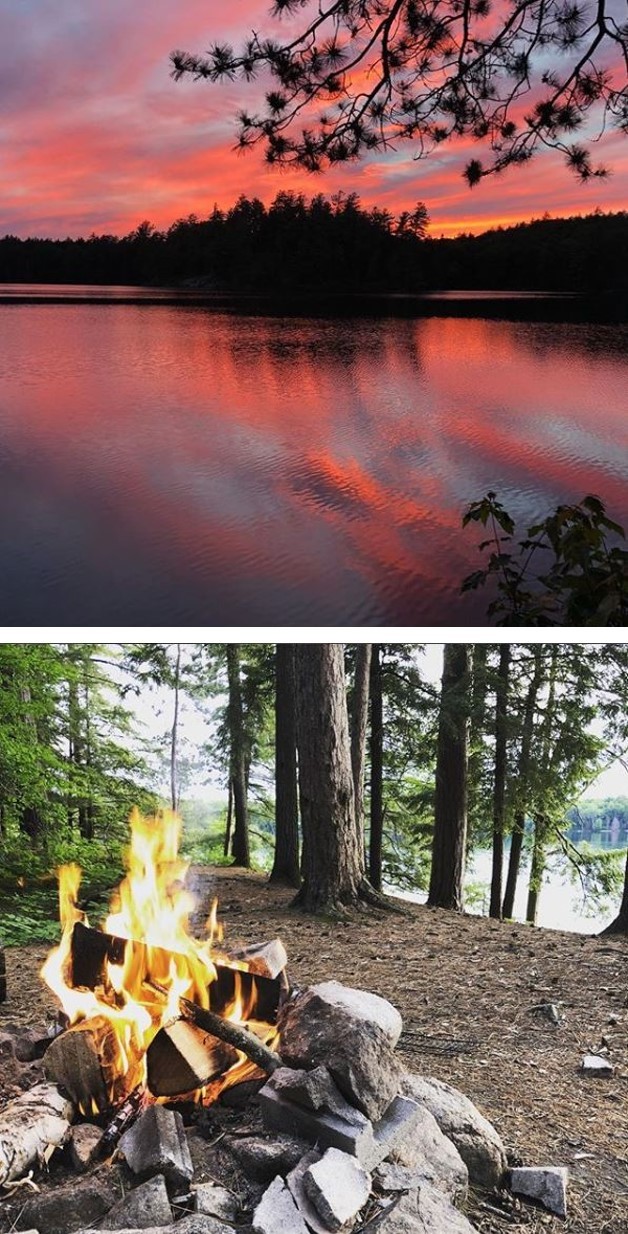
Photo Credit: Instagram user @katpane | Location: Little Green Pond, St. Regis Canoe Area
Specific Notices
Notices below reflect recent changes in conditions and recreation infrastructure work completed by DEC and its partners. Check the Backcountry Information for the Adirondacks web pages for ongoing issues and more detailed information.
-
High Peaks Wilderness/Vanderwhacker Wild Forest (Boreas Ponds): Gulf Brook Road will be closed on week days for the next several weeks beginning at sundown Sunday, June 24 to the end of July.
- The road will be open on weekends from 5 p.m. Friday through sundown Sunday.
- Until the repairs are complete, only four-wheel drive SUVs, pick-up trucks, and other high clearance vehicles should use the road.
- Drivers should use caution, drive slowly, and watch for oncoming vehicles.
- High Peaks Wilderness:
- The lands of the Dix Mountain Wilderness are now part of the High Peaks Wilderness. DEC will be changing signs, web pages, and regulations to eliminate the Dix Mountain Wilderness and transition to the High Peaks Wilderness.
- A nuisance bear with an ear tag has been active in Eastern High Peaks recently. The bear is approaching hikers and campers in an attempt to obtain food. Pack all food, toiletries, and garbage in a bear resistant canister as required by regulation. If approached by a bear:
- Do not throw your pack at them, if they are rewarded with food, they will continue this behavior.
- Raise your arms over your head to look bigger, yell loudly at the bear as you slowly back away – do not run.
- If available, bang rocks or metal objects together for noise.
- Avoid negative encounters with bears
- Bradley Pond Lean-to has a 3ft by 6ft hole in the roof. The lean-to can still be used but should be avoided if it's raining. DEC is developing a temporary fix for the 2018 season and will fully repair the roof during the off season.
-
Bog River Complex (Lows Lake)
- DEC is overseeing a maintenance project on the Lows Upper Dam to bring the dam into compliance with New York Dam Safety Regulations.
- Construction activities will impact recreational users of the portage from Hitchins Pond to Lows Lake, as well as private landowners and users of the Sabattis Boy Scout Camp.
- Work is scheduled to occur Monday through Friday and is expected to last through summer 2018.
- Members of the public wishing to access Hitchins Pond and Lows Lake will continue to launch at Low's Lower Dam, located near the end of State Highway 421.
- Recreational users should continue to use the existing designated portage around Low's Upper Dam.
- From Hitchins Pond, travel northwest past the old homesite;
- Stay within the designated traffic area (delineated with orange construction fence) at all times as you make your way through the work area.
- Continue to the dock on the right side of the Bog River Flow
- If you have any questions or concerns, contact Henry Dedrick, Supervising Forester at the DECs Potsdam sub-office at 315-274-3342 or by email.
-
Shaker Mountain Wild Forest: The South Trail up Kane Mountain off Schoolhouse Road is closed. The trail crosses private lands, and the landowner revoked permission for the public to cross. Hikers must use the formal Kane Mountain Trailhead off Green Lake Road.
-
Essex Chain Lakes Complex: Access to the western portion of the Complex, including the Deer Pond Parking Area, the Fifth Lake MAPPWD route, and the campsites along Cornell and Deer Pond Cornell Roads, will be closed to public use and motor vehicle access, beginning at sunset Sunday, July 22.
- The closure will remain in effect until the end of August.
- DEC is replacing three motor vehicle bridges, one each on Woody’s Road, Cornell Road, and Deer Pond Road, to facilitate safe passage along these corridors for the future.
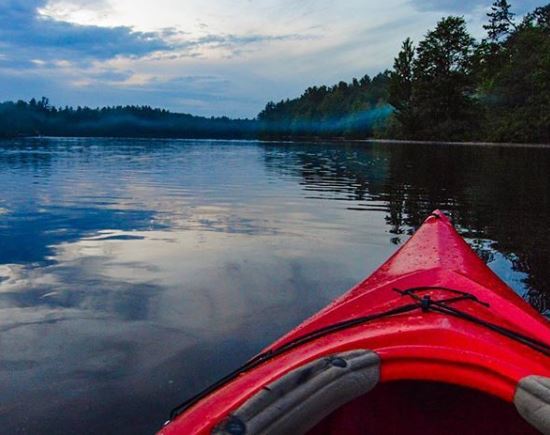
Photo Credit: Instagram user @bdeibel4 | Location: Rollins Pond Campground
Highlighted Pond - Lake Lila, Long Lake, NY
Lake Lila is found entirely within the William C. Whitney Wilderness area and is located west of the Village of Long Lake. This remote lake has both excellent warm and cold-water fishing. Lake Lila is a large, windswept wilderness lake where motor use is prohibited.
Fishing: Angling is often best in the early morning or near sunset when winds calm, and the fish start to rise. Both smallmouth bass and lake trout opportunities are great within Lake Lila. It has been reported that the smallies are found in the northeast end where rocky habitat abounds. The lakers are found in the deep water west of Buck and Spruce Islands. Lake Lila has a massive mayfly hatch in late June and early July which creates outstanding fly fishing opportunity for smallmouths.
Camping: There are also 24 island and beach primitive campsites. Primitive tent sites and lean-tos are available on a first-come, first-served basis and cannot be reserved. If you find a tent site or lean-to with no people or gear, then you can camp there.
Hiking: Mt. Frederica (2,170ft) is the only mountain in the area with a trail to the summit. The summit provides views of Lake Lila and other lands and waters to the south and east. There are two starting points for this hike.
A 4.8-mile hike begins at the Lake Lila parking area and travels along a private access road. A trail intersects with road 0.2 mile after the road leaves the lake shore. The trail climbs 400 feet and 1.2 miles to the summit.
An access site on the western shore of Lake Lila at the site of a former lodge, not far from where the private access road leaves the lake allows paddlers to reduce the length of the hike to 1.6 miles.
Getting There: Lake Lila parking area lies at the end of the Lake Lila Road, 5.6 miles from the Sabbattis Road. A private access road continues past the gate at the end of the parking area. The public should not block the gate. The public can use the access road on foot only. (44.0192°N, 74.7264°W)
From the parking area, there are two trails that leave the lot. The .3-mile canoe carry trail leads you to a sandy beach on Lake Lila as well as accesses campsite #1. The other trail leads you to the west side of Lake Lila with access to campsites and the Lake Lila lean-to. The parking area is also where the trail to Frederica Mountain begins.
|