|
Have a safe and enjoyable outdoor recreational experience on the lands and waters of the Adirondacks. Properly plan and prepare for your outdoor adventure. Minimize the impact on the mountains and forests, rivers and brooks, ponds and lakes, and the wildlife of the Adirondacks.
check the Backcountry Information for the Adirondacks web pages for more detailed information on access, outdoor recreation infrastructure, and conditions for those planning to recreate in the Adirondacks. This bulletin provides only the most recent notices.
Would you like your photo shared in our weekly bulletin? Send us your photos that represent current backcountry conditions in the Adirondacks. Send in your photos with your name and photo location/brief description to Info.R5@dec.ny.gov or simply tag #NYSDEC on Instagram.
PLAN
Weather forecasts and conditions can and do change quickly. Check the current National Weather Service Forecast and be prepared for the forecasted conditions or change your plans.
-
Thin ice has formed on lakes and ponds. With the colder temperatures returning at night, a thin layer of ice has formed again over many lakes and ponds. DEC has received and responded to numerous reports of motorized vehicles falling through ice. Check area conditions before heading out on any waterway. If you don’t know, don’t go!
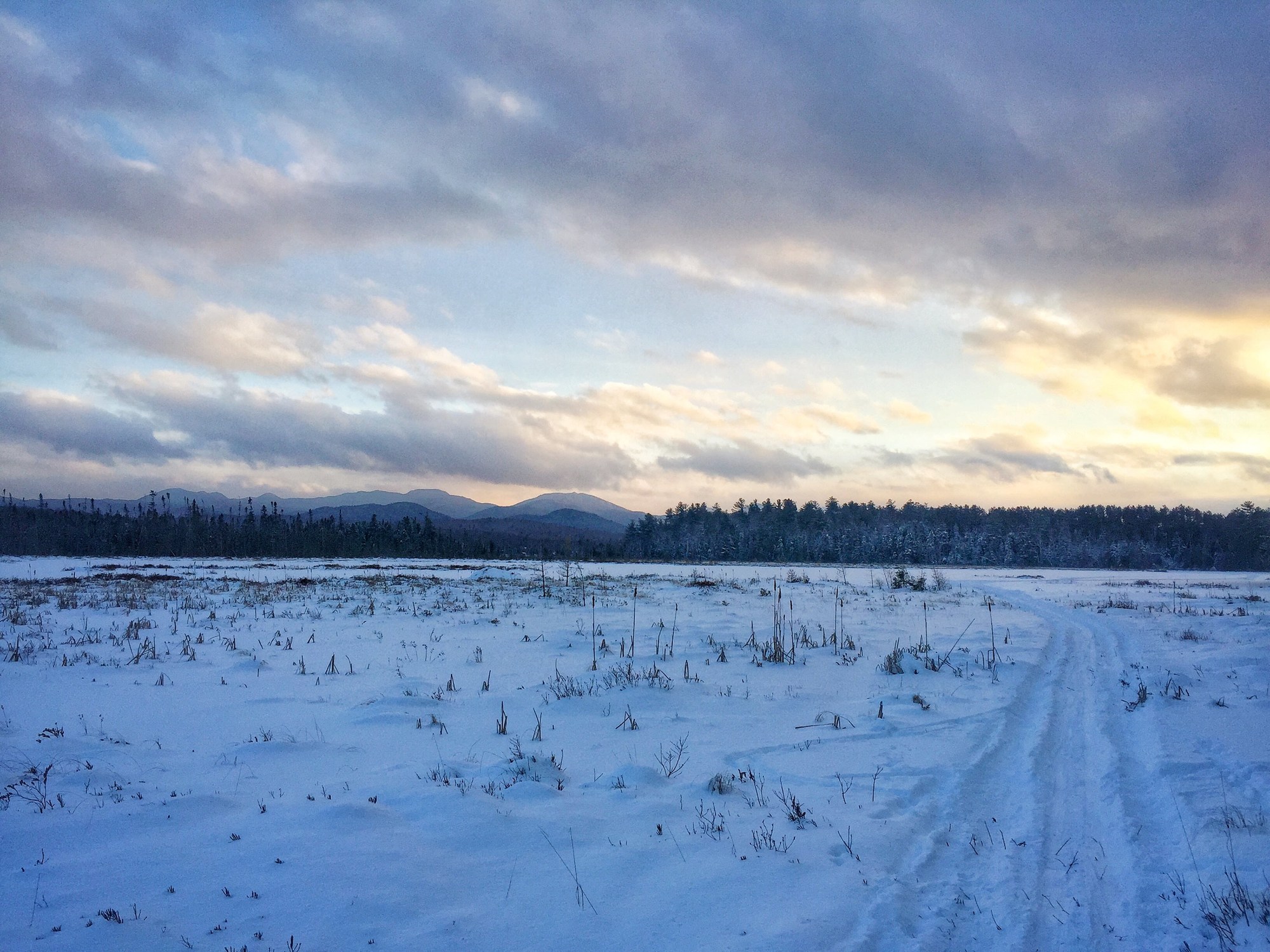
- Snow on trails. All trails have significant snow covering. Ice is still prevalent underneath the fresh snow on exposed summits and bedrock. Wear snowshoes or skis, pack or carry crampons. Snow shoes or skis are required wherever snow depths exceed 8” in the High Peaks Wilderness.
- Avalanche Awareness. Avalanche conditions may exist on slides and other exposed slopes after significant snowfalls. Learn more about how to recognize avalanche conditions, avoid triggering an avalanche, and the necessary rescue equipment to carry when backcountry skiing in the Adirondacks.
PREPARE
Properly prepare to better ensure a safe and enjoyable winter recreation experience.
-
Winter camping tip- layering for sleep: it is important when camping in the cold to be sure you are well equipped for the brisk Adirondack nights. The first layer is your barrier. Use a thicker sleeping pad in the winter to help block the cold from the ground. It is recommended to use two full length sleeping pads, a closed cell foam pad for next to the ground with a self-inflating pad on top. The second layer is the sleeping bag liner. Sleeping bag liners can add 0-15 degrees of warmth, help keep your sleeping bag cleaner, and help reduce wear on your sleeping bag. Finally, your sleeping bag which provides the most amount of coverage on cold nights. Be sure to use a sleeping bag that is rated for 10 degrees colder than what you are expecting to endure. Use a sleeping bag that offers draft tubes around the zippers and draft collars above the shoulders and hood for maximum warmth security.
-
Prevent Hypothermia: Dress properly, stay dry and add or remove layers to regulate your body temperature. Carry plenty of food and water. Eat, drink and rest often. Being tired, hungry or dehydrated makes you more susceptible to hypothermia. Traveling in snow takes more energy and more time than traveling the same trail on bare ground.
-
Packing the proper gear for a winter hike is very important and you should be prepared to encounter all conditions. See our recommended packing list and winter safety tips.
PRACTICE LEAVE NO TRACE
 Follow proper trail etiquette to maintain minimal impact on the environment and the natural resources of the Adirondacks as well as ensuring an enjoyable outdoor experience for all visitors by following the Seven Principles of Leave No Trace. Follow proper trail etiquette to maintain minimal impact on the environment and the natural resources of the Adirondacks as well as ensuring an enjoyable outdoor experience for all visitors by following the Seven Principles of Leave No Trace.
-
Travel and Camp on Durable Surfaces (Principle # 2)
Durable surfaces include established trails and campsites, rock, gravel, dry grasses or snow. Protect riparian areas by camping at least 200 feet from lakes and streams. Good campsites are found, not made.
-
Plan and Prepare Ahead (Principle #1):
Being prepared is essential. Always carry a headlamp, space blanket and/or sleeping bag, tent or other form of shelter, hand and feet warmers, emergency whistle, first aid kit, pocket knife, fire making tools, extra snacks and water, dry layers and socks. It may seem like a lot of extra weight to your pack but you will be safer and happier if the unexpected occurs.
-
Be Considerate of Other Visitors (Principle #7)
Share the trail and yield to downhill and faster users. Skiers and snowshoers using designated snowmobile trails should keep to the side and move off the trail to allow safe passage of snowmobiles. Snowmobilers should slow down when passing skiers and snowshoers.
GENERAL CONDITIONS/NOTICES
Learn the conditions you will encounter from Adirondack Backcountry Information.
-
- Trail Conditions: Trails are covered with deep snow. Snowshoes or skis should be required on all trails. More energy and time is required when traveling through deep snow.
- Ice on Trails: Thick ice is present on high elevation trails especially on bedrock summits, steep rocky slopes, and other exposed areas. The thick ice may be covered by snow. Carry mountaineering or climbing crampons if you are planning to travel up trails to mountain summits and use when warranted – trail crampons are ineffective.
- Snowmobile Trails: Deep snows are providing great late season snowmobiling
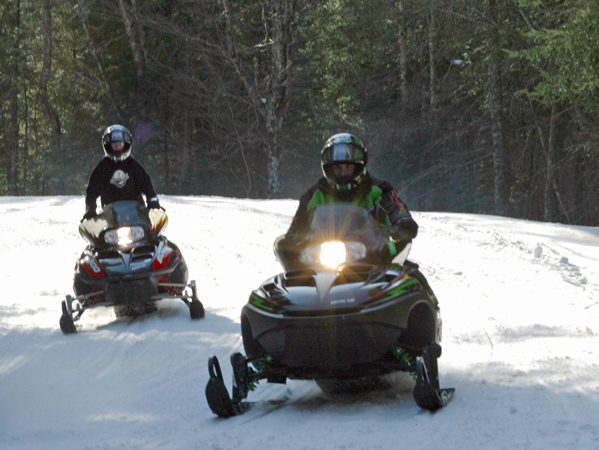 opportunities. Many gates and snowmobile trail systems previously closed have been reopened with the recent snows. Check local conditions before going out especially when planning a trip that crosses lakes and ponds. Lakes and Ponds may only have a thin layer of ice covering which will not hold the weight of a snowmobile. opportunities. Many gates and snowmobile trail systems previously closed have been reopened with the recent snows. Check local conditions before going out especially when planning a trip that crosses lakes and ponds. Lakes and Ponds may only have a thin layer of ice covering which will not hold the weight of a snowmobile.
- River and Streams: Large areas of ice over moving water are gone or have thinned considerably. All ice is covered with snow. Ice that holds the weight of snow may not hold the weight of a person, snowmobile, or ATV. Be sure you know the thickness of the ice under the snow – If you don’t know, don’t go. Use extreme caution at all stream crossings, as rocks are covered with ice.
- Ice on Lakes and Ponds: Ice has thinned on lakes and ponds especially over river channels and other moving water. DEC has received and responded to numerous reports of motorized vehicles falling through ice. Water and slush are present below the snow on the surface of the ice. Be sure you know the thickness of the ice under the snow – If you don’t know, don’t go. Be safe on ice.
- Always check the thickness of ice before traveling across it.
- Avoid and stay well away from ice:
- Over running water
- Near inlets & outlet
- Near boathouses & docks - especially those with "bubblers" or other ice prevention devices.
- Remember, ice that holds snow may not hold the weight of a person or snowmobile.
- Mountain Summit Conditions will be more extreme than those found at the trailhead. Temperatures will be colder, winds will be stronger, ice will be present, and snow will be deeper. Check the National Weather Service Mountain Point Forecasts for selected summits.
SPECIFIC NOTICES
Notices below reflect recent changes in conditions and recreation infrastructure work completed by DEC and its partners.
-
High Peaks Wilderness: Snow has tapered off since last Thursday bringing sunnier days and temperatures back in the 20s leaving snow on trails in good condition for skiing and snowshoeing.
- Snowshoers and skiers should stay on designated trails to avoid avalanche prone terrain.
- More energy and time is required when traveling through deep snow
- Use caution when hiking above tree line as trail markers (stone cairns) are covered by snow and blowing snow will shorten sight distance and cover tracks.
- Backcountry skiers and others using slides and other avalanche prone terrain should be aware of conditions.
- New snow has added stress to the current snowpack.
- Dig test pits and know how to read the snow pack. Do not reply on other people’s assessment.
- Carry avalanche beacon, probe and shovel, know how to self-rescue.
- Practice safe travel techniques and when in doubt, don’t go.
- Report any observed avalanche activity to DEC Dispatch at 518-897-1300.
- Lake Colden Caretaker reports 54 inches (137 cm) of snow at the stake on the shores of Lake Colden (Elevation 2,750 ft./838 m) with up to 5 to 6 feet snow (150 to 180 cm) in the higher elevations.
- Snowshoes or skis are required on all trails.
- Avoid the inlets and outlets of Lake Colden and Avalanche Lake, snow is covering thin ice around the open water.
- Corey’s Road in the Western High Peaks is closed beyond the Calkins Brook/Raquette River Trailhead Parking. It will remain closed through mud season. The road will reopen when it has dried and hardened, and all routine maintenance and repairs have been completed.
- Debar Mountain Wild Forest/Kushaqua Conservation Easement Tract: Lyme Adirondack Forest Company, the private landowner
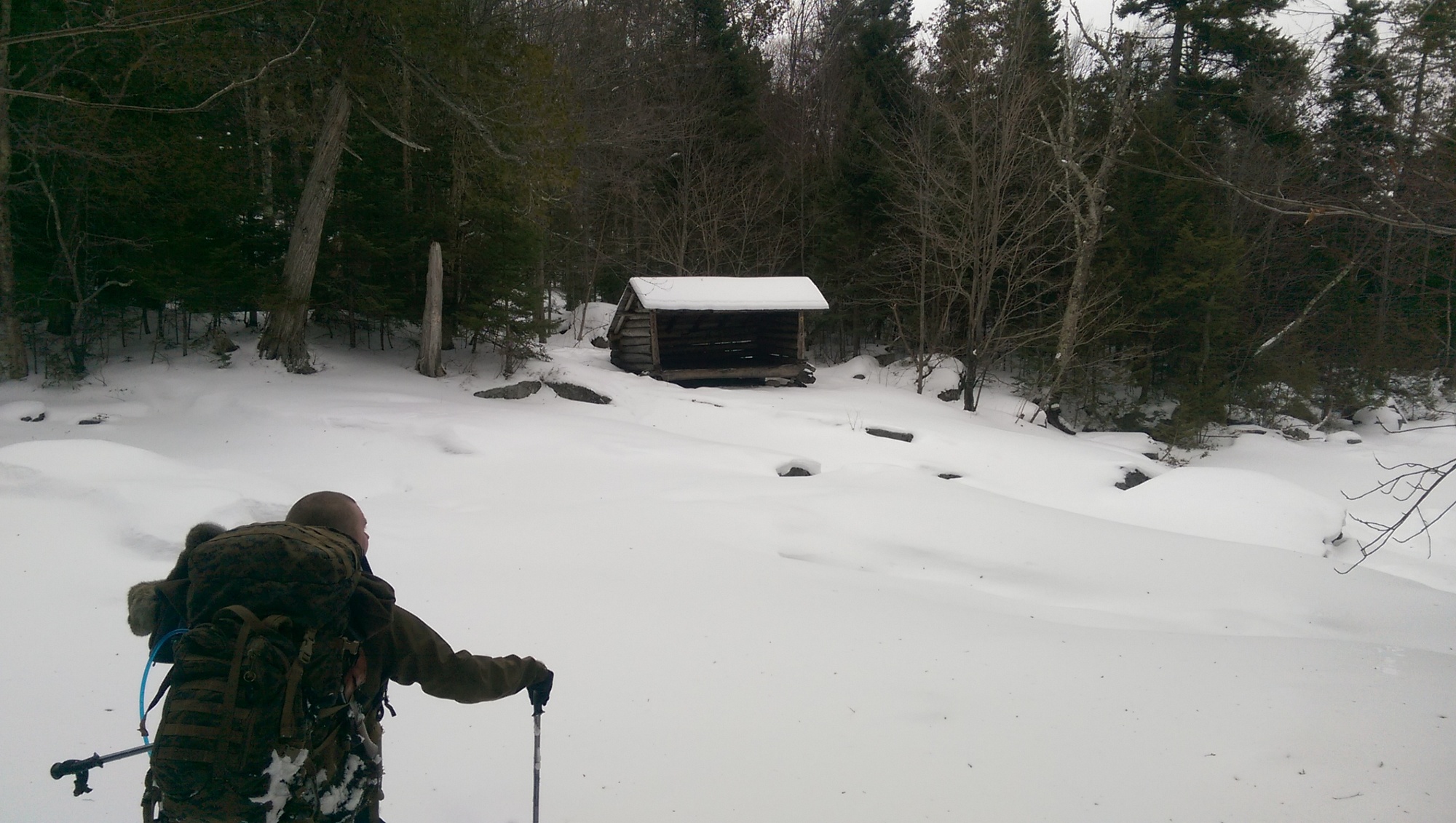 of the Kushaqua Conservation Easement Tract, is conducting a timber harvest in the area of the Loon Lake Mountain Trail. Be prepared to encounter logging trucks and heavy equipment at any time on the trail and the easement lands in the area during this active harvest operation. Please contact the DEC Ray Brook Office at 518-897-1291for questions regarding this harvest operation. of the Kushaqua Conservation Easement Tract, is conducting a timber harvest in the area of the Loon Lake Mountain Trail. Be prepared to encounter logging trucks and heavy equipment at any time on the trail and the easement lands in the area during this active harvest operation. Please contact the DEC Ray Brook Office at 518-897-1291for questions regarding this harvest operation.
- Conifer-Emporium Easement Tract: Due to logging operations on the CL West Tract, DEC has closed the Cranberry Lake 50 connector trail and Lost Pond Trail to public use until further notice. The Cranberry Lake 50 trail has been temporarily re-routed to its former route State Route 3 during the closure.
- Lake George Wild Forest: The Town of Fort Ann has closed Shelving Rock Road for mud season. Parking along the road before the gate is prohibited. During this period there is no access to Hogtown, Sleeping Beauty, Buck Mountain (east trail head), Shelving Rock, Dacy Clearing, Log Bay, Shelving Rock Day Use Area, or Shelving Rock Falls. Buck Mountain from Pilot Knob and Inman Pond are still open
HIGHLIGHTED TRAIL- Flume Trails, Wilmington, NY
Wilmington Flume Trail Network located in the Wilmington Wild Forest provides 11.5 miles of trails for snowshoeing and hiking. Those accessing these hiking trails from the Flume Trailhead West will pass a wildlife viewing area overlooking a beaver dam and pond and enjoy scenic views of the West Branch Ausable River.
Flume Knob can be reached on trails traversing at least 2.5 miles, depending on the route taken, and ascending 1,300 feet from the Flume West Trailhead. The peak can also be reached from the Bear Den Trailhead, from which the trail traverses a total of 1.5 miles and ascends approximately 1,025 feet.
Bear Den Mountain can be reached on trails traversing 2.8 miles, depending on the route taken, and ascending 1,600 feet from the Flume West Trailhead. The peak can also be reached from the Bear Den Trailhead from which the trail traverses a total of 1.6 miles and ascends approximately 1,325 feet. Both peaks provide views of the West Branch Ausable River Valley, the Sentinel Range and the Stephenson Range.
Wilmington Flume Falls, a narrow gap and waterfalls in the West Branch Ausable River can be accessed from the Flume East Trailhead on a short trail, less than 0.1 mile in length, that descends approximately 75 feet from the trailhead to the shore of the West Branch Ausable River.
Trail head Locations:
Wilmington Flume Trailhead West Parking Area is located along Route 86 immediately north/east of the bridge over the West Branch Ausable. (N 44.3661°; W 73.8414°)
Wilmington Flume Trailhead East Parking Area is located on the opposite side of Route 86 and a short distance north/east of the West Parking Area. (N 44.3671°; W 73.8403°)
|