|
Have a safe and enjoyable outdoor recreational experience on the lands and waters of the Adirondacks. Properly plan and prepare for your outdoor adventure. Minimize the impact on the mountains and forests, rivers and brooks, ponds and lakes, and the wildlife of the Adirondacks.
check the Backcountry Information for the Adirondacks web pages for more detailed information on access, outdoor recreation infrastructure, and conditions for those planning to recreate in the Adirondacks. This bulletin provides only the most recent notices.
Would you like your photo shared in our weekly bulletin? Send us your photos that represent current backcountry conditions in the Adirondacks. Send in your photos with your name and photo location/brief description to Info.R5@dec.ny.gov or simply tag #NYSDEC on Instagram.
PLAN
Weather forecasts and conditions can and do change quickly. Check the current National Weather Service Forecast and be prepared for the forecasted conditions or change your plans.
-
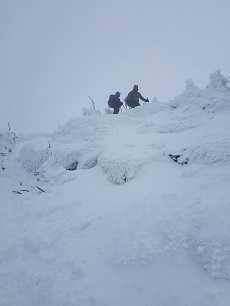
Snow on trails. All trails have significant snow covering. Ice is still prevalent underneath the fresh snow on exposed summits and bedrock. Wear snowshoes, pack or carry crampons. Snow shoes are required wherever snow depths exceed 8” in the High Peaks Wilderness.
-
Breaking trail. The recent snow has covered even well-traveled trails. Plan for more time during your trip. Breaking trail can exhaust more energy than regular hiking. Gaiters can protect your lower legs from the wet, cold elements of deep snow.
-
Blowdown on trails. The recent storm brought high winds in the higher elevations. Plan to encounter fallen trees and low hanging branches along trails.
-
Know your skill level and physical capabilities. Choose trails within your or your group’s ability. Remember it takes more effort and energy to move through snow.
Photo Credit: Noelle Guimond, Algonquin Peak
PREPARE
Properly prepare to better ensure a safe and enjoyable winter recreation experience.
-
Be aware of spruce traps. After a large accumulation of fresh snow, spruce traps can occur. A spruce trap is when deep snow hides a cavity between buried branches. This happens more frequently at higher elevations where the trees grow shorter but the snow piles higher. A misstep off the broken trail even in snowshoes can mean finding yourself waist deep in a trap. When breaking trail, be cautious of buried branches and take your time to find the safest path. Educate yourself on spruce traps before your winter hike.
-
Layering for varying temperatures: Temperatures at the trail head will vary from temperatures at your destination. Higher elevations and exposed summits can have significantly colder temperatures than the base of the mountain along with high winds. Pack extra non-cotton, wind protectant layers and be sure to use them once exposed or feeling colder to help prevent hypothermia.
-
Prevent Hypothermia: Dress properly, stay dry and add or remove layers to regulate your body temperature. Carry plenty of food and water. Eat, drink and rest often. Being tired, hungry or dehydrated makes you more susceptible to hypothermia. Traveling in snow takes more energy and more time than traveling the same trail on bare ground.
-
Avalanche Awareness. Avalanche conditions may exist on slides and other exposed slopes after significant snowfalls. Learn more about how to recognize avalanche conditions, avoid triggering an avalanche, and the necessary rescue equipment to carry when backcountry skiing in the Adirondacks.
PRACTICE LEAVE NO TRACE
 Follow proper trail etiquette to maintain minimal impact on the environment and the natural resources of the Adirondacks as well as ensuring an enjoyable outdoor experience for all visitors by following the Seven Principles of Leave No Trace. Follow proper trail etiquette to maintain minimal impact on the environment and the natural resources of the Adirondacks as well as ensuring an enjoyable outdoor experience for all visitors by following the Seven Principles of Leave No Trace.
-
Plan and Prepare Ahead (Principle #1):
Prepare for unexpected overnight stays. There are many dangerous variables when recreating in the winter. If you find yourself injured or lost, rescuers may have a more difficult and longer time reaching you, and you have to spend the night. Being prepared is essential. Always carry a headlamp, space blanket and/or sleeping bag, tent or other form of shelter, hand and feet warmers, emergency whistle, first aid kit, pocket knife, fire making tools, extra snacks and water, dry layers and socks. It may seem like a lot of extra weight to your pack but you will be safer and happier if the unexpected occurs.
-
Be Considerate of Other Visitors (Principle #7)
Share the trail and yield to downhill and faster users. Skiers and snowshoers using designated snowmobile trails should keep to the side and move off the trail to allow safe passage of snowmobiles. Snowmobilers should slow down when passing skiers and snowshoers.
GENERAL CONDITIONS/NOTICES
Learn the conditions you will encounter from Adirondack Backcountry Information.
-
Trail Conditions: Trails are covered with deep snow. Snowshoes or skis should be required on all trails. More energy and time is required when traveling through deep snow. Secondary trails may contain deep, untrammeled snow. “Breaking trail” takes even more time and energy.
-
Ice on Trails: Thick ice is present on high elevation trails especially on bedrock summits, steep rocky slopes, and other exposed areas. The thick ice may be covered by snow. Carry mountaineering or climbing crampons if you are planning to travel up trails to mountain summits and use when warranted – trail crampons are ineffective.
-
Snowmobile Trails: Deeps snows are providing great late season snowmobiling opportunities. Many gates and snowmobile trail systems previously closed have been reopened with the recent snows. Check local conditions before going out.
-
River and Streams: Large areas of ice over moving water are gone or have thinned considerably. All ice is covered with snow. Ice that holds the weight of snow may not hold the weight of a person, snowmobile, or ATV. Be sure you know the thickness of the ice under the snow – If you don’t know, don’t go. Use extreme caution at all stream crossings, as rocks are covered with ice.
-
Ice on Lakes and Ponds: Ice has thinned on lakes and ponds especially over river channels and other moving water. DEC has received and responded to numerous reports of motorized vehicles falling through ice. Water and slush are present below the snow on the surface of the ice. Be sure you know the thickness of the ice under the snow – If you don’t know, don’t go. Be safe on ice.
- Always check the thickness of ice before traveling across it.
-
Avoid and stay well away from ice:
- Over running water
- Near inlets & outlet
- Near boathouses & docks - especially those with "bubblers" or other ice prevention devices.
- Remember, ice that holds snow may not hold the weight of a person or snowmobile.
-
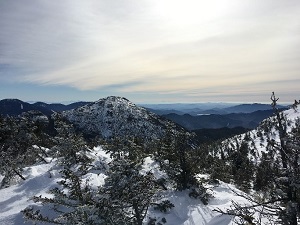
Mountain Summit Conditions will be more extreme than those found at the trailhead. Temperatures will be colder, winds will be stronger, ice will be present, and snow will be deeper. Check the National Weather Service Mountain Point Forecasts for selected summits.
Photo Credit: Aaron McNamara, Mt. Marcy
SPECIFIC NOTICES
Notices below reflect recent changes in conditions and recreation infrastructure work completed by DEC and its partners.
-
High Peaks Wilderness: The region has received 18 inches of new snowfall in the 24 hours prior to Wednesday afternoon. Additional snow has accumulated since then.
- Snowshoers and skiers should stay on designated trails to avoid avalanche prone terrain.
- More energy and time is required when traveling through deep snow
- Secondary trails may contain deep, untrammeled snow. “Breaking trail” takes even more time and energy.
- Use caution when hiking above tree line as trail markers (stone cairns) are covered by snow and blowing snow will shorten sight distance and cover tracks.
-
Backcountry skiers and others using slides and other avalanche prone terrain should be aware of conditions.
- New snow has added stress to the current snowpack.
- Winds continue to add snow load and form wind slab on leeward slopes.
- Dig test pits and know how to read the snow pack. Do not reply on other people’s assessment.
- Carry avalanche beacon, probe and shovel, know how to self-rescue. Practice safe travel techniques and when in doubt, don’t go.
- Report any observed avalanche activity to DEC Dispatch at 518-897-1300.
-
Lake Colden Caretaker reports 57 inches (145 cm) of snow at the stake on the shores of Lake Colden (Elevation 2,750 ft./838 m) with up to 5 to 6 feet snow (120 to 180 cm) in the higher elevations.
- Snowshoes or skis are required on all trails.
- Avoid the inlets and outlets of Lake Colden and Avalanche Lake, snow is covering thin ice around the open water.
-
Corey’s Road in the Western High Peaks is closed beyond the Calkins Brook/Raquette River Trailhead Parking. It will remain closed through mud season. The road will reopen when it has dried and hardened, and all routine maintenance and repairs have been completed.
-
Debar Mountain Wild Forest/Kushaqua Conservation Easement Tract: Lyme Adirondack Forest Company, the private landowner of the Kushaqua Conservation Easement Tract, is conducting a timber harvest in the area of the Loon Lake Mountain Trail. Be prepared to encounter logging trucks and heavy equipment at any time on the trail and the easement lands in the area during this active harvest operation. Please contact the DEC Ray Brook Office at 518-897-1291for questions regarding this harvest operation.
-
Conifer-Emporium Easement Tract: Due to logging operations on the CL West Tract, DEC has closed the Cranberry Lake 50 connector trail and Lost Pond Trail to public use until further notice. The Cranberry Lake 50 trail has been temporarily re-routed to its former route State Route 3 during the closure.
-
Lake George Wild Forest: The Town of Fort Ann has closed Shelving Rock Road for mud season. Parking along the road before the gate is prohibited. During this period there is no access to Hogtown, Sleeping Beauty, Buck Mountain (east trail head), Shelving Rock, Dacy Clearing, Log Bay, Shelving Rock Day Use Area, or Shelving Rock Falls. Buck Mountain from Pilot Knob and Inman Pond are still open
HIGHLIGHTED XC SKI TRAIL- Mt. VanHoevenberg, Lake Placid, NY
The Olympic XC Ski trails of Mt. VanHoevenberg include 50km of groomed, rolling Adirondack terrain that fit every ability level. The ski center boasts a ski-to destination, known as Joise’s cabin which serves delicious food and hot drinks. Adjacent to the cabin are two fire pits fully equipped with s’mores kits.
Saturday, March 17th is Mt. VanHoevenberg’s historic Lake Placid Loppet and Citizen’s Challenge Race which is a community XC ski race for all abilities. The race includes a 50km and 25km technique race as well as a 12.5km, 6km, and 3km community challenge race.
Trail access: During the winter season, Mt. Van Hoevenberg is open daily from 9:00 am - 4:30 pm (trail passes available for purchase until 4:00 pm). See more ski center and trail conditions information.
Location: 220 Bobsled Run Lane, Lake Placid, NY, 12946
Check out more XC skiing opportunities in Lake Placid, NY.
|