|
Have a safe and enjoyable outdoor recreational experience on the lands and waters of the Adirondacks. Properly plan and prepare for your outdoor adventure. Minimize the impact on the mountains and forests, rivers and brooks, ponds and lakes, and the wildlife of the Adirondacks.
Backcountry Information for the Adirondacks web pages provide information on access, outdoor recreation infrastructure, and current conditions for those planning to recreate in the Adirondacks.
Would you like your photo shared in our weekly bulletin? Send us your photos that represent current backcountry conditions in the Adirondacks. Send in your photos with your name and photo location/brief description to Info.R5@dec.ny.gov or simply tag #NYSDEC on Instagram.
PLAN
Weather forecasts and conditions can and do change quickly. Check the current National Weather Service Forecast and be prepared for the forecasted conditions or change your plans.
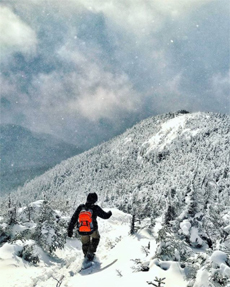
- Plan for snow on roads. With snow continuing through the weekend, travel corridors and parking areas will be snow covered and slippery. Be aware of cars pulling in and out of parking areas. Park efficiently side by side where lots permit.
- Plan for snow on trails. All trails are once again snow covered. Ice is still prevalent underneath the fresh snow on exposed summits and bedrock. Wear snowshoes, pack or carry crampons. Snow shoes are required wherever snow depths exceed 8” in the High Peaks Wilderness.
- Blow down on trails. The recent storm brought high winds in the higher elevations. Plan to encounter fallen trees and low hanging branches along trails.
Photo credit - Instagram User @corn_wild
High Peaks Wilderness
PREPARE
Properly prepare to better ensure a safe and enjoyable winter recreation experience.
- Layering for varying temperatures: Temperatures at the trail head will vary from temperatures at your destination. Higher elevations and exposed summits can have significantly colder temperatures than the base of the mountain along with high winds. Pack extra non-cotton, wind protectant layers and be sure to use them once exposed or feeling colder to help prevent hypothermia.
- Daylight saving time: Get out and enjoy the extra daylight but be prepared with a headlamp and/or flashlight. Hiking through snow takes more effort and time and with clouds in the forecast, heavily forested trails may still get darker more quickly.
-
Stream crossings may be impassable. Prepare to take alternate routes or turn back if a stream crossing is impassable. Recent thaws, icy conditions, and very cold water, fast moving streams should be avoided. Keep dogs on leashes near fast moving water.
PRACTICE LEAVE NO TRACE
 Follow proper trail etiquette to maintain minimal impact on the environment and the natural resources of the Adirondacks as well as ensuring an enjoyable outdoor experience for all visitors by following the Seven Principles of Leave No Trace. Follow proper trail etiquette to maintain minimal impact on the environment and the natural resources of the Adirondacks as well as ensuring an enjoyable outdoor experience for all visitors by following the Seven Principles of Leave No Trace.
- Respect Wildlife (Principle #6):
- View wildlife from a distance using binoculars or a spotting scope
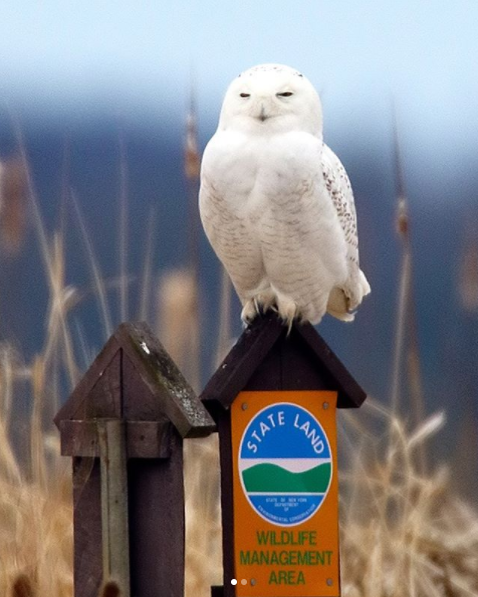 to observe the natural behavior of animals. It's safer for wildlife - especially vulnerable populations like young animals, breeding and nesting birds, and wintering raptors. It's safer for you - animals may attack if they perceive you pose a threat to them or their young. Avoid flushing or disturbing wildlife when watching or photographing them, and never purposely chase wildlife. to observe the natural behavior of animals. It's safer for wildlife - especially vulnerable populations like young animals, breeding and nesting birds, and wintering raptors. It's safer for you - animals may attack if they perceive you pose a threat to them or their young. Avoid flushing or disturbing wildlife when watching or photographing them, and never purposely chase wildlife.
- Be Considerate of Other Visitors (Principle #7)
- Be safe and respect others. Snowy roads can create dangerous travel conditions. Be considerate of other visitors by parking only in designated parking areas, give slowing or turning vehicles the proper space, use caution when leaving or entering your vehicle and use caution when crossing roads. Stay well out of travel lanes and be aware of road traffic.
GENERAL CONDITIONS/NOTICES
Learn the conditions you will encounter from Adirondack Backcountry Information.
-
Winter Conditions: Winter conditions have returned, particularly in the central and southern Adirondacks, thanks to two Nor’easters in the past week. Snow depths range from 4 to 6 inches in northwestern and northeastern corners of the Adirondacks, 15 to 20 inches across much of the southern and central area. See the NERFC Snow Page for current snow information. Learn how to have a safe and enjoyable outdoor winter experience.
-
Snowmobile Trails: Many gates and snowmobile trail systems previously closed have been reopened with the recent snows, particularly those in the southern and central Adirondacks. Check local conditions before going out. Be safe when snowmobiling.
-
Trail Conditions: Low elevation trails are covered with snow but may have ice water, or mud under the snow. Snow depths warrant the use of snowshoes across most of the Adirondacks. Trail crampons and other traction devices should be carried for use on lower elevation, less steep trails in the northwestern and northeastern areas.
-
Ice on Trails: Thick ice is present on high elevation trails especially on bedrock summits, steep rocky slopes, and other exposed areas. The thick ice may be covered by snow. Carry mountaineering or climbing crampons if you are planning to travel up trails to mountain summits and use when warranted – trail crampons are ineffective.
-
River and Streams: Large areas of ice over moving water are gone or has thinned considerably. All ice is covered with snow. Ice that holds the weight of snow may not hold the weight of a person, snowmobile, or ATV. Be sure you know the thickness of the ice under the snow – If you don’t know, don’t go. Use extreme caution at all stream crossings, as rocks are covered with ice.
-
Ice on Lakes and Ponds: Ice is thinning on lakes and ponds especially over river channels and other moving water. DEC has received and responded to numerous reports of motorized vehicles falling through ice. Water and slush are present below the snow on the surface of the ice. Be sure you know the thickness of the ice under the snow – If you don’t know, don’t go. Be safe on ice.
- Always check the thickness of ice before traveling across it.
- Avoid and stay well away from ice:
- Over running water
- Near inlets & outlet
- Near boathouses & docks - especially those with "bubblers" or other ice prevention devices
- Remember, ice that holds snow may not hold the weight of a person or snowmobile.
-
Mountain Summit Conditions will be more extreme than those found at the trailhead. Temperatures will be colder, winds will be stronger, ice will be present, and snow will be present and deep. Check the National Weather Service Mountain Point Forecasts for selected summits.
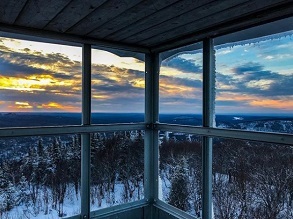
Photo Credit - Instagram User @psilocybe187, Azure Mountain Fire Observation Station
SPECIFIC NOTICES
Notices below reflect recent changes in conditions and recreation infrastructure work completed by DEC and its partners.
-
High Peaks Wilderness:
- Skiers and others traveling off trail onto slides and other avalanche terrain should be prepared:
- Know the amount of news snow
- Carry transceivers, probes and shovels.
- Know how to self-rescue.
- Report any avalanches you witness to the DEC Dispatch (518-897-1300)
- Lake Colden Caretaker reports 45 inches (115 cm) of snow at the stake on the shores of Lake Colden (Elevation 2,750 ft./838 m) with up to 5 to 6 feet snow (120 to 180 cm) in the higher elevations.
- Snowshoes or skis are required above past Marcy Dam (2,360 ft/720 m) and wherever else snow depths exceed 8 inches.
- Avoid the inlets and outlets of Lake Colden and Avalanche Lake, snow is covering thin ice around the open water.
- Corey’s Road in the Western High Peaks is closed beyond the Calkins Brook/Raquette River Trailhead Parking. It will remain closed through mud season. The road will reopen when it has dried and hardened, and all routine maintenance and repairs have been completed.
- Independence River Wild Forest: The 10 Mile Crossing Road gate at Otter Creek and the Mt. Tom Trail East gate are both closed.
- Jessup River Wild Forest: The Oxbow Trail is closed
-
Conifer-Emporium Easement Tract: Due to logging operations on the CL West Tract, DEC has closed the Cranberry Lake 50 connector trail and Lost Pond Trail to public use until further notice. The Cranberry Lake 50 trail has been temporarily re-routed to its former route State Route 3 during the closure.
- Lake George Wild Forest: The Town of Fort Ann has closed Shelving Rock Road for mud season. Parking along the road before the gate is prohibited. During this period there is no access to Hogtown, Sleeping Beauty, Buck Mountain (east trail head), Shelving Rock, Dacy Clearing, Log Bay, Shelving Rock Day Use Area, or Shelving Rock Falls. Buck Mountain from Pilot Knob and Inman Pond are still open.
HIGHLIGHTED TRAIL- Camp Santanoni XC Trail, Newcomb, NY
Winter weekend event this weekend, March 10th-11th!
Camp Santanoni provides a 9.8-mile round trip cross-country ski excursion. The trail traverses from the Gate Lodge Complex past the Farm Complex, to the remote lakeside Main Camp Complex, providing a moderate ski and a great opportunity to enjoy the outdoors. For those who don't have their own skis or snowshoes, the Adirondack Interpretive Center provide snowshoes free of charge to visitors at the Gate Lodge.
Trailhead: Camp Santanoni Historic Area is accessed from the Gate Lodge Parking Area, located on Newcomb Lake Road, off NY Route 28N. (43.9737°N, 74.1650°W)
Skiers and snowshoers are welcome to recreate on the trail and surrounding lands on any day 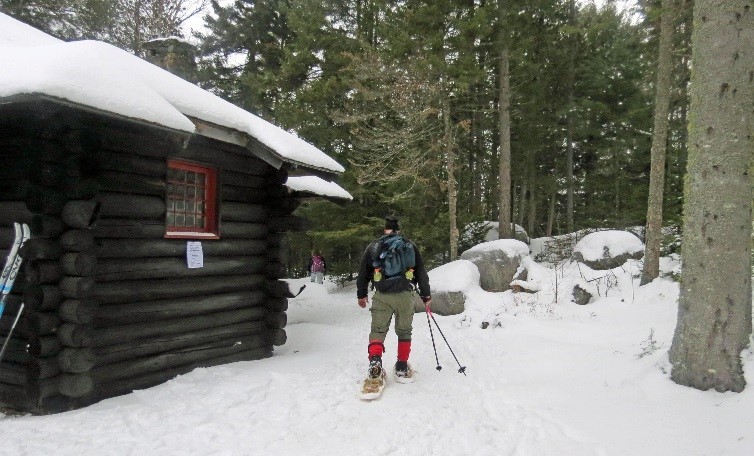 during the winter. However, during the Winter Weekend events which includes this coming weekend, March 10th-11th, cross-country skiers and snowshoers will be able to visit both the Gate Lodge and Main Lodge of Camp Santanoni, view displays about the great camp and take interpretive tours with Adirondack Architectural Heritage (AARCH) staff. during the winter. However, during the Winter Weekend events which includes this coming weekend, March 10th-11th, cross-country skiers and snowshoers will be able to visit both the Gate Lodge and Main Lodge of Camp Santanoni, view displays about the great camp and take interpretive tours with Adirondack Architectural Heritage (AARCH) staff.
The Artist's Studio, a stone building near the main lodge on the shores of Newcomb Lake, is open as a warming hut during Winter Weekend events. Visitors can warm themselves by the woodstove and enjoy coffee, tea or hot chocolate - you are encourage to bring your own cup.
In addition to the popular 9.8-mile round trip from the Gate Lodge to the Main Lodge, cross-country skiers and snowshoers are encouraged to take the half mile-trail that connects Camp Santanoni to the nearby Adirondack Interpretive Center's 3.6-mile trail system. The Center's buildings are open from 10 a.m. to 4 p.m. on the Winter Weekends.
Reservations are not required but for more information, contact AARCH at (518) 834-9328
Check out more information on Camp Santanoni Historic Area
|