Shellfishing Newsletter
The New York State Department of Environmental Conservation sent this bulletin on 10/10/2017 04:00 PM EDT |
| DEC Delivers - Information to keep you connected and informed from the NYS Department of Environmental Conservation |
| Share or view as a web page || Update preferences or unsubscribe |
Shellfishing Newsletter |
Bay Scallop Season Opens November 6thBay scallops (Argopecten irradians) are New York’s official state shellfish and an anticipated commodity this time of year. They get their name from the shallow water bodies they’re found in, such as the Peconics, Gardiners, and Shinnecock Bays here in New York!
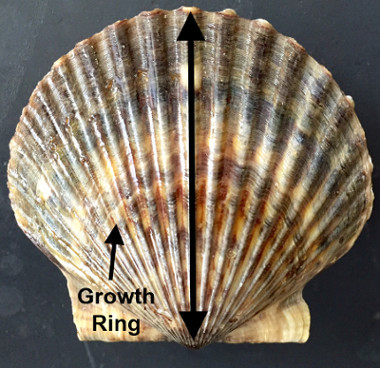
In New York, most shellfish, such as clams, oysters, and mussels, can be harvested from certified areas year-round, but bay scallop season is an exception. Their season always opens on the first Monday of November and closes on March 31st. To keep bay scallops, they must be 2¼ inches in length from mid-hinge to mid-bill, as shown in the picture. Bay scallops have a relatively low life expectancy, averaging 12-18 months and reproduce only once in their lifetime. To retain bay scallops, they must also display an annual growth ring (pictured) to guarantee they were able to reproduce prior to being harvested. For more information on harvesting shellfish, visit Shellfish Harvest Limits. Marine Harmful Algal Blooms
Algae are an important part of the ocean ecosystem and form the basis of the food chain. Given Marine HABs may grow so dense that they physically change the environment by limiting sunlight and oxygen. There are also marine HABs that may produce dangerous toxins (marine biotoxins) that are harmful to the health of marine organisms and humans. Two species that commonly cause blooms in Long Island marine waters, are Aureococcus anophagefferens and Alexandrium spp. (pictured). HABs may or may not be visible to the human eye. High concentrations of Aureococcus – “brown tide” – turn the water a muddy brown, but do not create any toxic effects. Alexandrium spp. blooms usually do not produce any color, but still might be large enough to produce a significant amount of biotoxin. Shellfish, such as clams, oysters and mussels, can be negatively impacted by HABs. They either can be impacted directly from ingesting the harmful toxins or due to the limited availability of food sources, as a result of the excessive amount of algae present in the environment. NYSDEC Bureau of Shellfisheries is responsible for monitoring Long Island’s waters for potentially dangerous HABs. HABs may also appear in fresh water and are monitored by the Division of Water. |

|
The New York State Department of Environmental Conservation respects your right to privacy and welcomes your feedback. | Update preferences or unsubscribe. | Learn more about DEC Delivers. |
|
Connect with DEC:   
|
 |
| NOW AVAILABLE: Receive DEC's Twitter feed via email. | |
| Andrew M. Cuomo, Governor * Basil Seggos, Commissioner | |