How is the Hudson Doing? New York Water Week May 3 - 9
The New York State Department of Environmental Conservation sent this bulletin on 05/04/2015 04:31 PM EDT
You are subscribed to receive updates from DEC. Links to receive help or to change your preferences are provided below. Having trouble viewing this email? View it as a Web page.
New York Water Week 2015 celebrates the 50th anniversary of the Pure Waters Act. For the past 30 years, New York has set aside the first full week in May to focus on its water resources. In this edition of Hudson RiverNet, we highlight some of the ways the Estuary Program is working to restore and protect the river and its watershed.
In This Issue:
State of the Hudson
EPA Environmental Champions
WAVE: Water Quality of Streams
Trees for Tribs: Protecting Streams
Walkill River: New Watershed Group Forms
Draft Action Agenda Public Comment Period
2015 Grants Available
 State of the Hudson 2015
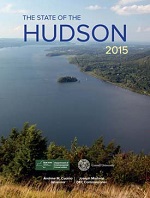
“How is the Hudson doing?” When talk turns to the river, this is the first question on everyone’s mind. To answer it, the Hudson River Estuary Program has produced The State of the Hudson 2015. In layperson's language, this illustrated report concisely describes progress and identifies ongoing problems for the river. State of the Hudson looks at water quality, habitat, biodiversity, and fish and wildlife in the estuary and its watershed, as well as climate change challenges and stewardship initiatives. To read the report, please visit the DEC’s State of the Hudson webpage at http://www.dec.ny.gov/lands/51492.html.
Environmental Champions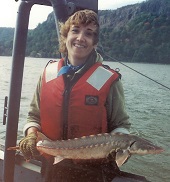 Each year, the EPA honors individuals and organizations who have contributed significantly to improving the environment in the region with Environmental Champion Awards. Kathy Hattala, a biologist in DEC’s Hudson River Fisheries Unit, was selected for the 2015 award. EPA commended Hattala’s nearly 30 years of unwavering passion for managing the migratory fish of the Hudson River, calling her “a tireless advocate for fish populations.” Hudson River Estuary Program fisheries staff monitor spawning stock, juvenile abundance, movement and habitat use for Atlantic sturgeon, shad, herring, and striped bass.
DEC's Hudson River National Estuarine Research Reserve, represented by Betsy Blair and Emilie Hauser, was recognized for the Sustainable Shorelines Project, which develops science-based recommendations for shore-zone management that preserve or enhance natural benefits while meeting engineering needs. Blair and Hauser created an online database and other tools in partnership with natural and social scientists, engineers, natural resource managers, communications specialists and consensus-building specialists. This information is essential to property owners, public agency regulators and other riverfront decision-makers as they face the impacts of climate changes, sea-level rise and increased storm intensity on communities and near-shore habitats along the Hudson. Partners in the Project include Cary Institute for Ecosystem Studies, the Hudson River Estuary Program, and Stevens Institute of Technology.
 Water Quality Sampling Volunteers Needed!
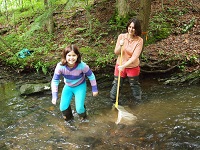
DEC is actively recruiting people to conduct water quality sampling in streams and rivers for the 2015 Water Assessments by Volunteer Evaluators (WAVE) summer sampling season. WAVE data is used to augment the work of the DEC Stream Biomonitoring Unit, which samples streams and rivers across the state to create an inventory of stream water quality. This data may be included in federal and state water quality reports and will help target professional assessments and local restoration or conservation efforts in areas where they are most needed. WAVE was created by the Estuary Program and the NYSDEC Division of Water to promote volunteer monitoring in Hudson River watershed streams and tributaries. The program became statewide in 2014. For more information or to register for a training session, contact WAVE Coordinator Alene Onion by email: wave@dec.ny.gov.
Trees for Tribs
On Arbor Day, April 24th, Student Conservation Association (SCA) interns and volunteers helped pot-up hundreds of bare-root seedlings at NYSDEC Region 3 headquarters. The plants will be used by the Hudson Estuary Trees for Tribs Program which helps to protect and restore streamside (riparian) buffers by planting native trees, shrubs, and grasses. Healthy stream buffers help filter pollution runoff, and slow the flow-rate of water, thereby reducing erosion and flooding. Riparian buffers also support wildlife and biodiversity. Since 2007 the program has been responsible for planting more than 40,000 native trees and shrubs along 20 miles of stream with the help of thousands of local volunteers.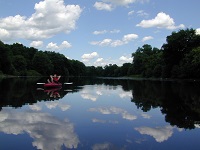 Walkill River
The Wallkill River flows from Northern New Jersey through Orange and Ulster counties in New York. After joining with the Rondout Creek, it meets the tidal Hudson River at Kingston as the largest tributary to the estuary. The Wallkill River watershed – the hills and valleys that channel streams into the Wallkill – is vast, covering 785 square miles.
Hudson River Estuary Program staff are participating in a newly-formed Walkill watershed group to help protect and restore the river. The group includes the Village of New Paltz, the Village of New Paltz Environmental Policy Commission, Riverkeeper, the Town of New Paltz Clean Water and Open Space Protection Commission, the Hudson River Watershed Alliance, and Mohonk Consultations, and the SUNY Center for Research, Regional Education and Outreach (CRRE0). The Walkill watershed group recently held a conference on ‘The Future of the Walkill River’ to help build public support for restoration efforts. For more information contact Dan Shapley, dshapley@riverkeeper.org.
Draft Action Agenda 2015
The Draft Hudson River Estuary Action Agenda 2015 – 2020 is available on our website at http://www.dec.ny.gov/lands/5104.html. Public comments will be accepted until May 15, 2015 by e-mail at hrep@dec.ny.gov, subject line “Action Agenda” or via US mail to: Hudson River Estuary Program, 21 South Putt Corners Road, New Paltz, NY 12525.
2015 Grants
The 2015 Hudson River Estuary Request for Applications (RFAs) for Tributary Restoration and Resilience and Local Stewardship Planning are now available. The application deadline is June 15 at 2 pm. To access the both RFAs please visit the Grants Gateway https://grantsgateway.ny.gov/IntelliGrants_NYSGG/module/nysgg/goportal.aspx and search for Hudson River Estuary. More information about the grants is also available on our website at http://www.dec.ny.gov/lands/5091.html.
Subscribe
To continue to receive updates about volunteer opportunities, events, and news about the Hudson estuary and watershed, please subscribe to our newsletter, Hudson RiverNet. You may also wish to subscribe to the Hudson River Almanac, a natural history journal that covers the Hudson from the High Peaks of the Adirondacks to New York Harbor. The Almanac seeks to capture the spirit, magic, and science of the river by presenting the observations of many individuals who delight in the diversity of nature in the Hudson Valley.
DEC uses GovDelivery service for all its e-mail listservs. Use the link below to subscribe to GovDelivery and enter your e-mail address: https://public.govdelivery.com/accounts/NYSDEC/subscriber/new. Fill in and submit the requested information on the “New Subscriber” page. This will take you to “Quick Subscriptions”. Scroll to “Lakes and Rivers” and check the boxes next to “Hudson River and Estuary and Hudson RiverNet e-newsletter” and “Hudson River Almanac”. Scroll down; under the heading "Natural Areas and Wildlife" is the section "Lakes and Rivers" with a listing for the Hudson River Almanac. Click on the check box to subscribe. While there, you may wish to subscribe to RiverNet, which covers projects, events and actions related to the Hudson and its watershed, or to other DEC newsletters and information feeds.