|
Amid the hustle and bustle of the holidays, I urge you to slow down. Not so much to smell the roses, but rather, from a practical standpoint, to be vigilant against people who could do you harm.
Scammers count on us being distracted and easily worried. This is especially true around the holiday season. Fraudsters aim to take advantage of us by getting us to take some action that we would not have if we knew who they really were.
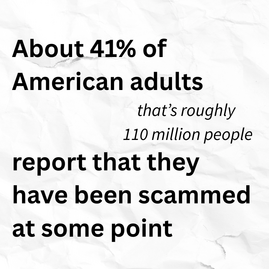
Each year, millions of Americans – including thousands of Nassau County residents – are affected by scams. According to a recent survey by AARP, about 41% of adult Americans — roughly 110 million people — report that they have had money stolen through fraud or misuse of sensitive information at some point.
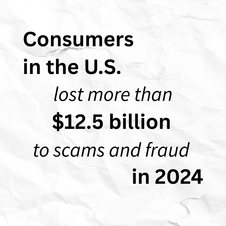
In terms of monetary losses, the impact is staggering. The Federal Trade Commission (FTC) reported that in 2024 consumers reported losing over $12.5 billion to fraud and scams — a 25% increase compared with the prior year.
|
A broader report from AARP estimates that identity fraud and scams cost U.S. adults a combined $47 billion in 2024. No matter how you look at it, it’s a major problem.
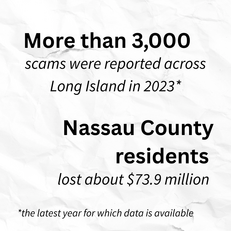
According to a 2023 report by the FBI, more than 3,000 scams were reported across Long Island in 2023 (the most recent year for which data is available); Nassau County residents lost about $73.9 million.
|
These numbers almost certainly understate the true impact. Many scams go unreported, and not all losses are captured by official reporting systems. As such, the real number of people harmed and the total financial loss is likely even higher.
All year round, I offer scam prevention workshops to Nassau County residents, and now, with the holidays upon us, I would like to share some practical and easy tips with you.
|
Tips to Help You Avoid Becoming a Scam Victim
- Do not answer calls from unknown numbers, or callers not in your Contacts list. If it’s important they will leave a message.
- If you do answer and the caller (or text message or email) claims to be from your bank, a government agency or credit company, do not assume this to be true. Hang up and call the toll-free number on the back of your bank/credit/membership card or a recent statement and ask them if there is a problem with your account.
- Do not click on links in text messages or emails from unknown senders; they can install malware on your device or take you to harmful websites.
- Nothing is free. If a caller tells you that you have won a prize but you have to pay a fee to claim it, hang up – it’s a scam!
- Never send funds – not cash or checks, gift cards or wire transfers – to anyone you are not 100 percent sure of. Never!
- Great investments don’t come in from random strangers. If someone pitches you an investment that sounds too good to be true (like a great guaranteed return), it’s probably a scam!
Just because the caller sounds professional doesn’t mean they are legit; fraudsters have trained actors making scam calls so they know how to come across as trustworthy. They are trained to deceive you and to create a sense of urgency. Don’t be fooled. And don’t be embarrassed by your uncertainty.
And above all, do not send money or give out personal information.
There is no way of fully protecting yourself from being scammed, but you can use these simple tools to help. Slow down, let calls go to voice mail and then research and verify. Call a family member, friend or your local police precinct for help.
Helpful Phone Numbers
If someone calls you claiming to be from the IRS: Call the Treasury Inspector General for Tax Administration (TIGTA): 1(800) 366-4484
If someone calls you claiming to be from Social Security: Call the SSA Office of the Inspector General at 1(800) 269-0271
If someone calls you claiming to be from Medicare: Call Medicare customer service at 1 (800) MEDICARE (1-800-633-4227)
If someone calls you soliciting a donation to a charity: Call the New York State Charities Bureau: 1(212) 416-8401
If you know of an organization that would be interested in a scam workshop, please contact my office at (516) 571-2386 or NCcomptroller@nassaucountyny.gov.
BEST WISHES FOR A WONDERFUL HOLIDAY SEASON!
|