|
 by Steven Koczak, PhD, Research Specialist and Kevin Jack, Deputy Director
An important, but little-understood, segment of the labor market is “multiple-job holding” (MJH), which refers to workers who have more than one job at the same time. MJH is more often called “moonlighting” or “having a side hustle.” A relatively new term for holding multiple jobs simultaneously is “polyworking.”
For ease of discussion, we call it “moonlighting” here. In this article, we provide a brief history of moonlighting, discuss exactly what it is, review rates across the nation and the state, and discuss why people do it.
History of Moonlighting
The term "moonlighting" to describe a secondary job likely started in the early 1880s. At first, it referred to criminals (ranging from murderers to burglars to cattle rustlers) who worked under the cover of darkness. Later, it came to mean individuals who worked a second job after their regular daytime job, often on the sly.
The earliest published study of modern moonlighting that we could locate was a 1959 article in the Monthly Labor Review, published by the U.S. Bureau of Labor Statistics (BLS). The article showed that the modern version of moonlighting was a distinctly post-World War II phenomenon and made some preliminary, descriptive observations about it.
A follow-up article published in 1970 (also in Monthly Labor Review) confirmed many of the observations from 1959 and added more. Over the past half century, the interest of analysts in moonlighting has waxed and waned, but there’s been a fair bit written. Commentators have used multiple data sources, studied assorted aspects of the issue, and come to different conclusions depending on the specifics of the study.
Official Definition of Moonlighting
Government data on moonlighting come from the Current Population Survey (CPS), which is a monthly survey of households conducted by the U.S. Census Bureau for the BLS. This survey is the primary source of labor force data and statistics, including the unemployment rate, in the U.S. and all 50 states.
According to the CPS, moonlighters (“Multiple Job Holders”) are “people who had two or more jobs during the survey reference week, at least one of which was a wage and salary job.” To count as a moonlighter, a respondent had to:
- Have two or more wage and salary jobs; or
- Have been self-employed, but also have a wage and salary job; or
- Have been an unpaid family worker, who also had a wage and salary job.
Not counted as moonlighters are self-employed people with multiple businesses or people with multiple jobs as unpaid family workers.
The relevant statistic calculated by BLS, which we’ll call the “moonlighting rate,” is simply the number of moonlighters divided by the total number of employed. If you see studies with moonlighting rates that differ significantly from the CPS (usually far higher), then they used different definitions and/or research methods.
Moonlighting Across the U.S. and New York
Current national and state-level statistics on moonlighting date to 1994. National data are available on a monthly basis. Due to the much smaller sample size of the CPS at the state level, however, moonlighting data for New York are only available on an annual basis.
Since 1994, the highest “moonlighting rate” recorded in the U.S. was 6.5%, set in November 1996. In contrast, the lowest rate, 4.0%, was set in April and May 2020, immediately after the onset of the COVID-19 pandemic. The long-term monthly average since January 1994 is 5.3%. Although only about one in 20 U.S. workers moonlight, multiple jobholders are significant to the overall labor market because they add several million jobs to the economy.
At the state level, South Dakota holds the record for the most instances of having the highest annual moonlighting rate (11 times, counting a few ties). In 2024, Montana had the highest moonlighting rate, at 8.3%, while New York’s was 4.7%.
Despite New York State containing New York City (“the city that never sleeps”), the Empire State’s moonlighting rate has been relatively low. We have never ranked higher than #32 (2019) and once ranked #49 (1996) among the other states. Presumably, this means most New Yorkers are too busy with their day jobs to moonlight.
Using a different dataset derived from the CPS, obtained from our State Data Center, we analyzed the moonlighting rates in New York City (NYC) and the Balance of State (BOS) region. The dataset covered April 2009-March 2025 and thus covers 16 distinct 12-month periods (April through March). Despite NYC’s reputation as the city that never sleeps, the BOS’s moonlighting rate was consistently higher throughout every covered 12-month period. When we calculated averages for the entire time frame (April 2009-March 2025), NYC’s rate was 2.9% and the BOS’s was 5.3%. In both cases, the rates were remarkably consistent over time.
Why Do People Work All Day (and Night)?
Economists have cited a number of factors that lead people to moonlight. An obvious one is the need to earn extra money to compensate for higher consumer prices. In June 2022, year-over-year inflation in the U.S. peaked at 9.1% and has remained relatively stubborn. This represented the nation’s largest increase in more than 40 years. Interviewed by the Wall Street Journal, Dr. Christopher Taber of the University of Wisconsin-Madison noted, “[o]ne story is that people are short of cash, and they need extra hours and the only way to pick up extra hours is by picking up a short-term job.”
Similarly, a survey of workers conducted in May 2004 found that most workers who were moonlighting reported doing so to earn extra money to meet expenses or to pay off debt. In addition, many moonlighters reported that their primary motivation was the enjoyment they received from their second job. Still others cited wanting to build a business or get experience in a different job. All of these reasons have appeared in earlier studies as well, going back decades.
Another factor that may contribute to moonlighting is a declining wage premium. In an August 2023 blog entry, economists at the Federal Reserve Bank of San Francisco noted that “[w]orkers with a college degree typically earn substantially more than workers with less education. This so-called 'college wage premium' increased for several decades, but it has been flat to down in recent years and declined notably since the pandemic.” As a result of this declining wage premium, many college graduates found the need to take on a second (or third) job out of economic necessity.
With the rise of various remote work and gig platforms (e.g., driving for ride-share companies or delivering food), Dr. Taber notes “that it’s easier to work two jobs now than it was before.” This, in turn, has broadened the pool of workers willing to moonlight, especially at night or on weekends.
Moonlighting and Other Factors
Past research has found the percentage of workers who hold multiple jobs tended to increase with education and remain stable over different wage classes. This latter result seems counterintuitive since, as wages from a worker’s main job go up, there’s less apparent need to work a second job to pay the bills, which removes an important motive for moonlighting.
Another often-researched issue is the moonlighting rate’s relationship with the U.S. business cycle. During the 2001 national recession, the moonlighting rate bounced around between 5.2% and 5.5%. Over the course of the 2007-09 recession, the rate was in a similar range. As noted above, the rate reached its low point immediately after the 2020 recession. No study we could find, and no data we examined, suggested a strong statistical relationship between the moonlighting rate and business cycle fluctuations.
Final Thoughts
The moonlighting rate has remained remarkably consistent for many years, across many jurisdictions. Neither recessions, nor the easy availability of places to moonlight through the “gig economy,” nor even a global pandemic have had much of a visible impact on the moonlighting rate.
Ultimately, it seems moonlighting is a highly individualized phenomenon. From the exaggerated depictions of white-collar employees who hold multiple full-time jobs from home to the more grounded accounts of single mothers who work at multiple, part-time service jobs just to keep food on the table, moonlighting appears to be an individual decision, often driven by personal, or family, necessity. Such circumstances don’t always coincide with changes in the business cycle.
|
|
|
“Many green jobs, such as those in HVAC and electrical engineering, are traditional roles evolving to incorporate sustainable practices.”
by Diana Pena, Labor Market Analyst, Central New York region
In recent years, New York State has advanced its green economy through ambitious legislation, like the Climate Leadership and Community Protection Act (CLCPA). Signed into law in 2019, the CLCPA mandates an 85% reduction in greenhouse gas emissions by 2050 (compared to 1990’s level), while it prioritizes green job creation. The Central New York region contributes to this effort and has a vibrant green economy.
State and Local Efforts
A recent milestone in this effort was the state’s $1 billion Sustainable Future Program, which is the largest climate investment in New York's history. The program focuses on reducing emissions, promoting clean energy and creating green jobs in renewable energy and clean transportation.
Additionally, the Climate Smart Communities program awarded over $7.3 million across the state for infrastructure improvement and climate planning — including around $600,000 to Central New York municipalities like Syracuse, Fayetteville, and Skaneateles. In April, the SUNY system awarded $2.6 million via its Green Workforce Grant program to help more students pursue clean energy jobs through academic programs and state-of-the art training equipment. SUNY selected 12 campuses for workforce grants, including SUNY Morrisville in Madison County.
The Syracuse area promotes green job growth through events like the Clean Energy Career Fair, organized by EnergySmart CNY. The SUNY College of Environmental Science and Forestry (ESF) — a national leader in environmental studies — also plays a key role, graduating new environmental leaders each year. ESF also hosts its own Career and Internship Fair, which draws around 100 employers — many of them ESF alumni — that offer opportunities in environment-related fields.
Academic Support
The region’s colleges and universities also play a key role in ensuring that our workforce has the proper skills for the green jobs of the future. For example, Syracuse University (SU) has established the Dynamic Sustainability Lab, which researches electric vehicles and sustainable supply chains, while it collaborates with firms like Amazon on climate solutions. SU also houses the Institute for Sustainability Engagement, which seeks to connect communities with academic resources for climate resilience projects.
Similarly, ESF launched its Sustainability Action Plan in 2023. The plan embeds sustainability into every facet of its curriculum, research, and campus operations. ESF’s Global Center for Sustainable Bioproducts (GCSB) initiative — funded by a $5 million National Science Foundation grant — pioneers the development of biodegradable plastics from agricultural waste. The initiative also helps to position the Central New York region and the GCSB as leaders in developing sustainable bio-based solutions for environmental and economic challenges.
Other SUNY schools in the region — including SUNY Cortland and SUNY Oswego — integrate sustainability into curricula through degrees in environmental policy, renewable energy technology, and sustainable agriculture. Both schools have been recognized for their sustainability efforts, receiving high green ratings from The Princeton Review.
What are Green Jobs?
Green jobs go beyond clean energy. Many green jobs, such as those in the HVAC and electrical engineering fields, are traditional roles that evolve to incorporate sustainable practices. Frameworks from the Occupational Information Network (O*NET), which is the nation's primary source of occupational information, and the U.S. Bureau of Labor Statistics (BLS) were used to compile lists of green jobs. We found that these jobs fell into three broad categories:
- Entirely new roles
- Transformed existing jobs that require updated skills
- In-demand positions that are unchanged, but are growing due to the needs of the green economy
The BLS tracks green jobs through its Green Goods and Services (GGS) survey, which identifies employers in sustainable sectors and their workforce.
The Local Green Workforce
We analyzed green jobs in Central New York using information from Lightcast, an analytics firm. In total, over 200 green job titles in the region were reviewed.
In 2024, Central New York had 24,476 green jobs. People working in the region’s green jobs were predominantly male (71.3%), while those aged 35-44 represented the largest age group (24.2%) within the local green workforce.
Workers in the region’s green workforce had majored in a variety of academic fields in college — some of the most common ones included:
- Business Administration & Management
- Psychology
- Public Administration
- Political Science/Government
- Biology/Biological Sciences
Green Job Postings
Looking at green job postings in CNY from Lightcast spanning the April 2024-April 2025 period (13 months), there were 4,557 unique postings from 663 employers, offering a median annual salary of $64,400. Onondaga County accounted for over 76% of postings. Regarding educational requirements, 36% of the postings indicated a bachelor’s degree was required and 24% required nothing above a high school diploma.
Employers in three local industries — Engineering Services (504), Colleges, Universities, and Professional Schools (425), and Plumbing, Heating, and Air Conditioning Contractors (323) — together accounted for more than 1,250 unique job postings during April 2024-April 2025. The top employers advertising for green workers over this 13-month period included Syracuse University, various SUNY schools, and Constellation Energy (electricity and gas provider). Other top recruiters included green-focused companies like Clean Harbors (environmental services), Ramboll (sustainability consulting), Carrier Corporation (HVAC, refrigeration, and security equipment manufacturer), CoolSys (HVAC), and Canonical Group (electrical).
In-demand green job titles include CDL-A Truck Drivers, Maintenance Technicians, Customer Service Representatives, Electrical Engineers and Manufacturing Engineers. In addition, specialized skills like construction, project management, HVAC, warehousing and plumbing are key to working in the green economy.
Conclusion
As New York State implements the CLCPA, Central New York’s workforce and businesses must adapt to the growing demand for green skills and technologies. Many green jobs, such as those in HVAC and electrical engineering, are traditional roles evolving to incorporate sustainable practices. To remain competitive, the Central New York region must expand training programs, attract green industries, and support workforce development initiatives, to ensure a sustainable future for its workforce and communities.
|
|
 In April 2025, New York State’s seasonally adjusted private sector job count increased over the month by 14,400, or 0.2%, to 8,471,700. In addition, the state’s seasonally adjusted unemployment rate held steady at 4.2% in April 2025, while New York’s seasonally adjusted labor force participation increased over the month from 60.9% to 61.0%.
Capital
Over the past year, the private sector job count in the Capital Region rose by 2,400, or 0.6%, to 436,400 in April 2025. Employment gains occurred in the following sectors:
- professional and business services (+2,200)
- trade, transportation and utilities (+1,500)
- natural resources, mining and construction (+1,100)
- other services (+500)
- leisure and hospitality (+300)
Over-the-year job losses occurred in the following sectors:
- education and health services (-2,000)
- financial activities (-400)
- information (-400)
- manufacturing (-400)
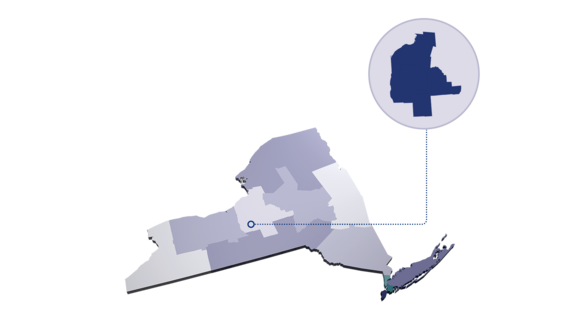
Central NY
The number of private sector jobs in the Syracuse metro area increased over the past year by 5,400, or 2.1%, to 258,000 in April 2025. The largest job gains occurred in these sectors:
- education and health services (+1,500)
- professional and business services (+1,300)
- trade, transportation and utilities (+1,200)
- leisure and hospitality (+1,000)
- natural resources, mining and construction (+900)
Job losses were largest in the following sectors:
- manufacturing (-300)
- information (-200)
Finger Lakes
From April 2024 to April 2025, the number of private sector jobs in the Rochester metro area rose by 4,300, or 1.0%, to 441,700. Job gains were greatest in the following sectors:
- education and health services (+1,800)
- professional and business services (+1,600)
- natural resources, mining and construction (+1,400)
- leisure and hospitality (+400)
Over-the-year employment losses were greatest in the following sectors:
- information (-400)
- manufacturing (-300)
- trade, transportation and utilities (-200)
Hudson Valley
Over the past year, the number of private sector jobs in the Hudson Valley grew by 3,700, or 0.4%, to 829,200 in April 2025. The largest job gains occurred in the following sectors:
- education and health services (+2,900)
- leisure and hospitality (+1,200)
- trade, transportation and utilities (+700)
- financial activities (+600)
- manufacturing (+500)
Job losses occurred in the following sectors:
- natural resources, mining and construction (-1,700)
- information (-900)
Long Island
From April 2024 to April 2025, private sector jobs on Long Island increased by 3,100, or 0.3%, to 1,161,100. Employment gains occurred in the following sectors:
- education and health services (+6,500)
- professional and business services (+1,900)
- other services (+900)
- trade, transportation and utilities (+500)
- leisure and hospitality (+300)
Over-the-year job losses were greatest in the following sectors:
- natural resources, mining and construction (-4,100)
- financial activities (-1,400)
- information (-1,300)
Mohawk Valley
For the 12-month period ending April 2025, the number of private sector jobs in the Mohawk Valley region decreased by 100, or 0.1%, to 140,200. The following sectors had the largest over-the-year employment gains:
- trade, transportation and utilities (+400)
- leisure and hospitality (+200)
Over-the-year job losses were centered in the following sectors:
- manufacturing (-400)
- education and health services (-300)
New York City
New York City’s private sector job count rose over the past year by 61,800, or 1.5%, to 4,238,900 in April 2025. Job gains were largest in the following sectors:
- education and health services (+62,500)
- professional and business services (+8,000)
- financial activities (+700)
- other services (+700)
- trade, transportation and utilities (+500)
Job losses occurred in the following sectors:
- natural resources, mining and construction (-5,400)
- leisure and hospitality (-4,300)
- manufacturing (-1,300)
North Country
The number of private sector jobs in the North Country region decreased over the past year by 800, or 0.8%, to 104,600 in April 2025.
Job losses were greatest in the following sectors:
- trade, transportation and utilities (-400)
- manufacturing (-300)
Southern Tier
For the 12-month period ending April 2025, the number of private sector jobs in the Southern Tier region decreased by 300, or 0.1%, to 208,000. The largest employment gains occurred in the following sectors:
- education and health services (+700)
- natural resources, mining and construction (+500)
Job losses were largest in the following sectors:
- manufacturing (-1,000)
- financial activities (-200)
- leisure and hospitality (-200)
Western NY
Over the past 12 months, the number of private sector jobs in the Buffalo-Cheektowaga metro area rose by 1,100, or 0.2%, to 468,100 in April 2025. Over-the-year job gains were largest in the following sectors:
- education and health services (+2,000)
- professional and business services (+800)
- trade, transportation and utilities (+400)
- natural resources, mining and construction (+300)
These sectors experienced the largest over-the-year employment losses:
- manufacturing (-1,100)
- leisure and hospitality (-800)
- financial activities (-500)
|
|
|
Click the button below to become a subscriber to Employment in New York State

|
|
|
|
|