|
 by Madison Macchiarella, Economist
Occupational wage data, which are compiled and published by the state’s Occupational Employment and Wage Statistics (OEWS) program, are among the most popular items on the New York State Department of Labor’s (NYSDOL) website. Data from the OEWS program offer comprehensive insights on employment levels, wage rates and occupational trends in New York.
This program provides data-driven information for knowledgeable decision-making. OEWS is helpful for workforce analysts, policymakers, job seekers and industry professionals alike. Whether the data interest is for a specific region or industry, the OEWS program produces usable estimates for the public.
In this article, we explore key OEWS methodologies and provide a real-life example of one of New York’s most widely employed — but often overlooked — occupations: Fast Food and Counter Workers. Using the latest OEWS data, we break down employment figures, wage trends, and how this occupation fits into New York’s broader labor market.
OEWS Program Basics
Funded and supported by the federal Bureau of Labor Statistics (BLS), NYSDOL collects and processes OEWS data from employers to produce employment and wage estimates. These estimates are then published on the state dashboard. Data are available on a statewide basis and broken down by the state’s ten Labor Market Regions (LMRs).
New York State’s OEWS sampling frame comes from the universe of establishments covered by the state’s Unemployment Insurance (UI) program. For each UI-covered business, the Quarterly Census of Employment and Wages (QCEW) inputs total monthly employment and wages for each quarter. This information provides OEWS with an expected level of employment for each firm. In turn, OEWS uses this information to assign establishments to different size classes, based on their employment level. Larger employers have a higher chance of being selected for the sample to ensure broader occupational representation.
About 6,900 establishments are selected for each survey panel. The OEWS program contacts employers via mail, email, and phone call, while data are collected via those methods in addition to online. Respondents report their employees’ job titles and wages. The Standard Occupational Classification (SOC) system is used with employees’ job titles and descriptions to classify jobs into around 830 distinct occupations. The estimates also follow the North American Industry Classification System (NAICS). Using the correct SOC and NAICS codes are critical to ensuring OEWS releases the most accurate data possible.
OEWS Estimation Methodology
The OEWS program generates semi-annual panels, with one in May and the other in November. Estimates combine data from six consecutive panels (three years), creating a sample of approximately 41,400 New York establishments.
A model-based estimation method known as “MB3” is used to fill in gaps from establishments that weren’t part of the sample, didn’t respond to the survey, or submitted responses that didn’t meet data quality criteria. MB3 relies on responses from surveyed establishments to estimate staffing patterns and wages for the rest. These predictions are based on each establishment’s geographic location, industry type, ownership and business size for estimation reliability.
An Example: Fast Food and Counter Workers
The SOC system describes the duties of Fast Food and Counter Workers (Occupation 35-3023) as individuals who “Perform duties such as taking orders and serving food and beverages. Serve customers at counter or from a steam table. May take payment. May prepare food and beverages.” Nearly 80% of workers in this occupation fall into NAICS Industry 7225 (Restaurants and Other Eating Places).
Fast Food and Counter Workers ranks among the most numerous occupations, both in the U.S. and New York. This occupation generally requires minimal experience, making it a gateway into the workforce for teenagers looking for a first job and jobseekers seeking flexible hours or part-time work. So, its popularity makes a good deal of sense.
Employment Counts
According to OEWS data, 199,530 people were employed as Fast Food and Counter Workers in New York State, as of May 2023. This group accounted for around 2.1% of all workers in New York, making it one of the most popular occupations in the state. The number of Fast Food and Counter Workers was greater than the number of Cashiers (177,810), but less than Retail Salespersons (228,150).
As of May 2023, national employment in this occupation was approximately 3.68 million, or about 2.4% of total U.S. employment. This demonstrates the broad impact of this occupation on the overall economy. This position’s accessibility to people with varying levels of experience and skills means it employs large numbers of people. In a testimony to how large and diverse our state’s economy is, New York ranked near the bottom of the list of states in the percentage of its workforce employed in this occupation. The top five, in descending order, were Hawaii, South Dakota, Arizona, Indiana and Arkansas.
New York’s OEWS program also publishes employment and wage estimates by Labor Market Region. Unsurprisingly, New York City has the highest count of fast food and counter workers with 81,440 employees — accounting for just above 40% of the state’s total. The Long Island and Hudson Valley regions follow behind, with 30,970 and 20,230 workers, respectively.
Wages
In New York State, Fast Food and Counter Workers earn wages above the national median — a statewide hourly median wage of $17.01 versus a national hourly median of $14.20. New York’s hourly wage for this occupation is the fourth highest of any state in the nation.
This is likely the result of local economic conditions, like increased demand for these workers and the higher cost of living, that can offer better pay compared to other parts of the country. This also likely reflects New York State’s higher minimum wage.
Wages vary slightly across different regions within the state as well. Long Island has the highest hourly median wage ($17.26) for fast food and counter workers, followed by Hudson Valley ($17.21) and New York City ($17.17). Differences in wages across regions highlight economic variance that affect compensation rates.
The wage data presented here are aged to the first quarter of 2024 using the Employment Cost Index, which is published by the BLS.
Conclusion
OEWS data highlight the vital role Fast Food and Counter Workers play in New York’s overall labor market, offering significant employment opportunities. As one of the most widely employed occupations in the state, these workers form the backbone of New York’s food service and tourism industries and serve as an entry point for many into the workforce. As the economy continues to evolve, these jobs remain a critical part of the workforce landscape.
Understanding employment trends and wage patterns is essential for workforce planning, policy development and industry growth. Specifically, OEWS data is used to create UI Prevailing Wages, Article 9 Wages for public work, and occupational projections.
Statewide and regional OEWS estimates are available on this public dashboard: https://dol.ny.gov/occupational-wages-0. National OEWS data can be found here: https://www.bls.gov/oes/tables.htm. Whether you’re analyzing labor market shifts, developing training programs or making business decisions, staying informed with up-to-date data helps ensure New York’s workforce continues to thrive.
|
|
|
“Job postings provide real-time labor market information to a variety of stakeholder groups in the Mohawk Valley.”
by Brion Acton, Labor Market Analyst, Mohawk Valley region
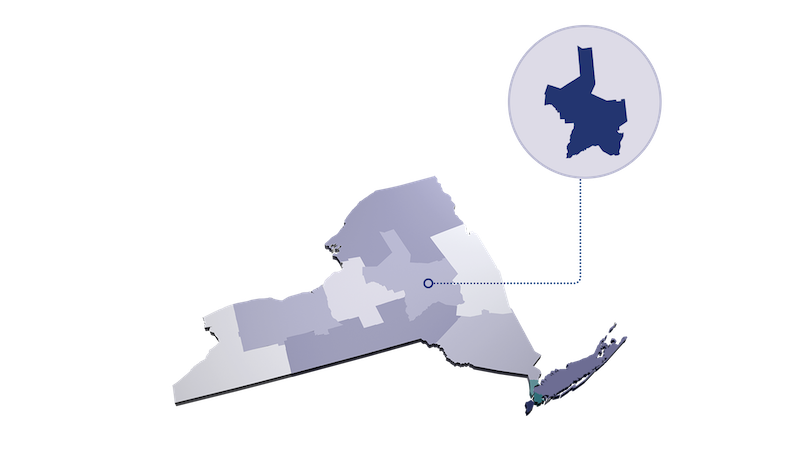
Newly benchmarked annual data for the six-county Mohawk Valley from the Current Employment Statistics (CES) program show that the region experienced its fourth consecutive year of total nonfarm job growth in 2024. Between 2023 and 2024, the region’s annual average job count grew by 1,300, or 0.7%, to 181,900. From 2020, the year of the COVID-19 pandemic and the associated economic downturn, to 2024, the region’s employers added a total of 7,500 nonfarm jobs.
(Note: Schoharie County is classified as part of the Mohawk Valley region. However, the CES program counts its employment in the Albany-Schenectady-Troy metro area, which is in the Capital Region.)
Real-time Labor Market Data
Job postings data are an important source of real-time labor market information. Analyzing these postings offers greater insight into the underlying employment dynamics that fuel growth in a region’s economy. They also provide information on the types of occupations that employers are looking to fill. In addition, they yield insights on specific details, like in-demand skills, license/certification requirements and qualifications that are most needed by regional employers.
How analysts compile and review job ads has changed over time. Twenty years ago, classified ads in local newspapers were a primary source of information. Today, however, job postings are primarily available online.
The labor data analytics firm Lightcast aggregates data from more than 65,000 online sources, including company career sites, national and local job boards, and job posting aggregators. Some of their better-known websites include indeed.com, DEJobs.org, SyracuseRecruiter.com, and NY.gov. To ensure data accuracy, Lightcast employs a unique two-step deduplication process, eliminating up to 80% of duplicate job postings. This comprehensive approach allows analysts to collect millions of job postings daily, providing a robust view of the labor market.
In 2024, Lightcast data showed there were 39,434 unique job postings made by 3,194 employers across the six-county Mohawk Valley region. Relative to 2023, the number of unique job postings in the region climbed 1,659, or 4.4%, while the number of employers posting job orders was up 255, or 8.7%, in 2024.
The region’s most populous county, Oneida, had more than half (23,895) of the unique postings in 2024. It was followed by Otsego (7,625), Montgomery (2,399), Herkimer (2,165) and Fulton (1,740) counties. The top five locations of job postings were Utica, Rome, New Hartford, Oneonta and Cooperstown.
More than half of the unique job postings (26,203) advertised a wage. The median of those listed wages was $27.02 per hour. The average posting duration in the region was 24 days.
Education and experience requirements listed in postings provide further insight into the region’s labor market. Fifty-three percent of postings listed no educational requirement. Of those that did, the breakdown was as follows:
- High school/GED (21%)
- Bachelor’s degree (18%)
- Associate’s degree (14%)
- Graduate or professional degree (10%)
Most postings (60%) listed no experience requirement, while 17% sought 0-1 years of experience and 16% listed 2-3 years.
Top Industries & Occupations
Regional employers with the greatest number of job postings were spread across several sectors, including healthcare, retail trade, leisure and hospitality, and government. Some representative employers included Mohawk Valley Health System, State of New York, Bassett Healthcare, Walmart and Turning Stone Enterprises.
Some of the occupations most sought by regional employers included:
- Registered nurses
- Retail salespersons
- Licensed practical nurses
- Heavy and tractor-trailer truck drivers
- First-line supervisors of retail sales workers
- Customer service representatives
- Nurse practitioners
- Janitors and cleaners
- Fast food and counter workers
- Merchandise displayers and window trimmers
- Health technologists and technicians
Skills in Demand
The top specialized skills that employers advertised for included nursing, merchandising, medication administration, medical records and auditing. The two most common ‘soft skills’ sought by employers were communication and customer service. Good communication skills allow employees to effectively interact with co-workers, customers, and management. These skills also help employees to provide customers with the best service experience, which is critical to maintaining a positive relationship with consumers.
As technical innovation continues to accelerate across all aspects of life, computer skills have become more important to conducting business. Software skills most demanded by local employers include Microsoft Office suite, Epic EMR, spreadsheets, operating systems and SAP applications.
Many jobs require specific licenses and certifications, particularly in industries such as healthcare, trucking and casino gaming. In 2024, the most in-demand certifications in the Mohawk Valley included:
- Registered Nurse license
- Valid driver’s license
- Basic Life Support certification
- Licensed Practical Nurse license
- Advanced Cardiovascular Life Support certification
- Certified Nursing Assistant credential
- Nurse Practitioner license
- Cardiopulmonary Resuscitation certification
- Commercial Driver’s License
Looking Ahead
Job postings provide real-time labor market information to a variety of stakeholder groups in the Mohawk Valley. Students and jobseekers use this information to evaluate employment and educational opportunities. Similarly, educational institutions, planners, training providers and workforce developers use this data for planning purposes. Employers and job recruiters analyze job postings to evaluate what the competition offers as compensation and what characteristics they are looking for in employees in order to give them a competitive advantage. Clearly, job postings provide an important "look under the hood" of the Mohawk Valley’s regional labor market.
|
|
 In February 2025, New York State’s seasonally adjusted private sector job count increased over the month by 3,700, or less than 0.1%, to 8,463,100. In addition, the state’s seasonally adjusted unemployment rate fell from 4.4% to 4.3% in February 2025, while New York’s seasonally adjusted labor force participation rate rose from 60.8% to 60.9%.
Capital
Over the past year, the private sector job count in the Capital Region rose by 2,100, or 0.5%, to 432,200 in February 2025. Employment gains were greatest in the following sectors:
- natural resources, mining and construction (+1,600)
- professional and business services (+1,600)
- trade, transportation and utilities (+1,000)
- other services (+600)
- leisure and hospitality (+300)
Over-the-year job losses were largest in the following sectors:
- education and health services (-2,400)
- information (-500)
Central NY
The number of private sector jobs in the Syracuse metro area increased over the past year by 6,400, or 2.6%, to 255,600 in February 2025. The largest job gains occurred in these sectors:
- trade, transportation and utilities (+2,000)
- professional and business services (+1,500)
- leisure and hospitality (+1,400)
- education and health services (+1,200)
- natural resources, mining and construction (+700)
Job losses were greatest in the following sectors:
- information (-200)
- manufacturing (-200)
Finger Lakes
From February 2024 to February 2025, the number of private sector jobs in the Rochester metro area rose by 4,800, or 1.1%, to 437,200. The greatest job gains occurred in the following sectors:
- education and health services (+2,800)
- leisure and hospitality (+900)
- natural resources, mining and construction (+800)
- professional and business services (+300)
- trade, transportation and utilities (+300)
Over-the-year job losses were recorded in the following sector:
Hudson Valley
Over the past year, the number of private sector jobs in the Hudson Valley grew by 6,800, or 0.8%, to 817,500 in February 2025. The largest job gains occurred in the following sectors:
- education and health services (+3,400)
- leisure and hospitality (+2,900)
- professional and business services (+2,000)
- trade, transportation and utilities (+1,600)
- financial activities (+600)
- manufacturing (+500)
Job losses occurred in the following sectors:
- natural resources, mining and construction (-3,200)
- information (-1,200)
Long Island
From February 2024 to February 2025, private sector jobs on Long Island increased by 11,600, or 1.0%, to 1,140,500. Employment gains occurred in the following sectors:
- education and health services (+7,700)
- leisure and hospitality (+5,000)
- trade, transportation and utilities (+2,400)
- other services (+1,200)
- manufacturing (+800)
Over-the-year job losses occurred in the following sectors:
- natural resources, mining and construction (-3,000)
- information (-1,100)
- financial activities (-700)
- professional and business services (-700)
Mohawk Valley
For the 12-month period ending February 2025, the number of private sector jobs in the Mohawk Valley region decreased by 600, or 0.4%, to 139,200. The following sector had the largest over-the-year employment gain:
- financial activities (+200)
Over-the-year job losses were largest in the following sectors:
- manufacturing (-400)
- education and health services (-200)
New York City
New York City’s private sector job count rose over the past year by 73,500, or 1.8%, to 4,202,100 in February 2025. Job gains occurred in the following sectors:
- education and health services (+66,700)
- information (+4,700)
- professional and business services (+4,000)
- trade, transportation and utilities (+2,500)
- leisure and hospitality (+2,000)
- financial activities (+1,500)
Job losses occurred in the following sectors:
- natural resources, mining and construction (-6,100)
- other services (-1,200)
- manufacturing (-600)
North Country
The number of private sector jobs in the North Country region rose over the past year by 1,200, or 1.2%, to 105,200 in February 2025. Over-the-year job gains were largest in the following sectors:
- leisure and hospitality (+600)
- education and health services (+400)
- professional and business services (+200)
Southern Tier
For the 12-month period ending February 2025, the number of private sector jobs in the Southern Tier region decreased by 300, or 0.1%, to 205,600. The largest job gains occurred in the following sectors:
- education and health services (+500)
- natural resources, mining and construction (+400)
The largest job losses occurred in the following sectors:
- manufacturing (-500)
- information (-400)
- trade, transportation and utilities (-400)
Western NY
Over the past 12 months, the number of private sector jobs in the Buffalo-Cheektowaga metro area rose by 3,500, or 0.8%, to 462,400 in February 2025. Over-the-year job gains were greatest in the following sectors:
- education and health services (+1,800)
- leisure and hospitality (+1,600)
- trade, transportation and utilities (+1,400)
- natural resources, mining and construction (+400)
These sectors experienced the largest over-the-year employment losses:
- financial activities (-800)
- manufacturing (-500)
- professional and business services (-400)
|
|
|
Click the button below to become a subscriber to Employment in New York State

|
|
|
|
|