|
 by Shital Patel, Labor Market Analyst, Long Island Region
College graduation is a huge milestone that can conjure up many emotions, ranging from excitement for what lies ahead to anxiety about entering the job market. Most new graduates believe their college education has prepared them well for the workforce. According to Monster’s 2024 State of the Graduate Report, 82% of job seekers are confident they will receive a job offer shortly after graduation. However, this is down from 88% in the 2023 survey.
Skyrocketing tuitions and student loan balances have led many parents and their children to rethink the value of college. Many are shunning traditional college paths and turning to skilled trades, apprenticeships and other careers that don’t require a degree. A recent Pew study found that 40% of Americans say a college degree is “not too” or “not at all” important to get a well-paying job. In New York State (NYS), these shifting opinions combined with higher tuitions resulted in declining enrollment in the state’s post-secondary institutions. According to a State Comptroller’s report, in Fall 2022, there were 896,000 students enrolled across all post-secondary institutions, the lowest total enrollment in 15 years.
The underlying college-age population that drives enrollments at post-secondary institutions has also been dropping as a share of the total population nationally. This has led to the closure of dozens of schools in the U.S. According to bestcolleges.com, since March 2020, 40 public or private non-profit schools or campuses have closed or announced plans to close, while 24 public or private non-profit schools have merged or announced mergers with other institutions.
And it’s only expected to get worse from here — the underlying college-age population in the nation is forecast to significantly drop starting in 2025, resulting in an enrollment cliff. This could lead to the further downsizing or closing of institutions.
Outcomes for NYS Graduates
Despite the negative perceptions about college, earning a degree is almost always worthwhile. First, it serves several important purposes, including strengthening communication and critical thinking skills, preparing young adults for responsible citizenship and expanding intellectual interests.
And, historically, those who have made the investment in a college education have received substantial economic benefits that last over their lifetime. In 2022, bachelor’s degree holders in NYS earned 91.5% more than those with just a high school diploma, according to Census Bureau data. Furthermore, between 2012 and 2022, people with a high school diploma saw their median wages rise from $29,549 to $37,377 (+26.5%), while people with a bachelor’s degree saw theirs rise from $52,278 to $71,567 (+36.9%).
New graduates also typically have lower rates of unemployment compared to those with less than a bachelor’s degree. Census Bureau data indicate the unemployment rate for young workers (age 22-27) without a college degree was 8.8% in 2023 — more than double the rate for recent college graduates. However, college isn’t always a guarantee of labor market success. While the typical college graduate continues to have better labor market outcomes than workers with a high school education, there remains a share of graduates that do not experience the outcomes they expected.
Underemployment of Recent Graduates
A recent report from the Burning Glass Institute and the Strada Institute for the Future of Work found that roughly half (52%) of college graduates in the U.S. wind up underemployed a year after graduation, meaning they are working in jobs that don’t require a degree. Ten years on, that number only drops to 45%. They also found that underemployment tends to be sticky, making that first job out of college crucial. Of the graduates who start out in non-college-level jobs, almost three-quarters (73%) remain underemployed a decade later. One factor may be that employers seeking college-level skills place more emphasis on the latest jobs held by candidates rather than their degrees.
The authors of the study cited several factors that determined graduates’ odds of obtaining a college-level job. One of the greatest determinants of post-graduation employment prospects is the choice of degree field. They found that career-oriented majors like education and health programs tend to have lower underemployment rates than those in fields like public safety, recreation and wellness, and general business fields such as marketing and human resources.
Contrary to popular belief, not all degrees conferred in science, technology, engineering and math (STEM) result in a job that reflects a college education. Fields that require a substantial amount of quantitative reasoning, like computer science, engineering, mathematics, or math-intensive business fields like accounting and finance, experience some of the lowest underemployment rates right out of college. On the other end, 47% of graduates with a biology and biomedical sciences major remained underemployed five years after graduating compared to just 26% of engineering majors.
The study also found that internships are another critical factor to securing a successful career, reducing the likelihood of underemployment by almost 50%. Internships not only provide valuable hands-on experience, but they also help students build professional networks and establish themselves within their field.
Degree Completions in NYS
Using data from Lightcast, an analytics company, we examined the number of bachelor’s degree completions in NYS in 2023 by field and compared that to the national underemployment rates calculated by the Burning Glass Institute.
Completions in health professions and related programs grew by 152% over the past 20 years and represented the second highest number of completions in the state. Computer and information sciences and engineering majors also had substantial growth. Both types of degrees had among the lowest underemployment rates nationally.
Degrees in biological and biomedical sciences grew by 130% over the past two decades. This was likely boosted by the high concentration of biotech and life sciences companies in New York State.
One missed opportunity was the education field, which had a relatively low underemployment rate (34%), yet it lost the most graduates of any college degree field in NYS since 2003.
Hiring Projections for New Grads
According to a report from the National Association of Colleges and Employers (NACE), some employers are scaling back on their hiring plans. Employers who responded to their survey plan to hire 5.8% fewer new graduates from the class of 2024 than they did from the class of 2023. The last time there was a projected decline of this magnitude was during the financial crisis in 2009. However, the authors of the survey note that the current dip follows the hiring spree that followed the pandemic, so the cutback reflects a return to more normal hiring patterns.
Despite the negative projections, a college degree continues to be an important factor in recruiting for businesses. Over the past several years, there have been many conversations about degree inflation and a movement towards skills-based hiring, but 80% of respondents to a NACE survey expect that there will be no change in the bachelor’s degree requirement for entry-level positions in the next two years.
Gen Z in the Workforce
While the majority of recent graduates are confident that they will be able to find a job, the current market is dampening their optimism about a number of factors. According to the Monster report cited above, 77% are concerned about job security while looking for a job in this market, while 69% are worried that the current state of the economy will negatively impact their job prospects. Another 52% believe they won’t be able to find a job at the company of their choice. While graduates are leveraging technological advancements like AI to streamline the job-seeking process, 62% believe it will be harder to find a job due to AI filling roles previously filled by humans.
The Monster survey also offered an interesting perspective on this year’s graduates which are part of Gen Z, the generation born between 1997 and 2012. They are an increasingly important part of the labor force and will soon overtake Baby Boomers in the full-time workforce. They bring to the workplace a different set of values, behaviors and expectations than prior generations, including Millennials. This year’s graduates are unwilling to compromise on several workplace characteristics, including work flexibility, mental health and career development. The current political climate is also causing graduates to seek out companies whose beliefs align with their own — 67% of graduates said they won’t work for a company that openly supports a political topic, issue or candidate they do not.
Advice for New Graduates
Despite a slowing job market, career experts advise new grads to remain upbeat. While entering the “real world” without a job offer can be nerve-wracking, graduating students can take advantage of continuing education courses, online classes, certification programs and boot camps to strengthen their résumés. Jobseekers should also expand their network by developing connections with parents, family friends, classmates, professors, their school’s alumni network, and community groups, and should utilize platforms like LinkedIn.
Good luck to the Class of ’24!
|
|
“The analysis of ‘Significant Industries’ provides helpful insight into the economic trends driving regional labor markets.”
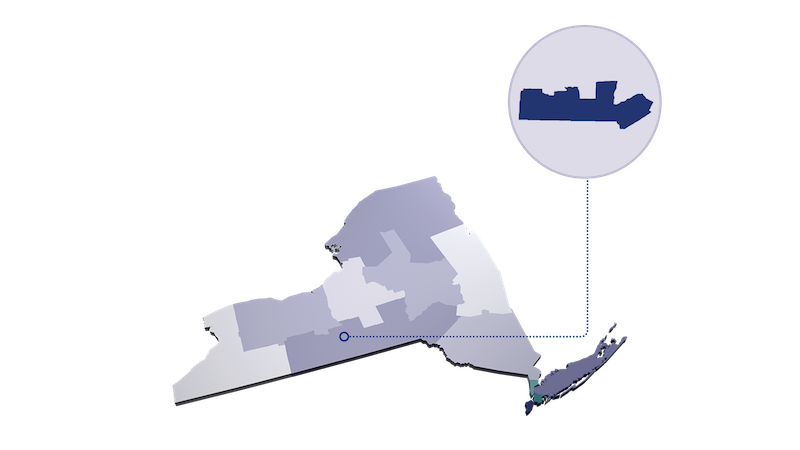
by Christian Harris, Labor Market Analyst, Southern Tier Region
Since 2011, labor market analysts at the New York State Department of Labor have compiled and released several rounds of research reports titled, “Significant Industries.” These reports — which are prepared for New York State and each of its 10 labor market regions — are based on private and public sector data from the Quarterly Census of Employment and Wages. These reports are intended to help local workforce development boards plan strategically and focus their resources on priority industries.
This article showcases three “Significant Industries” — educational services, ambulatory health care services, and couriers and messengers — that are having a particularly notable economic impact on the Southern Tier in 2024.
Educational Services (NAICS 611)
In 2023, educational services accounted for 41,100 jobs, or 16.7% of all employment in the region, making it the largest industry in the Southern Tier. Among New York’s 10 labor market regions, the Southern Tier has the highest share of its employment base in educational services. Not only is this industry responsible for a significant number of jobs, but its average annual wage ($69,200) is more than 10% greater than the region’s all-industry average.
Per media reports, the two largest educational services employers in the region are Cornell University (CU) and Binghamton University (BU). CU is a private, Ivy League, land-grant research university based in Ithaca (Tompkins County), while BU is a public research university with campuses in Binghamton, Vestal and Johnson City — all in Broome County. Recent reports released by CU and BU put their annual economic impacts on the region at $2.4 billion and $1.4 billion, respectively.
Both campuses are undergoing expansions. At CU, construction is currently underway on the Ann S. Bowers College of Computing and Information Science building. This modern structure will gather the institution’s computer science, information science, and statistics and data science departments all under one roof. According to the school, the new 135,000 square-foot, four-story structure will provide instructional and research spaces — including robotics, builder, and research labs; a design studio; and a large active learning classroom — as well as office space and a variety of meeting and informal study spaces. The building is expected to open in Spring 2025.
In June 2024, BU officially launched a federally supported innovation hub — called the Upstate New York Energy Storage Engine — which is designed to support the U.S. battery industry. The overarching goals of the group are to reduce the nation’s reliance on foreign battery technology and to assist in the country’s clean energy transition. The Engine’s service region comprises 27 counties in the Western NY, Central NY, Southern Tier and Finger Lakes regions. According to BU, the Energy Storage Engine is one of 10 inaugural National Science Foundation (NSF) Regional Innovation Engines around the country. It will receive $15 million from the NSF for the first two years of the project and up to $160 million over 10 years.
Ambulatory Health Care Services (NAICS 621)
The healthcare and social assistance sector is the region’s second largest employer with more than 40,000 workers in 2023, or 16.3% of regional employment. One segment within the broader sector — ambulatory health care services — was selected as a significant industry. This industry includes offices of physicians and dentists, diagnostic labs, outpatient care centers and home health care services. Industry employment rose by 200, to 9,100, in 2018-23. Going forward, industry employment is expected to grow by 23.5% in 2020-30. Adding to its regional importance, the industry paid an average annual wage of $86,800 in 2023, which was 38% above the region’s all-industry average.
Healthcare providers continue to innovate throughout the Southern Tier. For example, Cayuga Health recently opened a new medical center in the Ithaca Mall (Tompkins County). The regional healthcare provider moved its heart and vascular, primary care and rheumatology units to the complex, bringing multiple critical resources under one roof. The move follows a recent regional trend of medical care groups upgrading infrastructure while co-locating service centers closer to other essential goods retailers.
Couriers and Messengers (NAICS 492)
Although small compared to the other industries discussed here, the region’s couriers and messengers industry has experienced very strong growth due to the continued rise of e-commerce. The industry, which is responsible for the delivery of parcels and documents, expanded its regional workforce by an eye-catching 137.5%, or 1,100, in 2018-23. This trend is expected to continue with the industry’s job count projected to grow by 42.1%, or 450, in 2020-30.
The notable local jobs expansion in this industry is due, in large part, to local growth at FedEx and Amazon. FedEx opened a 458,000-square-foot sorting and distribution center in Kirkwood (Broome County) in Fall 2022. Company officials initially estimated a workforce of about 300, but recent media reports have put the number well above that. Although Amazon doesn’t officially belong to the couriers and messengers industry, they’ve had an indirect impact on employment growth there. Many independent courier and messenger businesses have co-located near Amazon warehouses to assist in order fulfillment.
Summing Up
The analysis of “Significant Industries” provides helpful insight into the economic trends driving regional labor markets. Here, we have looked at three such industries considered “significant” in the Southern Tier. To learn more about “Significant Industries” in the Southern Tier, see the full report here.
|
|
 In August 2024, New York State’s seasonally adjusted private sector job count fell over the month by 8,100, or 0.1%, to 8,393,400. In addition, the state’s seasonally adjusted unemployment rate increased from 4.3% to 4.4% in August 2024, while New York’s seasonally adjusted labor force participation rate held steady at 61.3%.
Capital
Over the past year, the private sector job count in the Capital Region rose by 5,500, or 1.2%, to 447,000 in August 2024. The largest job gains occurred in the following sectors:
- education and health services (+6,200)
- leisure and hospitality (+2,800)
Job losses were greatest in the following sectors:
- trade, transportation and utilities (-1,700)
- professional and business services (-900)
- information (-500)
- natural resources, mining and construction (-300)
Central NY
The number of private sector jobs in the Syracuse metro area increased over the past year by 3,600, or 1.4%, to 260,900 in August 2024. Job gains occurred in the following sectors:
- education and health services (+2,200)
- leisure and hospitality (+1,300)
- professional and business services (+300)
- natural resources, mining and construction (+200)
- other services (+200)
The largest job loss occurred in the following sector:
Finger Lakes
From August 2023 to August 2024, the number of private sector jobs in the Rochester metro area rose by 8,100, or 1.8%, to 457,300. The largest job gains occurred in the following sectors:
- education and health services (+6,400)
- leisure and hospitality (+2,700)
- other services (+300)
Job losses occurred in the following sectors:
- professional and business services (-1,100)
- information (-500)
Hudson Valley
Over the past year, the number of private sector jobs in the Hudson Valley grew by 14,300, or 1.8%, to 831,300 in August 2024. Job gains occurred in the following sectors:
- education and health services (+12,700)
- other services (+3,800)
- leisure and hospitality (+900)
- financial activities (+400)
Job losses occurred in the following sectors:
- natural resources, mining and construction (-1,400)
- professional and business services (-800)
- trade, transportation and utilities (-800)
- information (-500)
Long Island
For the year ending August 2024, private sector jobs on Long Island increased by 16,300, or 1.4%, to 1,183,800. The largest job gains occurred in the following sectors:
- education and health services (+6,600)
- leisure and hospitality (+6,000)
- natural resources, mining and construction (+4,200)
- other services (+2,500)
Job losses were largest in the following sectors:
- trade, transportation and utilities (-2,300)
- professional and business services (-700)
Mohawk Valley
For the 12-month period ending August 2024, the number of private sector jobs in the Mohawk Valley region increased by 2,000, or 1.4%, to 144,600. The following sectors had the largest over-the-year employment gains:
- education and health services (+2,000)
- leisure and hospitality (+300)
- natural resources, mining and construction (+200)
Job losses occurred in the following sectors:
- manufacturing (-400)
- professional and business services (-300)
New York City
The private sector job count in New York City rose over the past year by 96,300, or 2.4%, to 4,160,300 in August 2024. Job gains were largest in the following sectors:
- education and health services (+97,900)
- leisure and hospitality (+23,300)
- other services (+2,200)
Job losses were largest in the following sectors:
- information (-9,700)
- natural resources, mining and construction (-8,600)
- financial activities (-5,500)
- professional and business services (-3,000)
North Country
The number of private sector jobs in the North Country region rose over the year by 700, or 0.6%, to 113,200 in August 2024. Gains were greatest in the following sectors:
- education and health services (+900)
- natural resources, mining and construction (+200)
The greatest job loss occurred in the following sector:
- leisure and hospitality (-200)
Southern Tier
For the 12-month period ending August 2024, the number of private sector jobs in the Southern Tier increased by 1,600, or 0.7%, to 216,900. The largest job gains occurred in the following sectors:
- education and health services (+1,600)
- leisure and hospitality (+1,200)
- natural resources, mining and construction (+400)
Job losses were greatest in the following sectors:
- trade, transportation and utilities (-800)
- manufacturing (-400)
- professional and business services (-400)
Western NY
Over the past 12 months, the private sector job count in the Buffalo-Niagara Falls metro area rose by 5,500, or 1.2%, to 472,900 in August 2024. Job gains occurred in the following sectors:
- education and health services (+4,500)
- leisure and hospitality (+1,100)
- natural resources, mining and construction (+900)
- financial activities (+500)
- manufacturing (+500)
- other services (+500)
Job losses were largest in the following sectors:
- professional and business services (-1,200)
- trade, transportation and utilities (-1,100)
|
|
|
Click the button below to become a subscriber to Employment in New York State

|
|
|
|
|